Looks Clean is Not Clean
Looks Clean Is Not Clean A room can look spotless and still fail. I wrote yesterday about why a fixed…

Looks Clean Is Not Clean A room can look spotless and still fail. I wrote yesterday about why a fixed…
Stop Asking ATP What Clean Is Most Environmental Services (EVS) departments that adopt an ATP (adenosine triphosphate) luminometer program start…
Years ago, as a Supervisor, at a different medical center, I walked in and found nine callouts. Vacations already approved and sick calls reduced half of my team that same day. On paper it looked impossible.
I didn’t try to fix it myself. I pulled the team together, explained exactly what we were facing, and we worked through it as a group. We agreed on what had to get done that shift, the basics that could not wait, and what could safely hold until the next one, based on who was actually going to be there. It worked. We got through the day, and it still amazes me to this day.
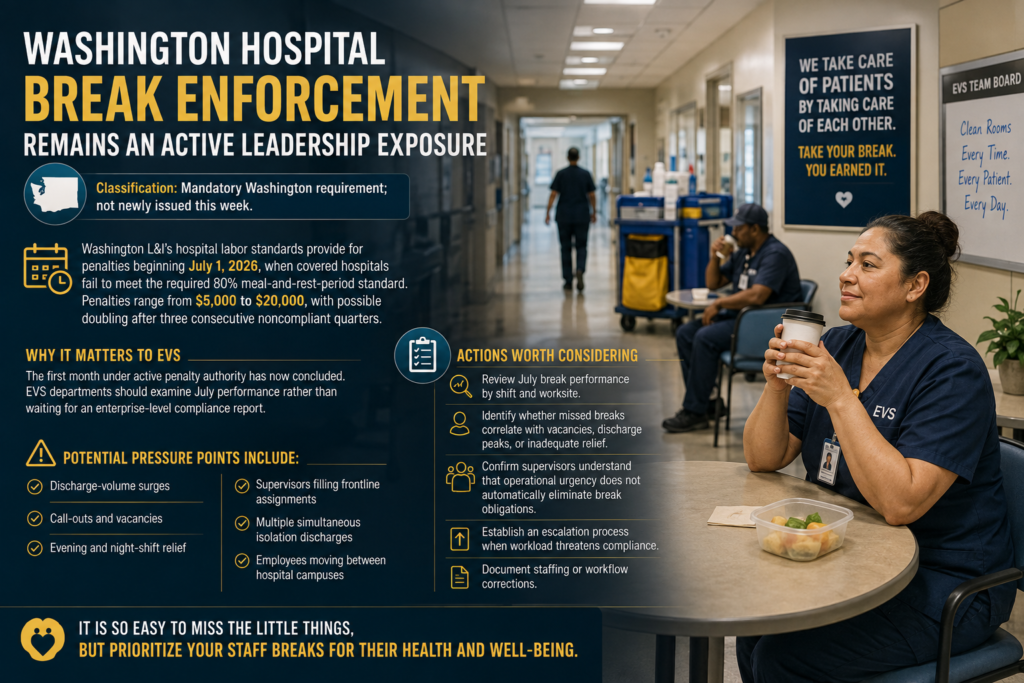
Washington hospital break enforcement remains an active leadership exposureClassification: Mandatory Washington requirement; not newly issued this week. Washington L&I’s hospital…
It’s not always a staffing shortage. We have a leadership development vacuum. If a paycheck is your only retention strategy, you are losing your best people to whoever offers a slightly bigger one.
I’ve hired people straight off the floor who had more leadership in them than some managers I’ve worked with. The instinct in a lot of departments is to look outside for that: post the supervisor job, bring in someone with a title already attached. Meanwhile the person who already knows the building, the staff, and the standard is standing right there, wiping down a room.
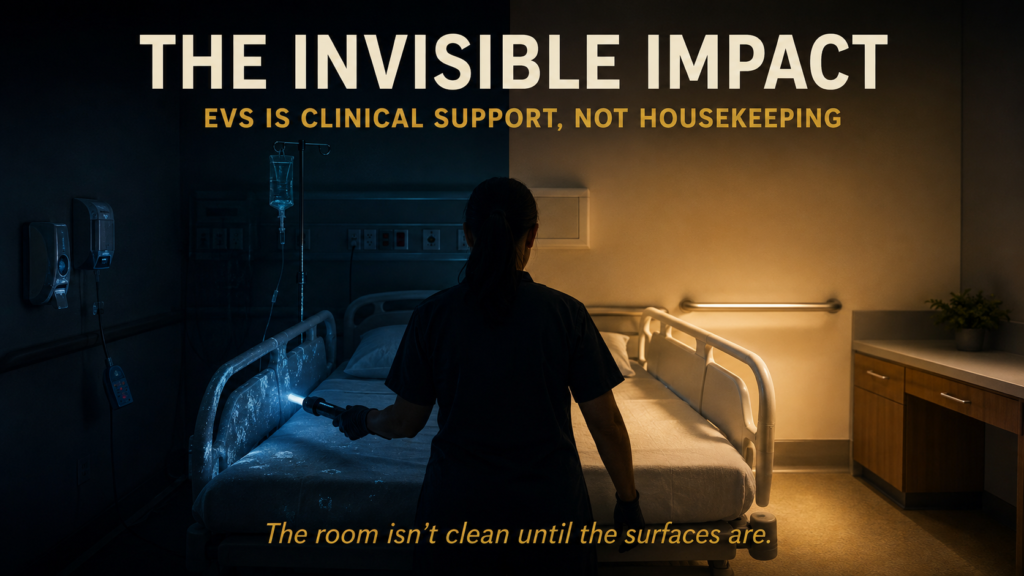
What people see in a patient room is a clean environment. No visible soil. Everything in place. A perfect picture.…
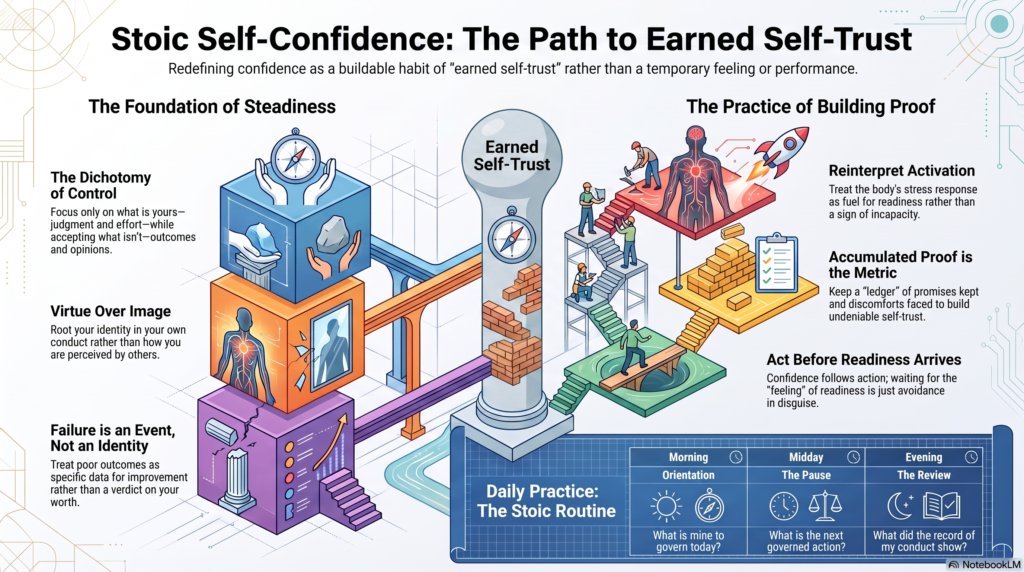
Learn more about my book: Stoic Self Confidence, on sale now.
Most advice about holding people accountable quickly moves to progressive guidance. Set the expectation, document the gap, escalate to discipline. The mechanics are not wrong. They are just second, and when a leader reaches for them first they usually do not work.
They don’t work because accountability is not perceived the same way by everyone. The same conversation, using the same words, can be help for one employee and a threat for another. The difference is whether that employee trusts me, and that needs to happen long before I sit down with potential progressive discipline.
If they do not trust me, accountability is not a correction. It is the first step in getting rid of them, and that is how they will hear it no matter how carefully I say it. Once someone believes I am building a case, nothing useful happens after that. They stop listening for what needs to change and start thinking about their defense.
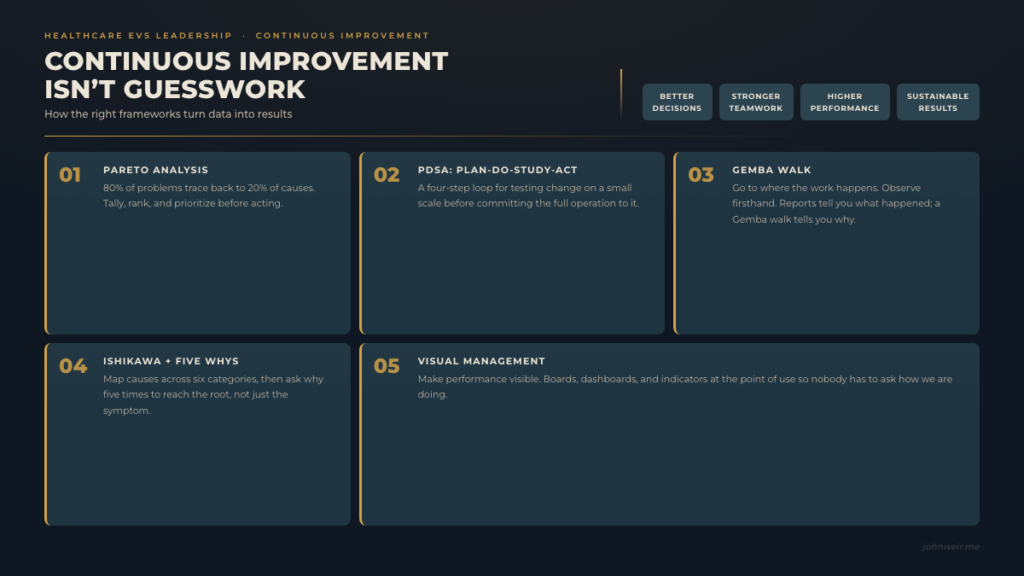
Real continuous improvement is a discipline. It runs on tools, structured frameworks and real data that tell you exactly where to look, what to fix, and how to know whether what you did actually worked. When I replace gut feel with a repeatable method, things shift. Problems get solved faster. Waste gets eliminated at the source instead of patched over. We stop having the same conversations about the same problems.
I wrote this book because I have spent nearly three decades leading teams in environmental services that do not allow for hesitation. The Stoics understood what hospital corridors and operating pressures teach you every day: character is not what you claim. It is what you do when things are hard.
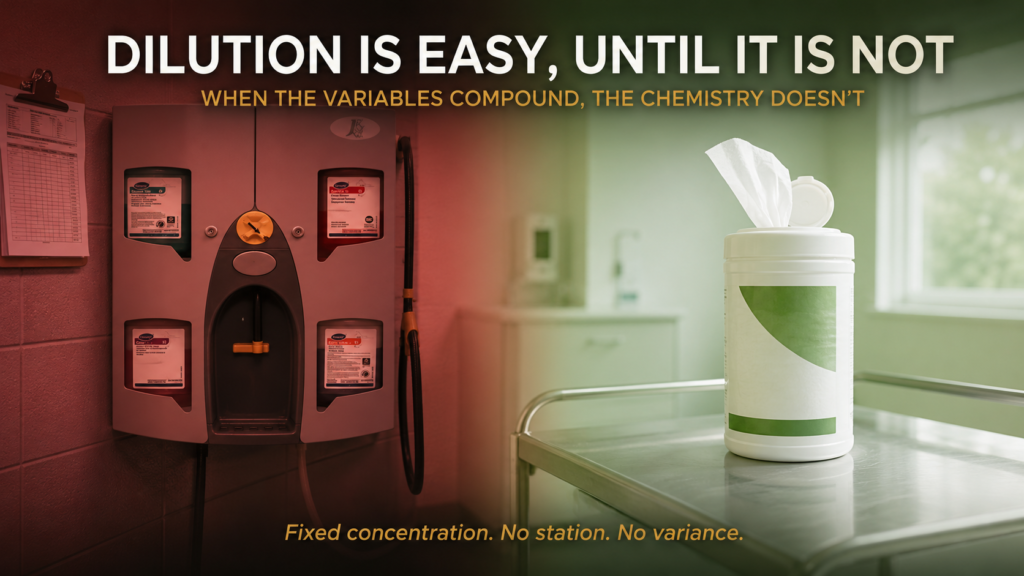
Mixing stations introduce variables that many cleaning programs don’t account for. Water pressure fluctuates throughout the day and across different locations in the building. Dispensers require regular maintenance to stay calibrated. Metering tips clog. One common dilution station manufacturer states water pressure minimum of 30lbs. That explained why I had a dispenser never meet standards of 800ppm, and after I had changed it out.
Most of the data reviewed in healthcare operations meetings is historical. The reports look current because they were just printed, but the outcomes they describe were already determined days, weeks, or months before anyone sat down to discuss them. That is the nature of lagging data, and it is how most organizations are running.
I have sat in those meetings. Everyone is looking at the same numbers, agreeing on the same trends, and calling it management. What it actually is, most of the time, is documentation.