Patient Safety

How Infection Travels Across a Hospital

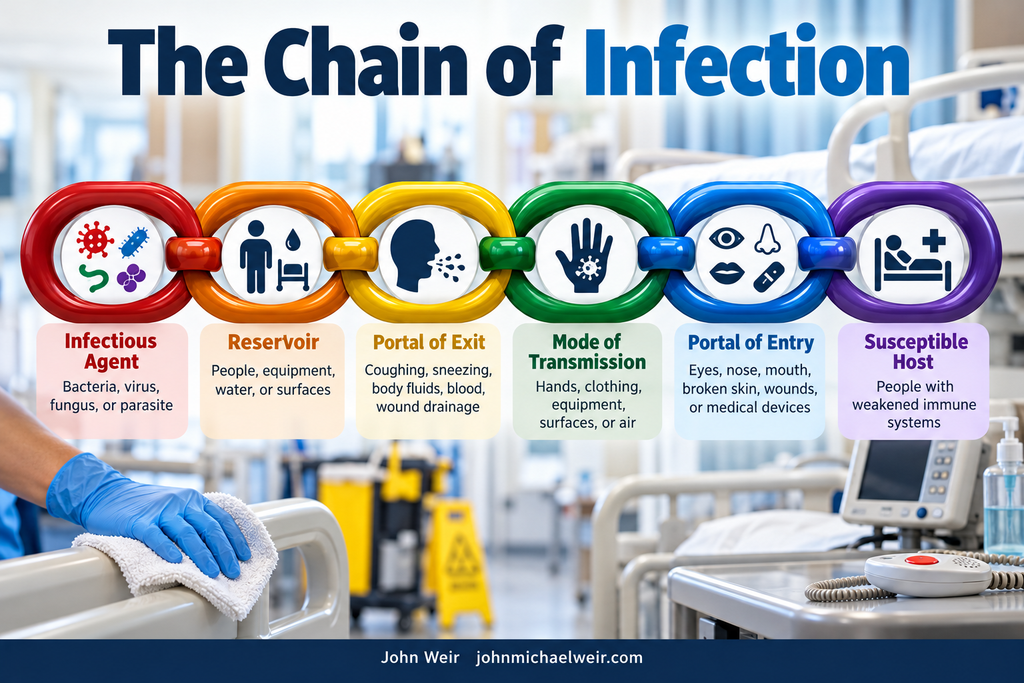
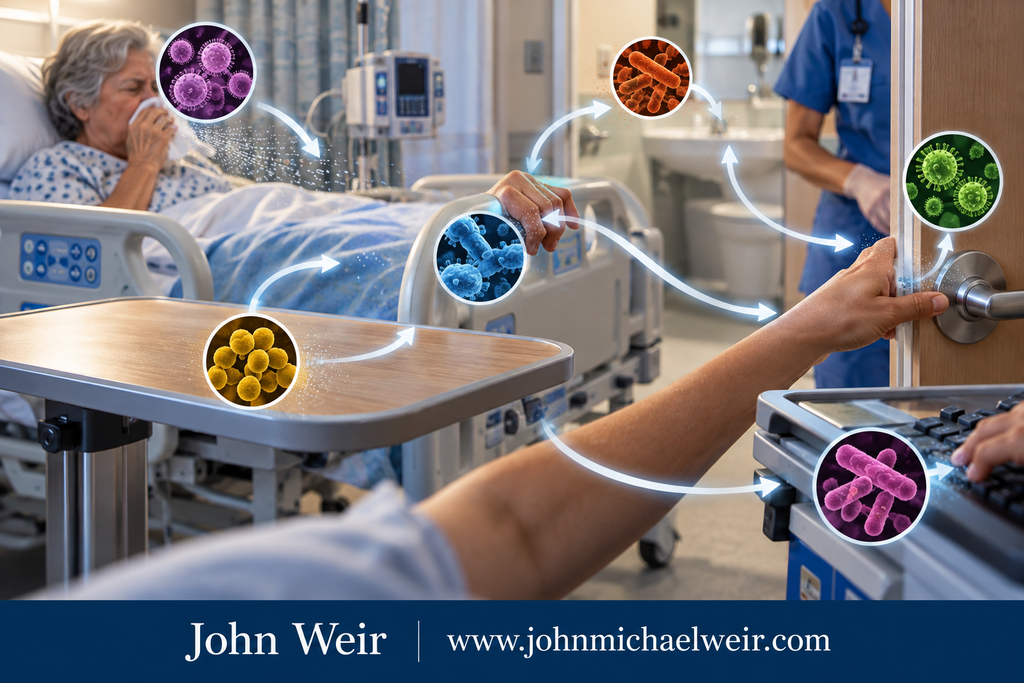
Infection control becomes easier to understand once you stop picturing germs as mysterious enemies and start tracking movement. Microorganisms travel…

More Than A Clean Room

The phrase hospital-acquired infection, or HAI, describes an infection that develops during or soon after a person receives care. Some…

The Physical Environment Part 3 of 9

Part 3 of 9, PE.02.01.01: Hazardous Materials and Waste PE.02.01.01, part of the Physical Environment chapter Accreditation 360 created in…

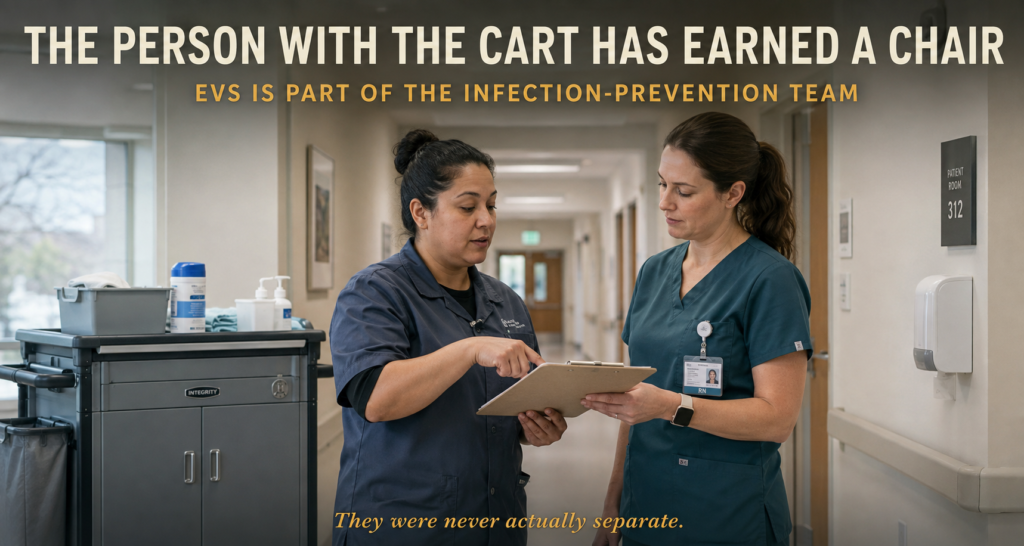
EVS Is Part Of The Infection Prevention Team

A surgeon gets applause. An EVS tech gets a pay stub. One of them prevents more infections than the other, and it’s not who you think.

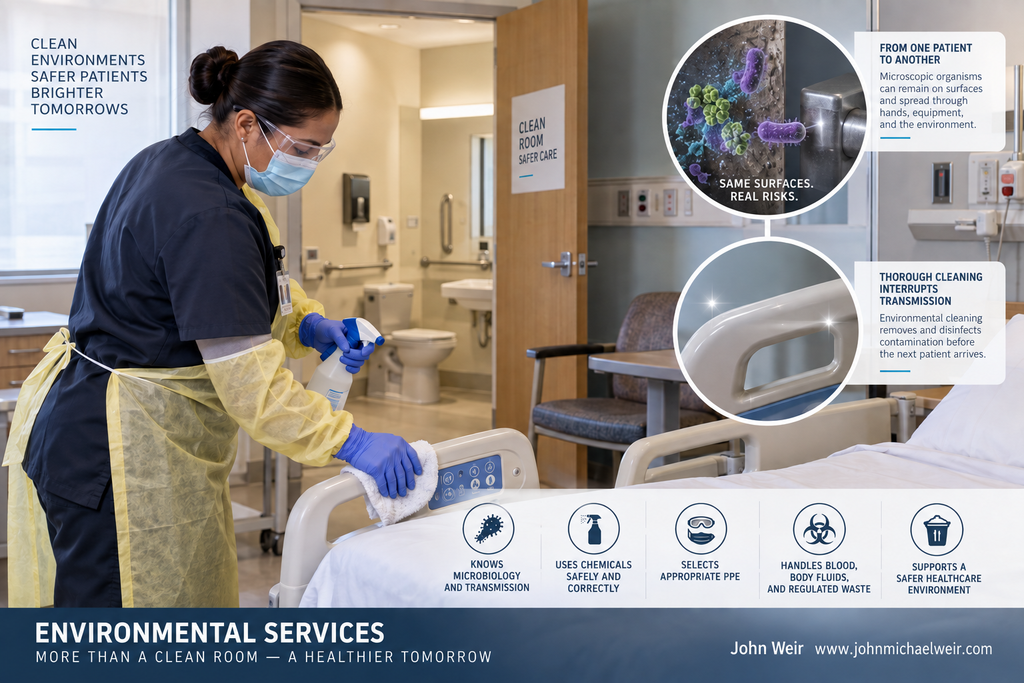
Environmental Services staff earn a national median of $39,310 a year, well below the $100,210 median for registered nurses in the same hospitals (U.S. Bureau of Labor Statistics, 2025). They are among the lowest paid people in the building, and easy to overlook, and they sit directly on the front line of infection prevention. Not adjacent to it. Not supporting it from a distance. On it. Every surface a patient touches, every high-risk room turned over between cases, every terminal clean that stands between one patient and the next one, runs through their hands first.

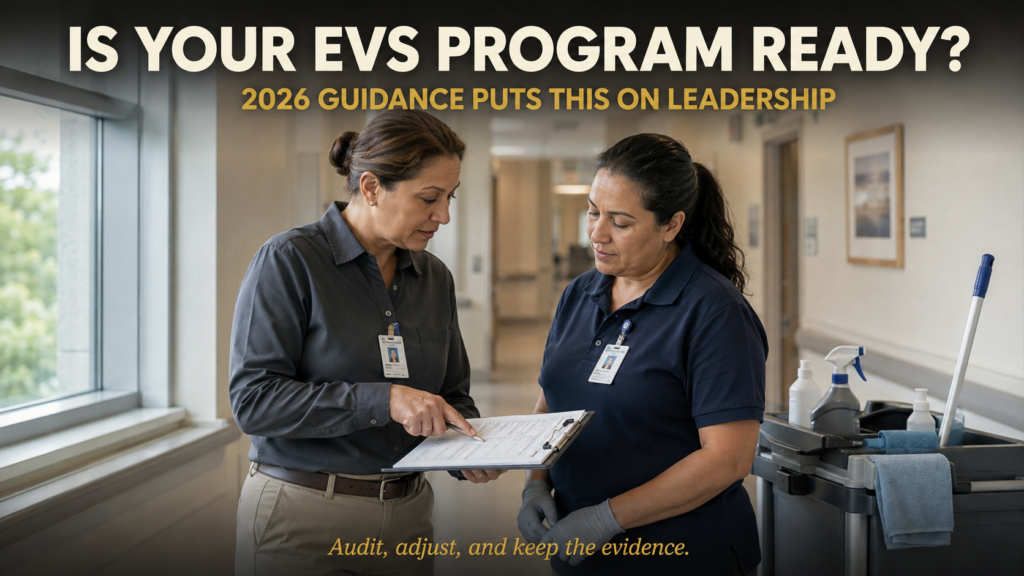
Is Your EVS Program Ready?

For years, infection prevention conversations treated Environmental Services as a support function. A separate department. A cost center. The people who clean after everyone else goes home. That era is ending. The 2026 guidance is explicit: if your EVS team is not staffed, trained, and monitored, that is a leadership failure, not a staff failure.

The guidance documents do not use the word blame. They use the word accountability. The expectation has moved from “did the room look clean” to “can you prove it is clean, and can you show who is responsible when it is not.”

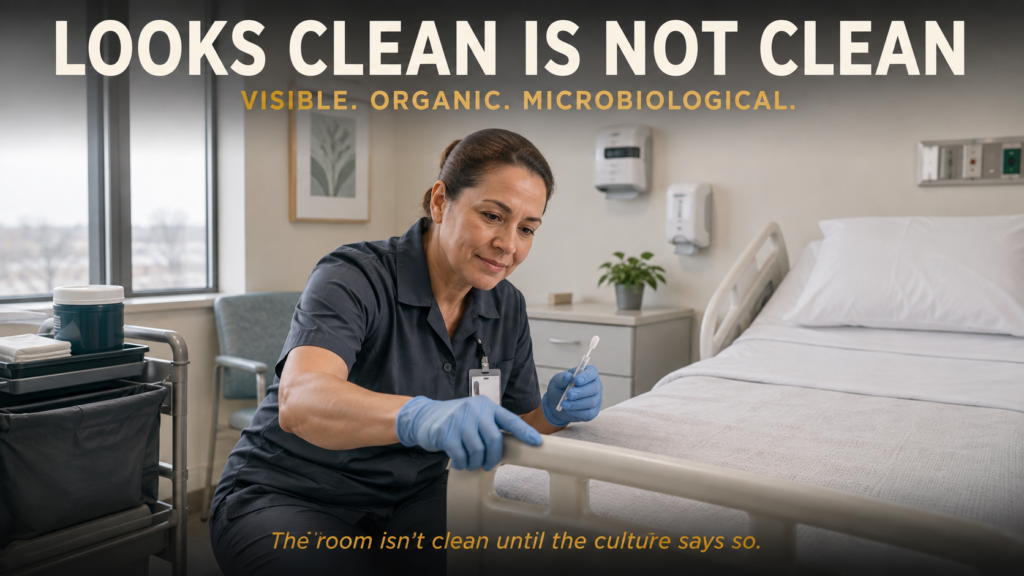
Looks Clean is Not Clean

Looks Clean Is Not Clean A room can look spotless and still fail. I wrote yesterday about why a fixed…