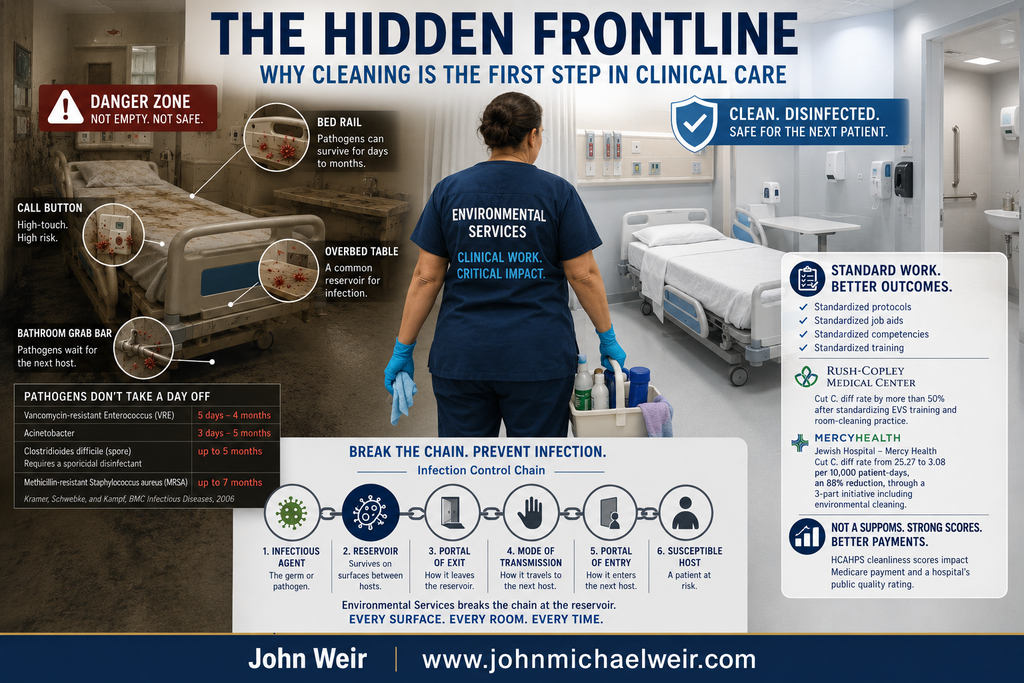
Hidden Frontline: Why Cleaning Is The First Step In Clinical Care
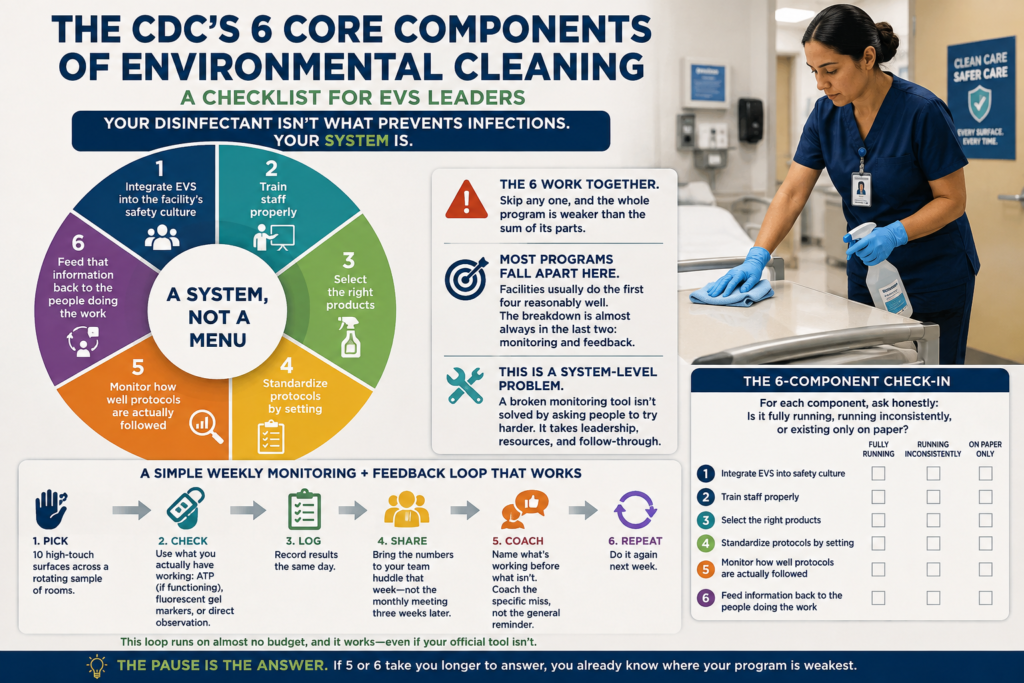
The Hidden Frontline: Why Cleaning is the First Step in Clinical Care Intervention: an action taken to prevent, treat, or…
The Hidden Frontline: Why Cleaning is the First Step in Clinical Care Intervention: an action taken to prevent, treat, or…
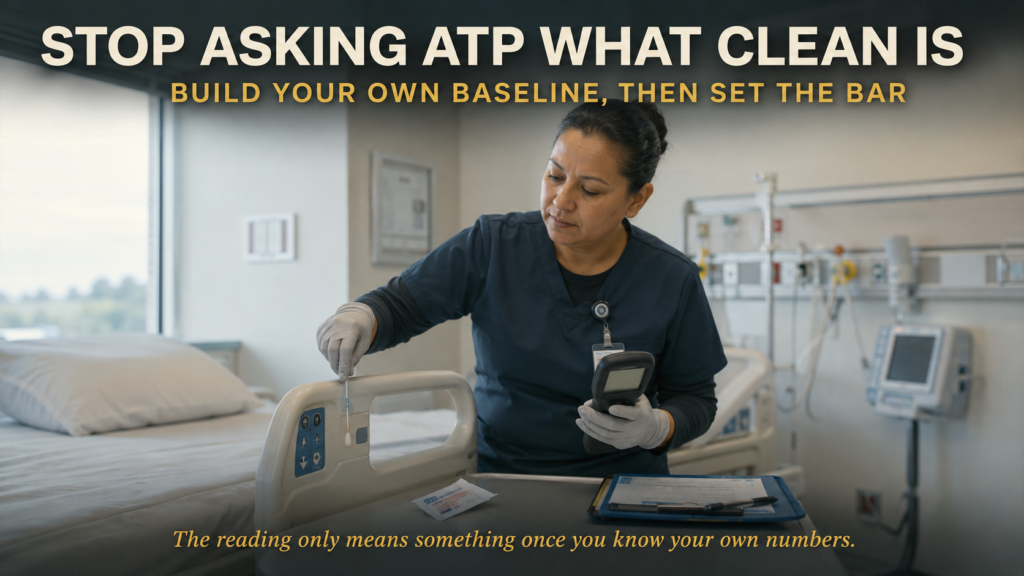
Stop Asking ATP What Clean Is Most Environmental Services (EVS) departments that adopt an ATP (adenosine triphosphate) luminometer program start…
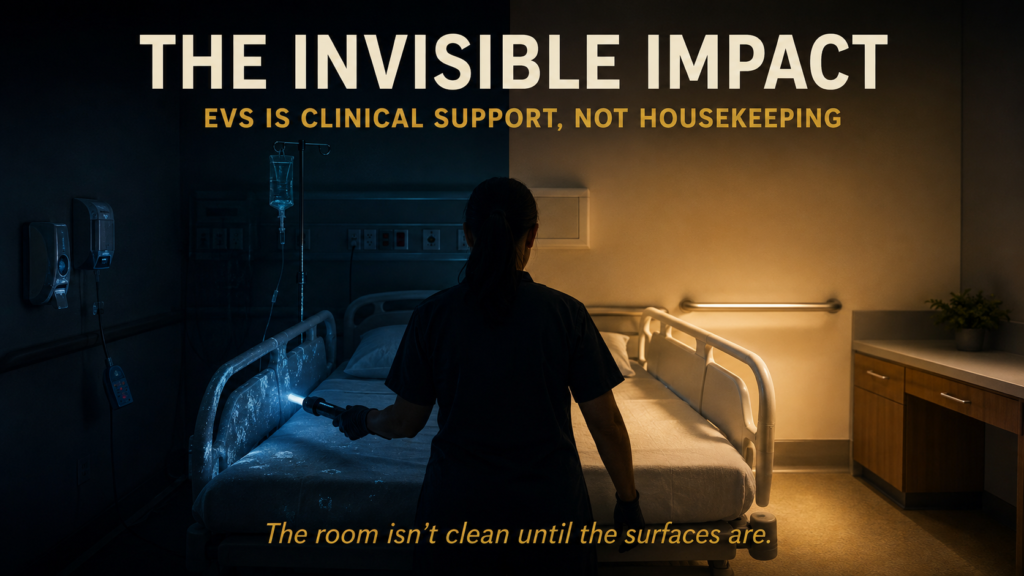
What people see in a patient room is a clean environment. No visible soil. Everything in place. A perfect picture.…
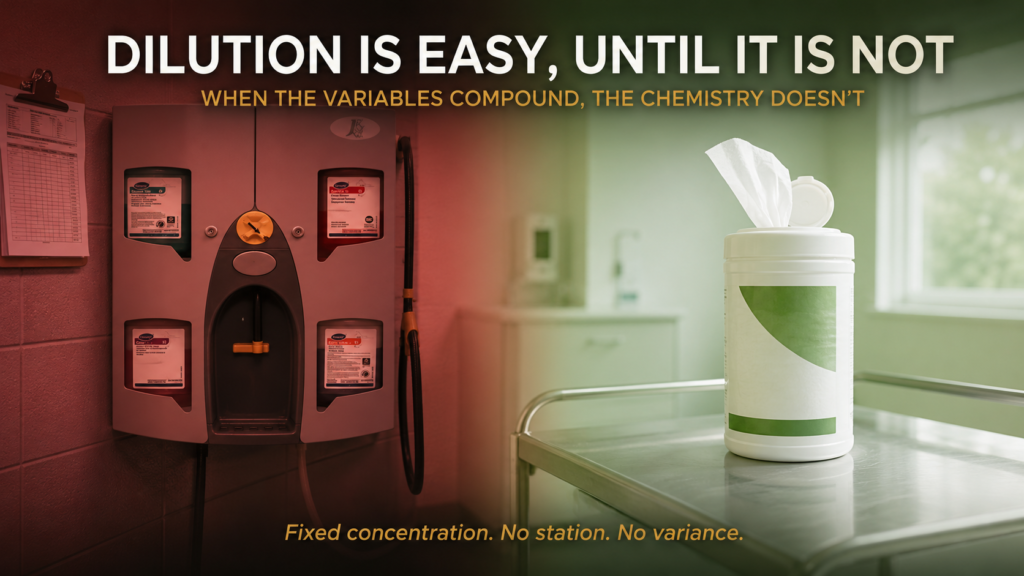
Mixing stations introduce variables that many cleaning programs don’t account for. Water pressure fluctuates throughout the day and across different locations in the building. Dispensers require regular maintenance to stay calibrated. Metering tips clog. One common dilution station manufacturer states water pressure minimum of 30lbs. That explained why I had a dispenser never meet standards of 800ppm, and after I had changed it out.
If you work in EVS leadership and have not looked into the CHESP, the CMIP, or the T-CNACC, start. Not for the credential. For what the learning does to how you see your own work.
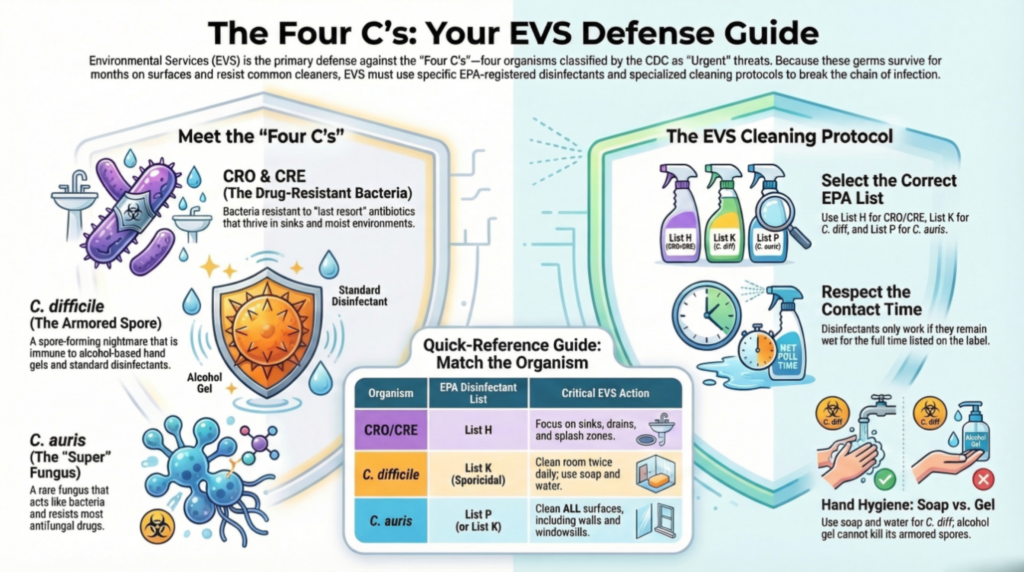
I have developed a full staff training on the Four C’s that we will be rolling out next week. These are four of the most dangerous drug-resistant organisms in healthcare settings, and I want to share some of the key points from that training here.
In the first post in this series, I laid out four variables that drive smart disinfectant selection: microbial targets, contact time, chemistry, and EPA registration. Each one deserves a deeper look. This post focuses on the first and most foundational: knowing exactly which organisms you are targeting and why that determines which disinfectant belongs in your team’s hands.
Choosing the right disinfectant is a critical decision for environmental services (EVS) professionals, impacting patient safety and infection control. Selection involves understanding microbial targets, proper application practices, chemical properties, and regulatory compliance.
When you think of the word “clean,” you might picture a sparkling kitchen counter. But in a hospital operating room, “clean” is a term of microscopic precision, where the stakes are infinitely higher. For the highly trained Environmental Services (EVS) technicians responsible for this environment, cleaning is not about tidiness—it is a critical, non-negotiable component of patient safety.
Analogy for Understanding: Think of Candida auris like a “microscopic ghost.” Long after a patient has been discharged, the fungus remains haunting the surfaces of the room. Using standard cleaners is like dusting the furniture while the ghost remains; only periodic interventions like this will truly clear the space for the next patient.
Microbes are everywhere—on your skin, in the air you breathe, and in the food you eat. They form a vast, invisible universe that shapes our lives in profound ways. While we often think of “germs” as simple enemies to be defeated, their stories are far more complex, surprising, and fascinating than we can imagine. From their discovery and evolution to their impact on our health, the interplay between microbes and humanity is a journey through the quirks and mysteries of life at the microscopic level.