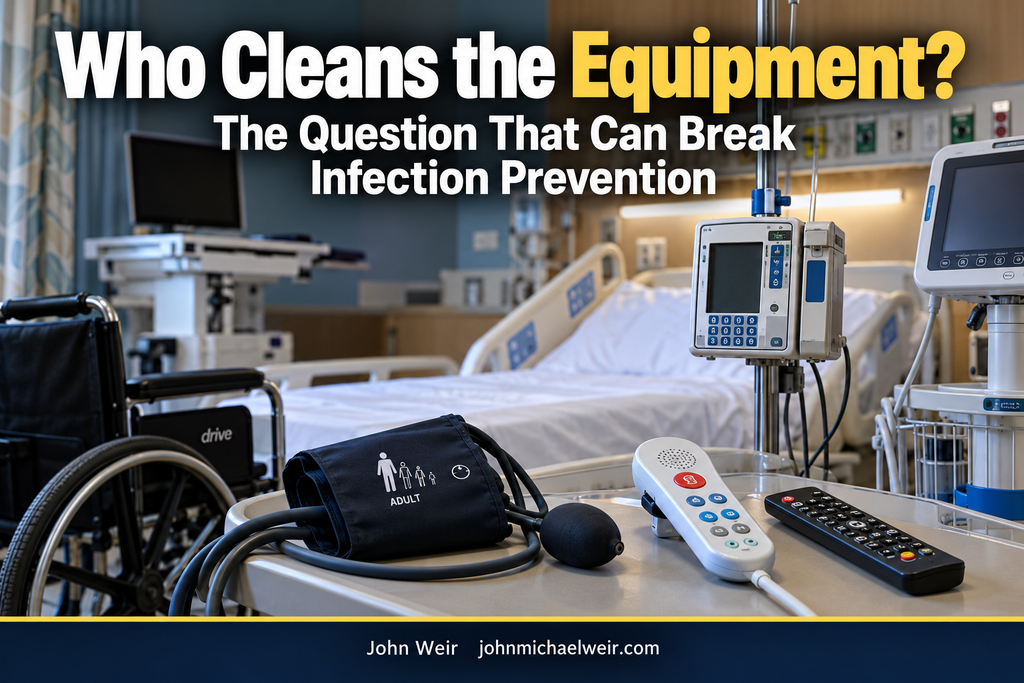
Who Cleans the Equipment? The Question That Can Break Infection Prevention
A hospital room can be cleaned correctly and still have an infection-prevention gap sitting right beside the bed. It may…
A hospital room can be cleaned correctly and still have an infection-prevention gap sitting right beside the bed. It may…
The Chain of Infection Infections do not appear out of nowhere. They move through connected steps, and understanding these steps…
Infection control becomes easier to understand once you stop picturing germs as mysterious enemies and start tracking movement. Microorganisms travel…
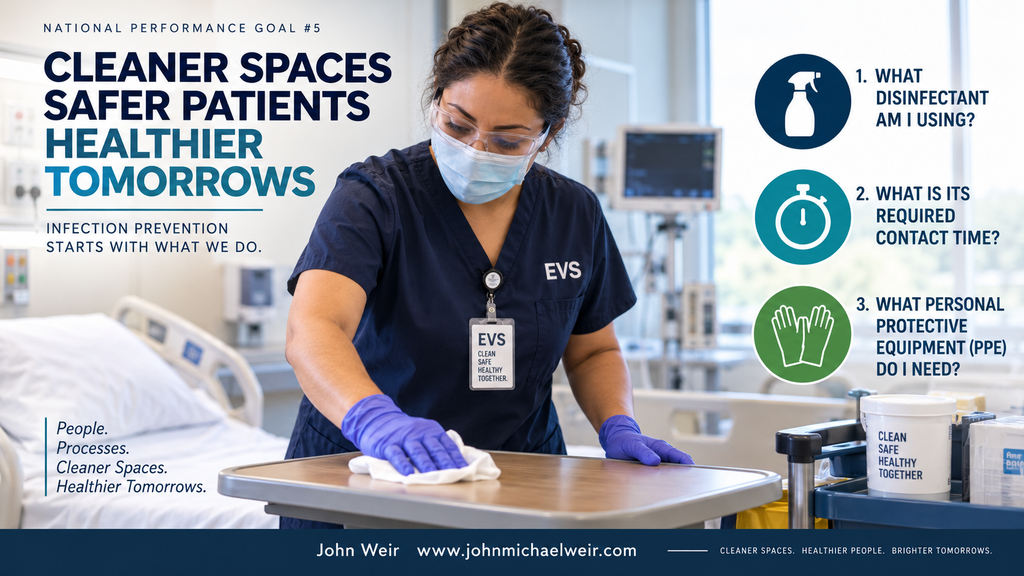
Three Questions Every EVS Technician Should Be Able to Answer National Performance Goal #5: Preventing and Controlling Infection A patient…
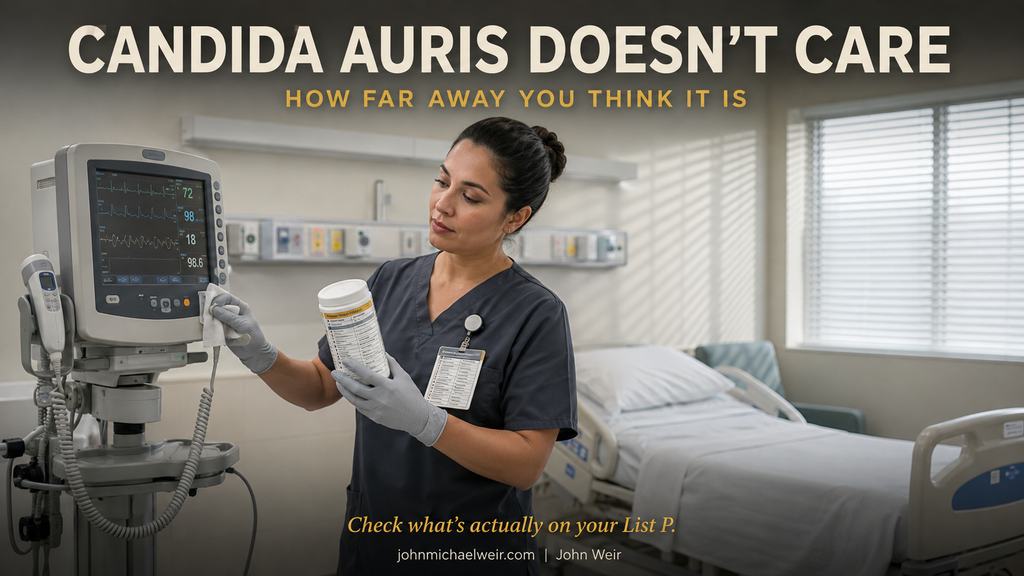
King County Washington. In January 2024, Washington State confirmed its first locally acquired cases of Candida auris there, traced to…
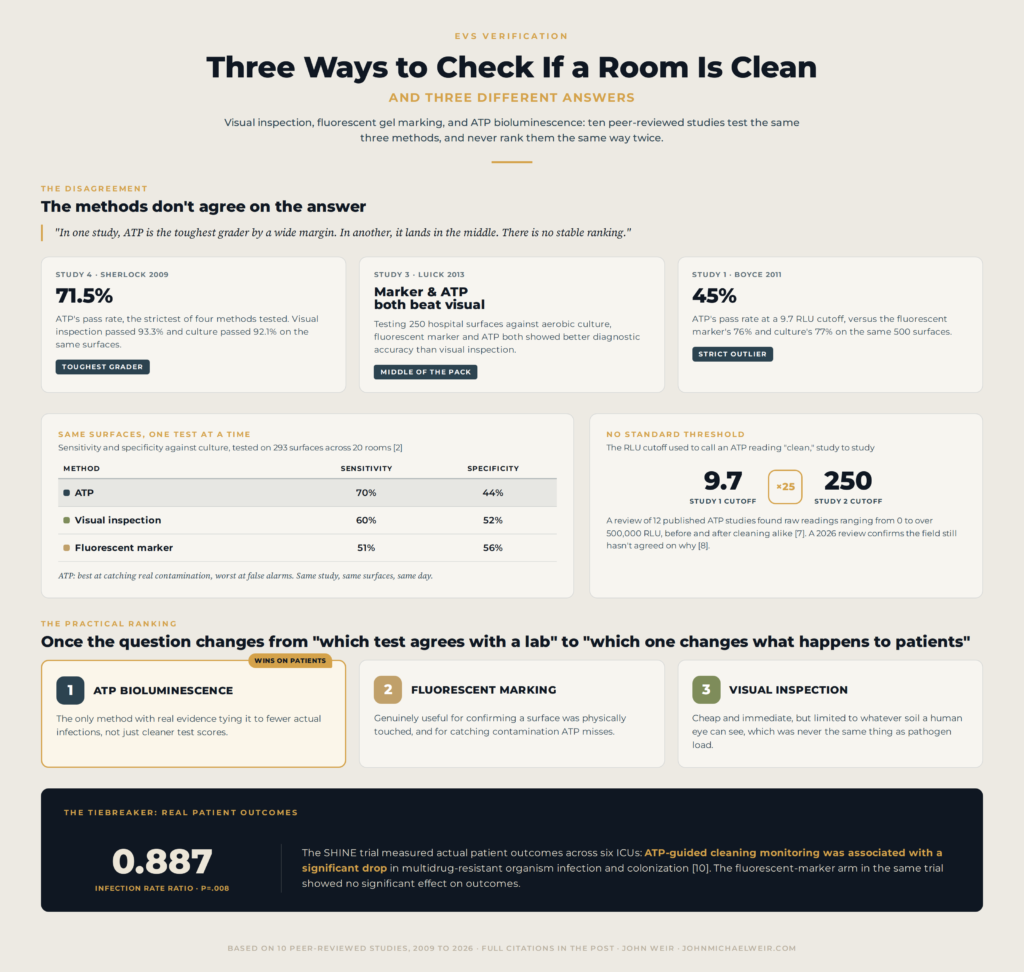
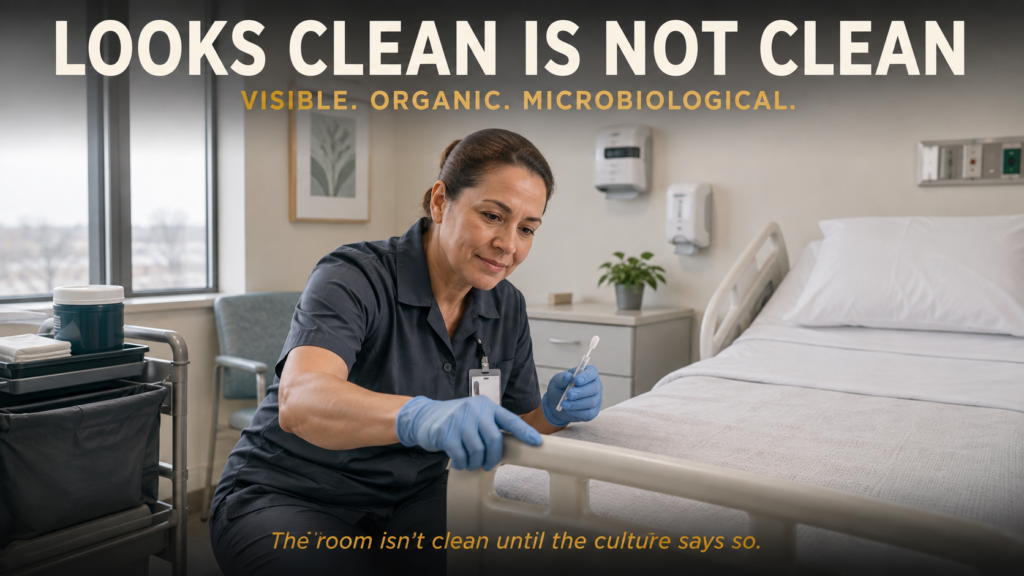
Ask an Environmental Services (EVS) program how it knows a room is clean, and you’ll get one of three answers: someone looked at it, someone marked it, or someone tested it. Only one of those three is actually capable of seeing what matters. The human eye can only ever catch visible soil. It has no way to see pathogen load, because pathogen load isn’t visible. Whatever a person can see with their own eyes was never going to be the whole picture, and the research bears that out again and again.
A surgeon gets applause. An EVS tech gets a pay stub. One of them prevents more infections than the other, and it’s not who you think.
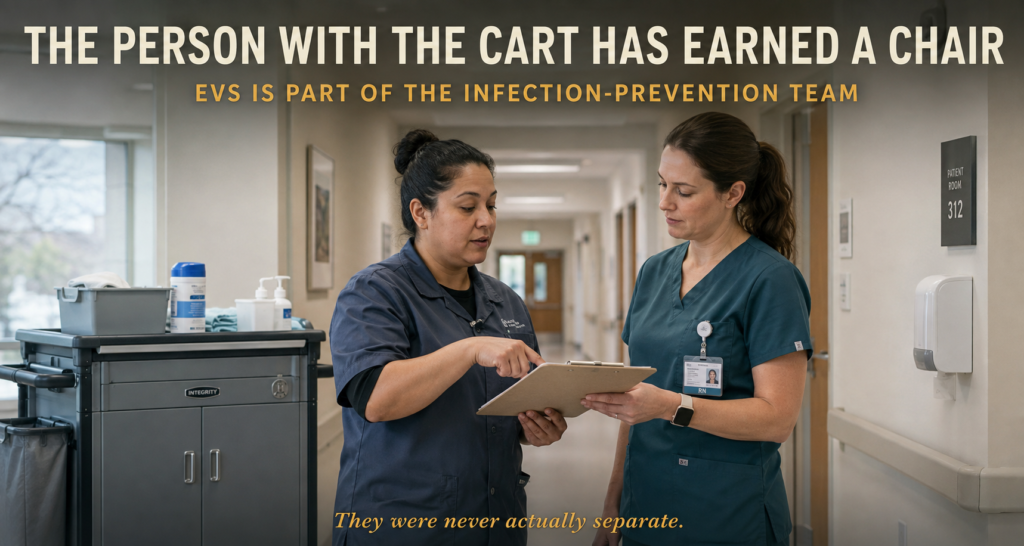
Environmental Services staff earn a national median of $39,310 a year, well below the $100,210 median for registered nurses in the same hospitals (U.S. Bureau of Labor Statistics, 2025). They are among the lowest paid people in the building, and easy to overlook, and they sit directly on the front line of infection prevention. Not adjacent to it. Not supporting it from a distance. On it. Every surface a patient touches, every high-risk room turned over between cases, every terminal clean that stands between one patient and the next one, runs through their hands first.
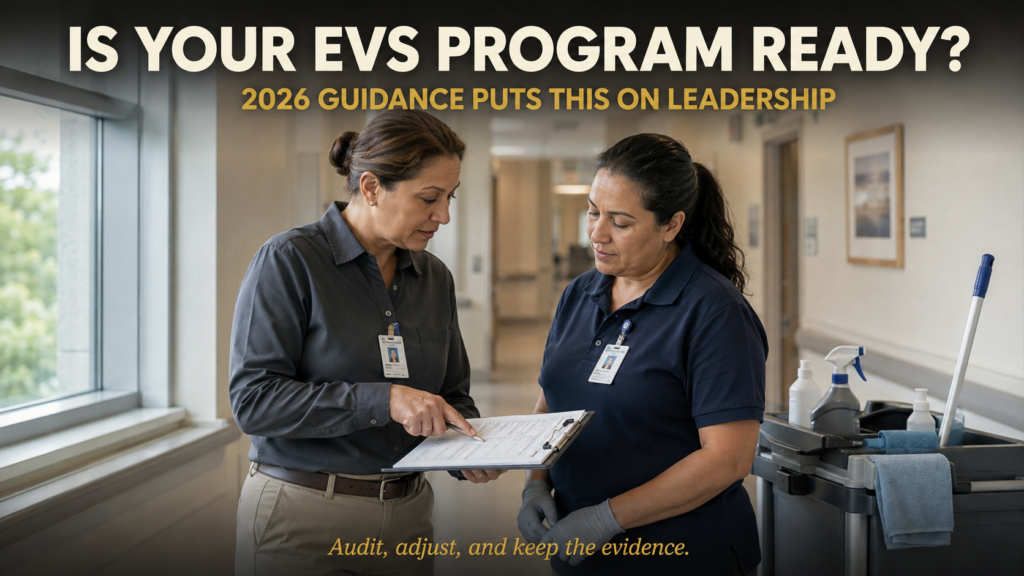
For years, infection prevention conversations treated Environmental Services as a support function. A separate department. A cost center. The people who clean after everyone else goes home. That era is ending. The 2026 guidance is explicit: if your EVS team is not staffed, trained, and monitored, that is a leadership failure, not a staff failure.
The guidance documents do not use the word blame. They use the word accountability. The expectation has moved from “did the room look clean” to “can you prove it is clean, and can you show who is responsible when it is not.”
Looks Clean Is Not Clean A room can look spotless and still fail. I wrote yesterday about why a fixed…