When Discomfort is a Signal
When you have seen the version of yourself you could become, the comfortable version of your life stops feeling comfortable.…
When you have seen the version of yourself you could become, the comfortable version of your life stops feeling comfortable.…
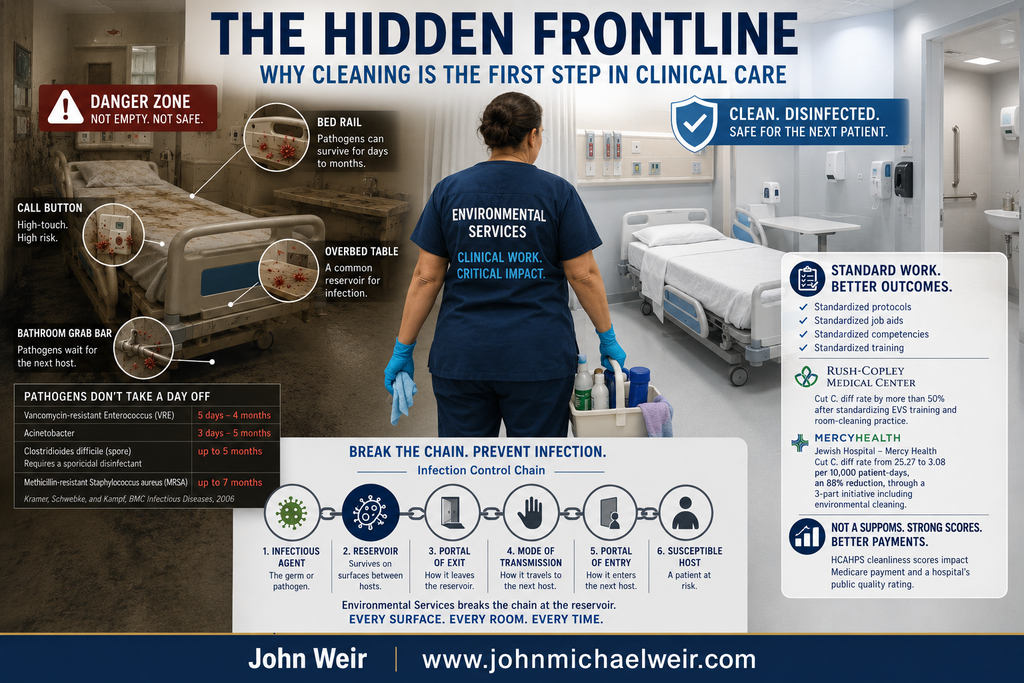
The Hidden Frontline: Why Cleaning is the First Step in Clinical Care Intervention: an action taken to prevent, treat, or…
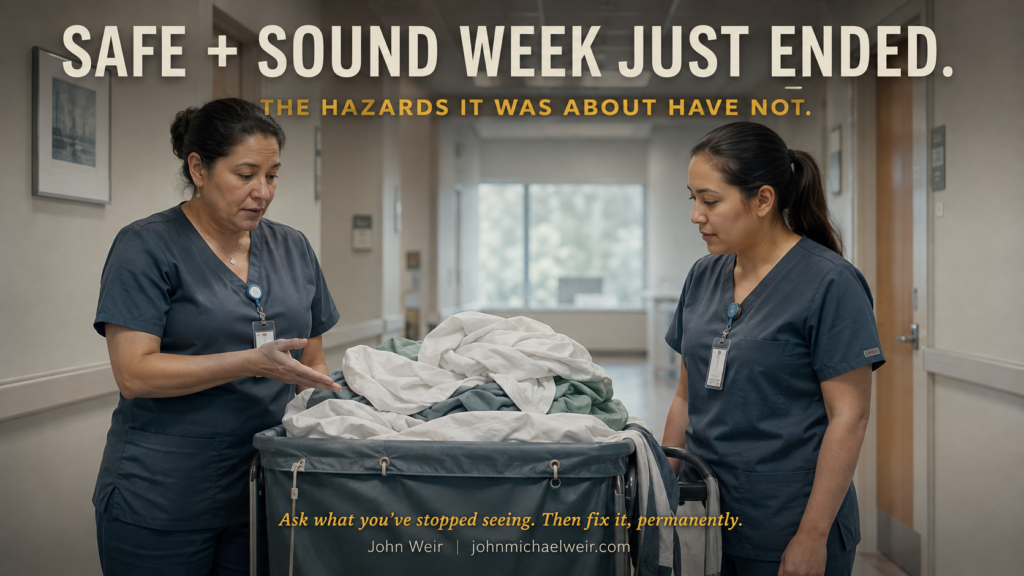
OSHA’s Safe & Sound Week ran August 10 to 16. It’s a voluntary campaign built on three things: management leadership, worker participation, and finding and fixing hazards before they find you. Participation is voluntary. The hazards it’s about are not.
Every EVS department has a version of the same list, and most of it has gone quiet. Overfilled trash and linen bags. Sharps disposed of improperly by clinical staff, not EVS. Cart wheels that have been bad for months. Chemical splash risk. Wet floors. Repetitive lifting. Workplace violence. None of these are secrets. They’re conditions a team sees so often that seeing them stops counting as noticing them.
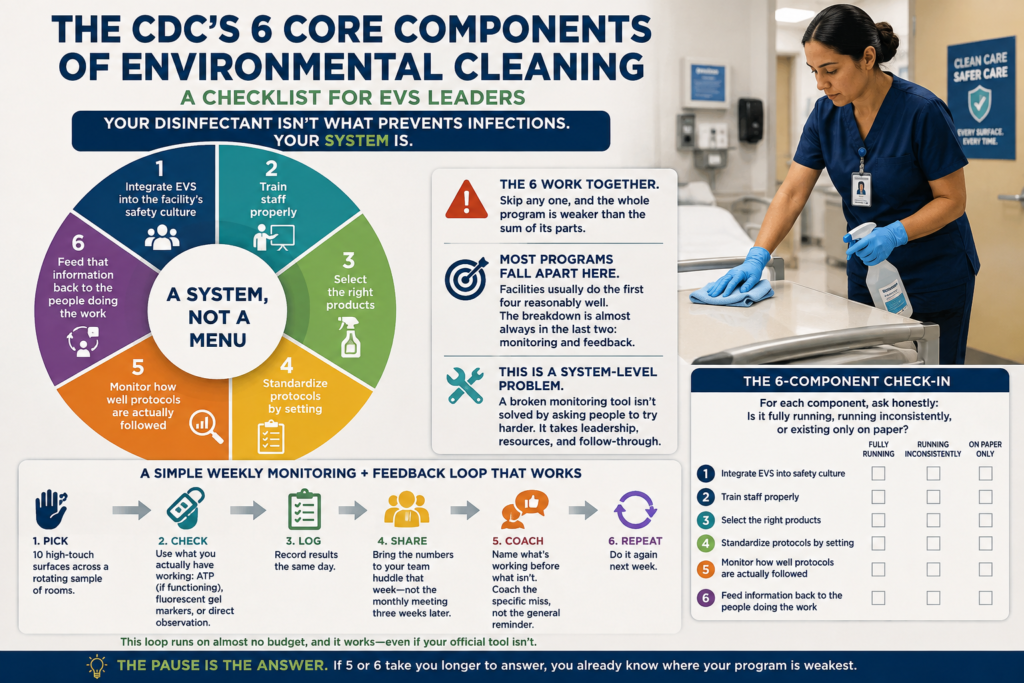
The Centers for Disease Control and Prevention, the CDC, lays out six core components for an environmental cleaning program:
Integrate Environmental Services, EVS, into the facility’s safety culture
Train staff properly
Select the right products
Standardize protocols by setting
Monitor how well those protocols are actually followed
Feed that information back to the people doing the work
CDC is explicit about one thing that gets lost in the summary version: these six work as a system, not a menu. You don’t get to run four of them well and skip the other two. Skip any one, and the whole program is weaker than the sum of its parts.
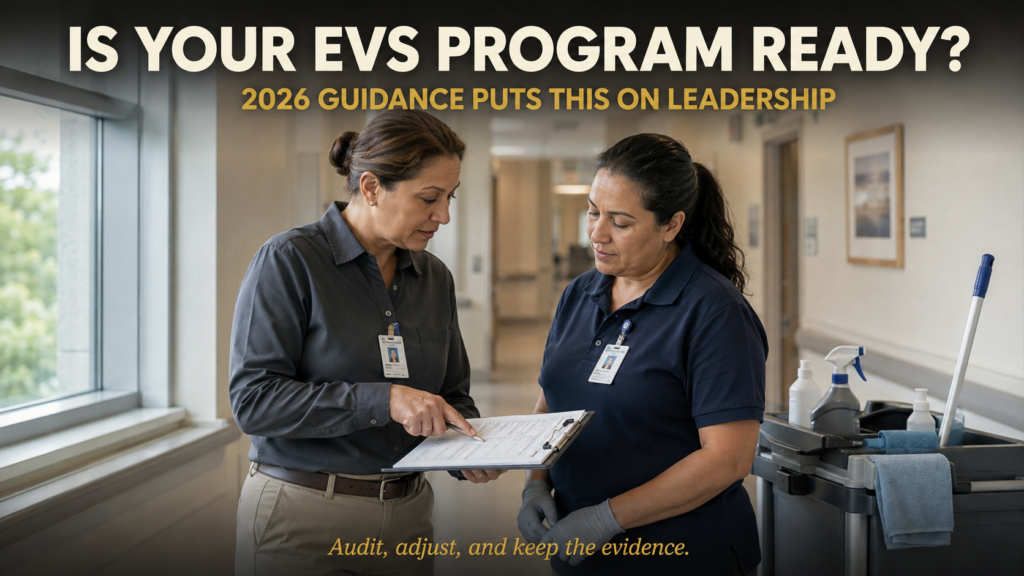
For years, infection prevention conversations treated Environmental Services as a support function. A separate department. A cost center. The people who clean after everyone else goes home. That era is ending. The 2026 guidance is explicit: if your EVS team is not staffed, trained, and monitored, that is a leadership failure, not a staff failure.
The guidance documents do not use the word blame. They use the word accountability. The expectation has moved from “did the room look clean” to “can you prove it is clean, and can you show who is responsible when it is not.”
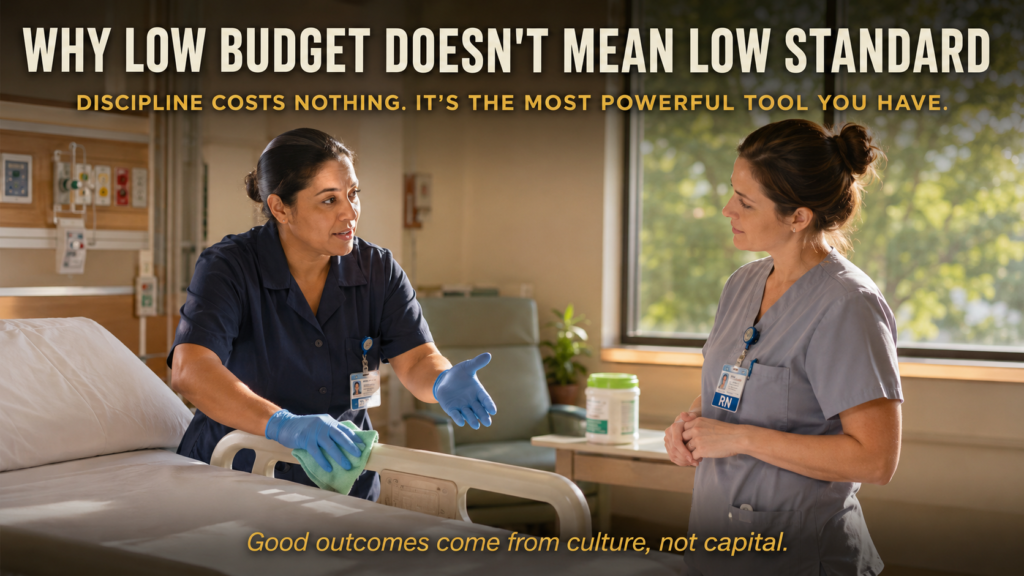
Why Low Budget Doesn’t Mean Low Standard You don’t need a multi-million dollar capital equipment budget to lower your Hospital-Acquired…
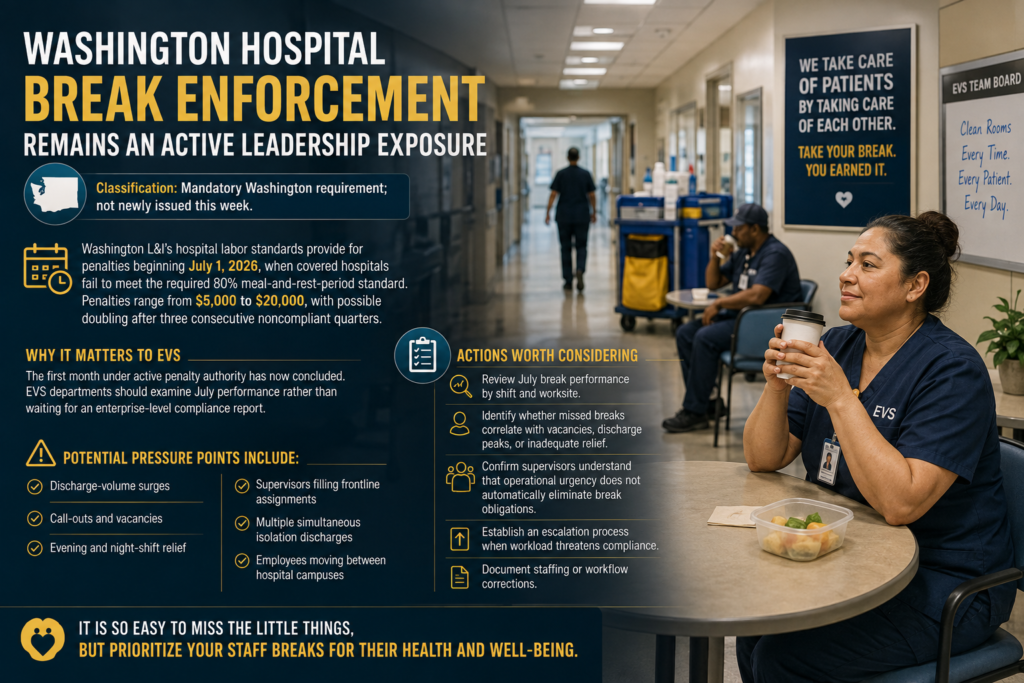
Washington hospital break enforcement remains an active leadership exposureClassification: Mandatory Washington requirement; not newly issued this week. Washington L&I’s hospital…
Most advice about holding people accountable quickly moves to progressive guidance. Set the expectation, document the gap, escalate to discipline. The mechanics are not wrong. They are just second, and when a leader reaches for them first they usually do not work.
They don’t work because accountability is not perceived the same way by everyone. The same conversation, using the same words, can be help for one employee and a threat for another. The difference is whether that employee trusts me, and that needs to happen long before I sit down with potential progressive discipline.
If they do not trust me, accountability is not a correction. It is the first step in getting rid of them, and that is how they will hear it no matter how carefully I say it. Once someone believes I am building a case, nothing useful happens after that. They stop listening for what needs to change and start thinking about their defense.
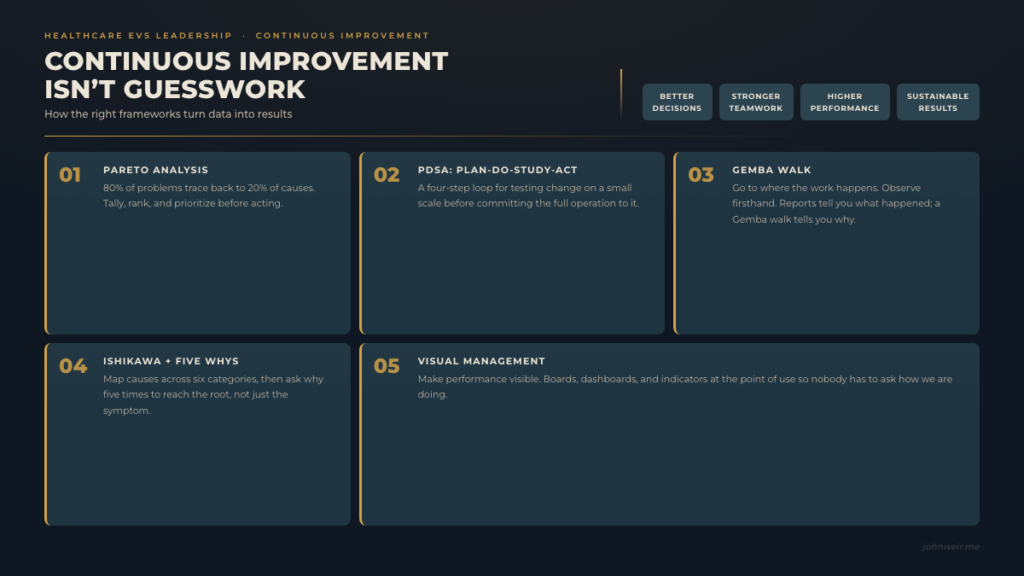
Real continuous improvement is a discipline. It runs on tools, structured frameworks and real data that tell you exactly where to look, what to fix, and how to know whether what you did actually worked. When I replace gut feel with a repeatable method, things shift. Problems get solved faster. Waste gets eliminated at the source instead of patched over. We stop having the same conversations about the same problems.