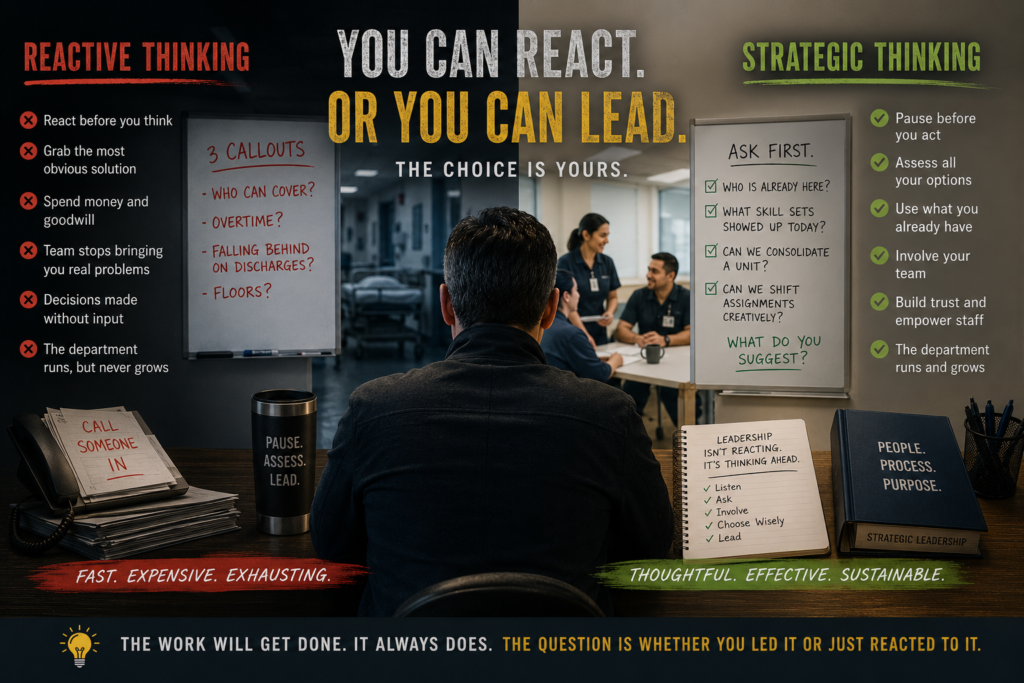
Years ago, as a Supervisor, at a different medical center, I walked in and found nine callouts. Vacations already approved and sick calls reduced half of my team that same day. On paper it looked impossible.

I didn’t try to fix it myself. I pulled the team together, explained exactly what we were facing, and we worked through it as a group. We agreed on what had to get done that shift, the basics that could not wait, and what could safely hold until the next one, based on who was actually going to be there. It worked. We got through the day, and it still amazes me to this day.

Continue reading this article here

It’s not always a staffing shortage. We have a leadership development vacuum. If a paycheck is your only retention strategy, you are losing your best people to whoever offers a slightly bigger one.

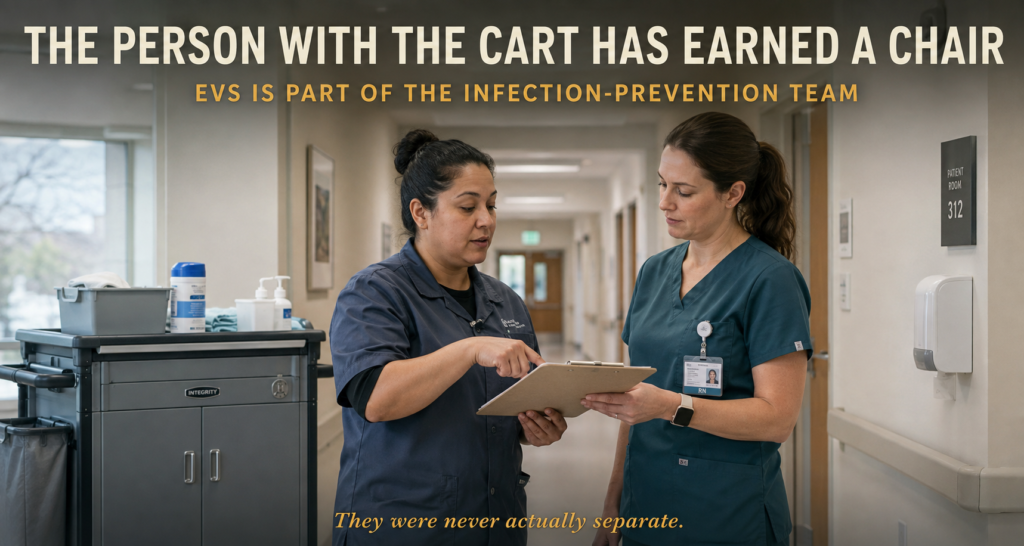
I’ve hired people straight off the floor who had more leadership in them than some managers I’ve worked with. The instinct in a lot of departments is to look outside for that: post the supervisor job, bring in someone with a title already attached. Meanwhile the person who already knows the building, the staff, and the standard is standing right there, wiping down a room.

Continue reading this article here

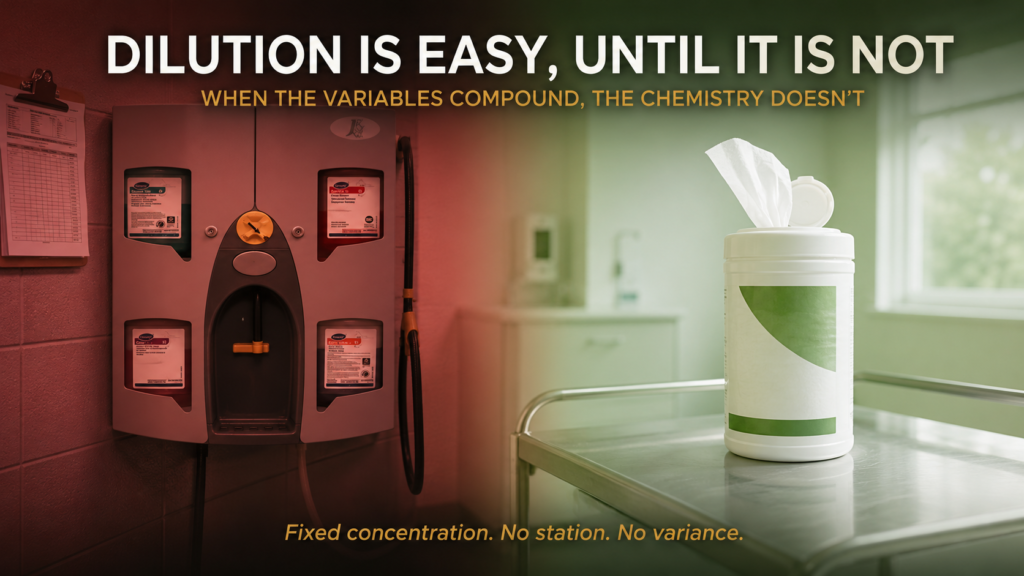
Mixing stations introduce variables that many cleaning programs don’t account for. Water pressure fluctuates throughout the day and across different locations in the building. Dispensers require regular maintenance to stay calibrated. Metering tips clog. One common dilution station manufacturer states water pressure minimum of 30lbs. That explained why I had a dispenser never meet standards of 800ppm, and after I had changed it out.

Continue reading this article here

The leader who works the floor leads the floor. Physical presence is not a monitoring tactic; it is a profound investment in your team. When you are visible, performance naturally rises because people raise their standards when they know their leader is paying attention. Problems surface as “small issues” before they can mutate into patient complaints or safety incidents. Most importantly, presence communicates a level of support that a memo never could.

To bridge the gap between high-level strategy and frontline execution, leaders must master these five lessons from the floor.

Continue reading this article here