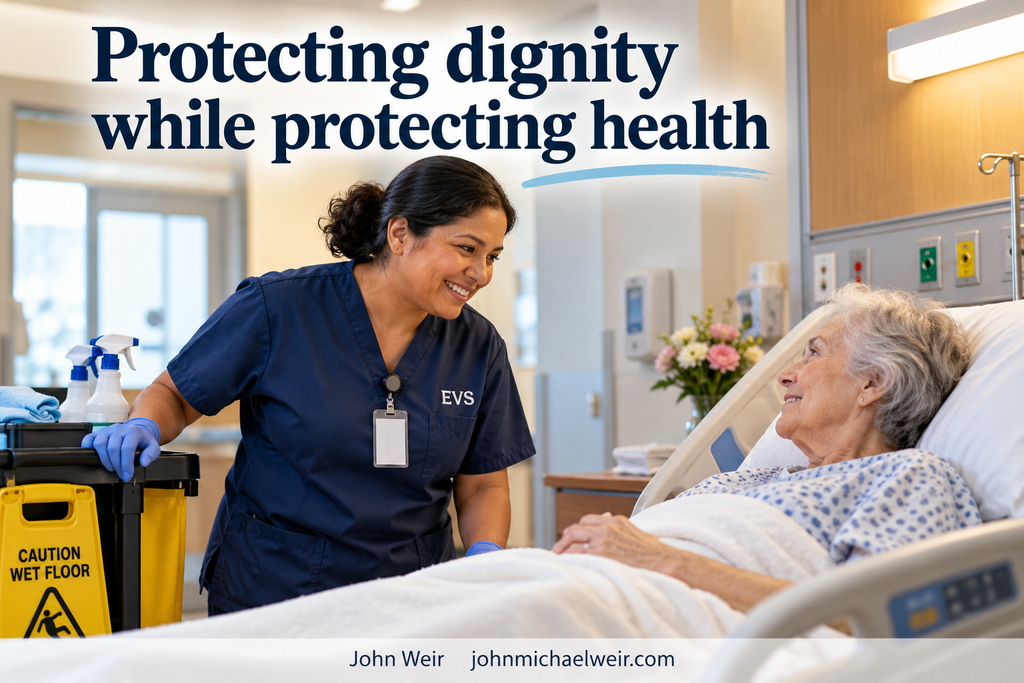
Protecting Dignity While Protecting Health
EVS workers often enter rooms when patients are tired, frightened, confused, or embarrassed. Their conduct influences how safe and respected…
EVS workers often enter rooms when patients are tired, frightened, confused, or embarrassed. Their conduct influences how safe and respected…
The phrase hospital-acquired infection, or HAI, describes an infection that develops during or soon after a person receives care. Some…
When you walk into a hospital, you see the doctors and nurses. You notice the monitors, the uniforms, the bright…
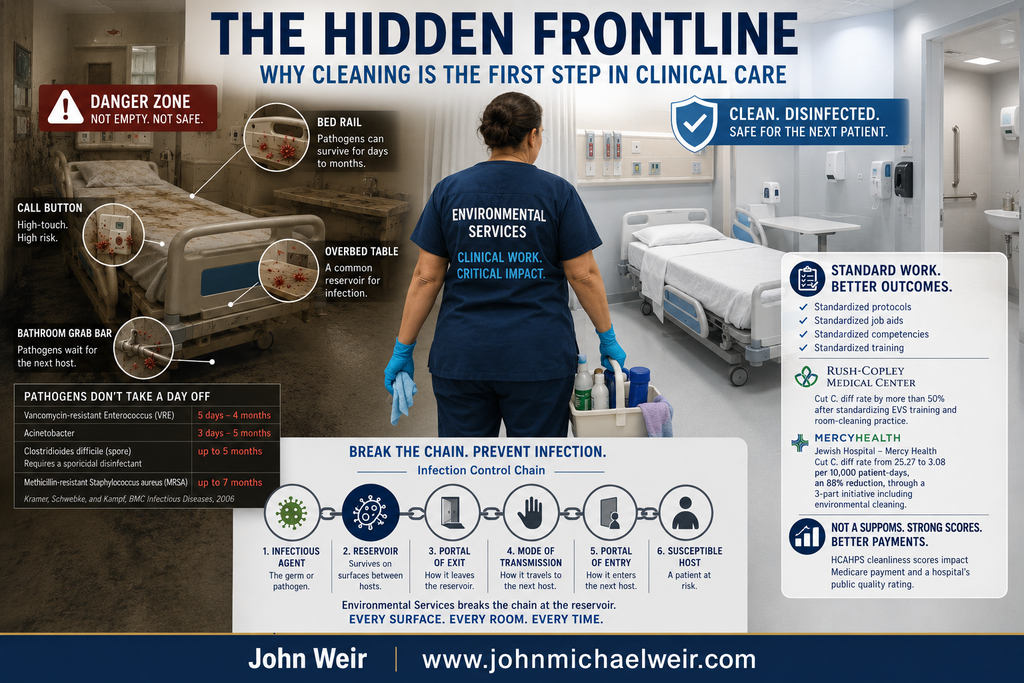
The Hidden Frontline: Why Cleaning is the First Step in Clinical Care Intervention: an action taken to prevent, treat, or…
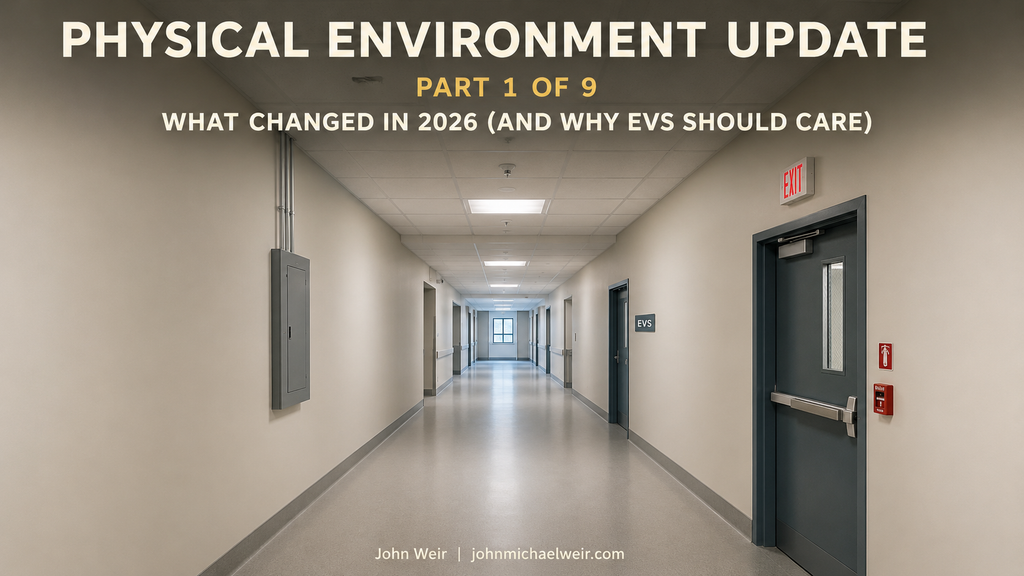
Joint Commission’s Physical Environment Standards, Part 1 of 9: Accreditation 360 as it relates to Environmental Services Joint Commission launched…
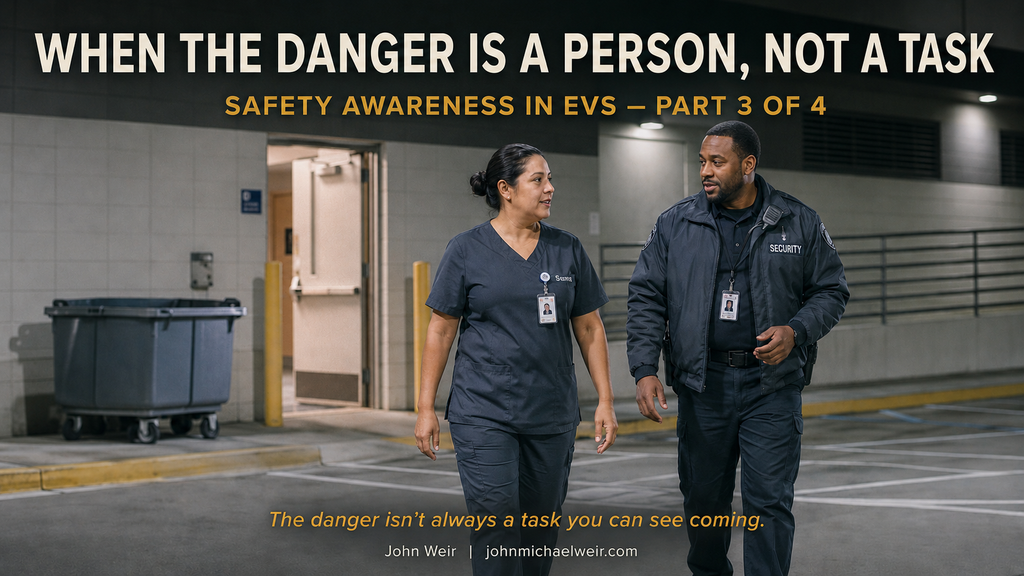
Safety Awareness in EVS, Part 3 of 4: When the Danger Is a Person, Not a Task I went deep…
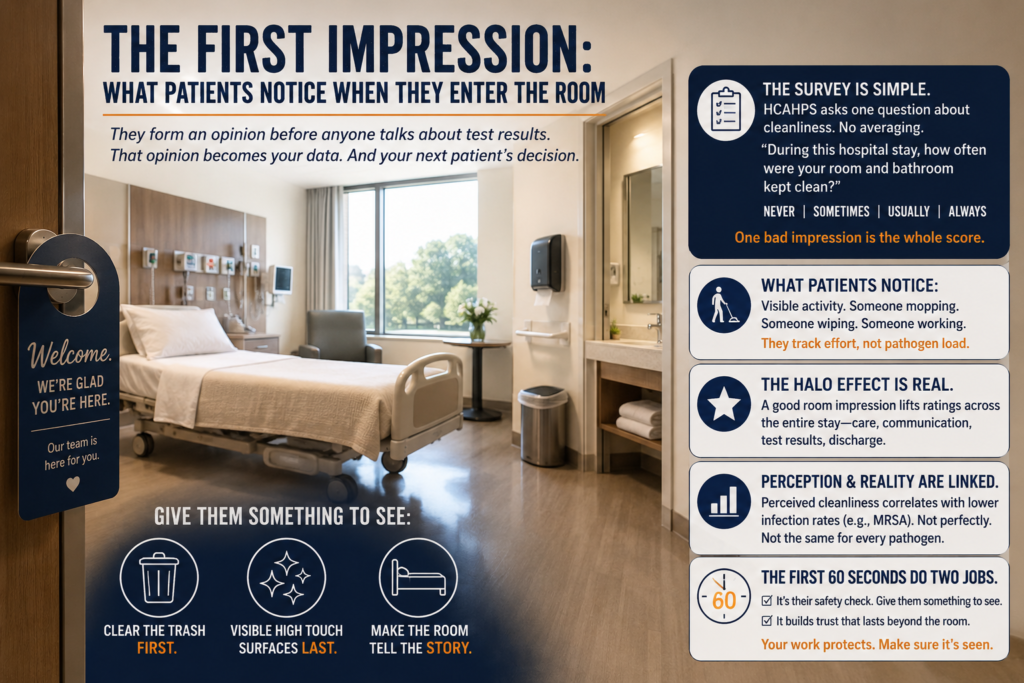
Two days ago I wrote about three ways to check if a room is clean: visual inspection, fluorescent marker, and ATP testing. All three exist because none of them fully agree with each other, and none of them is the one your patient is actually using.
A patient forms an opinion about your hospital before anyone tells them the room passed any of those three tests. They form it by looking around: no dust on the windowsill, no wrapper in the trash, how the floor looks, a bed made square. That opinion becomes data. It shows up on a federal survey, and that is how the next patient hears about your hospital before they walk through the door.
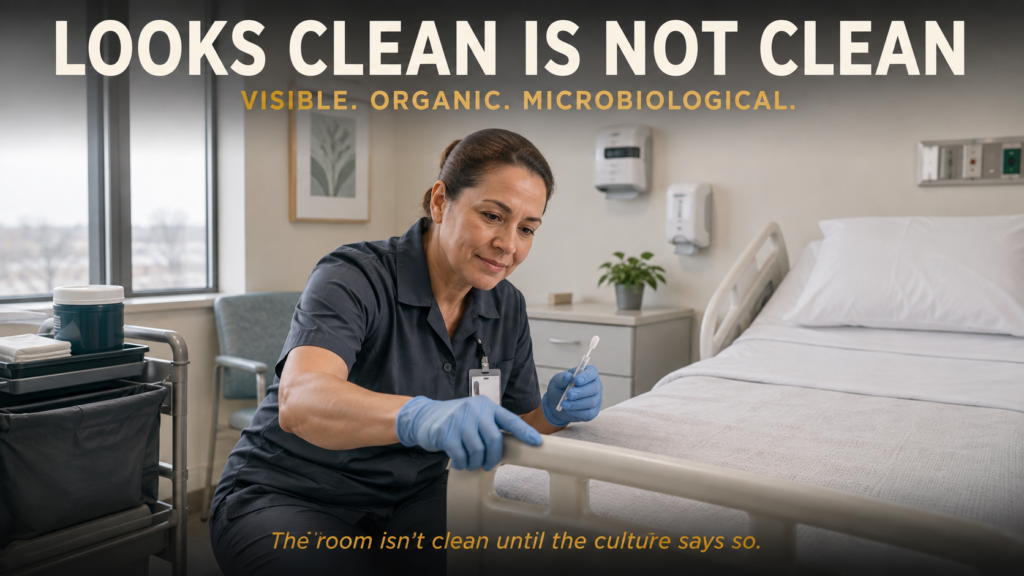
Looks Clean Is Not Clean A room can look spotless and still fail. I wrote yesterday about why a fixed…
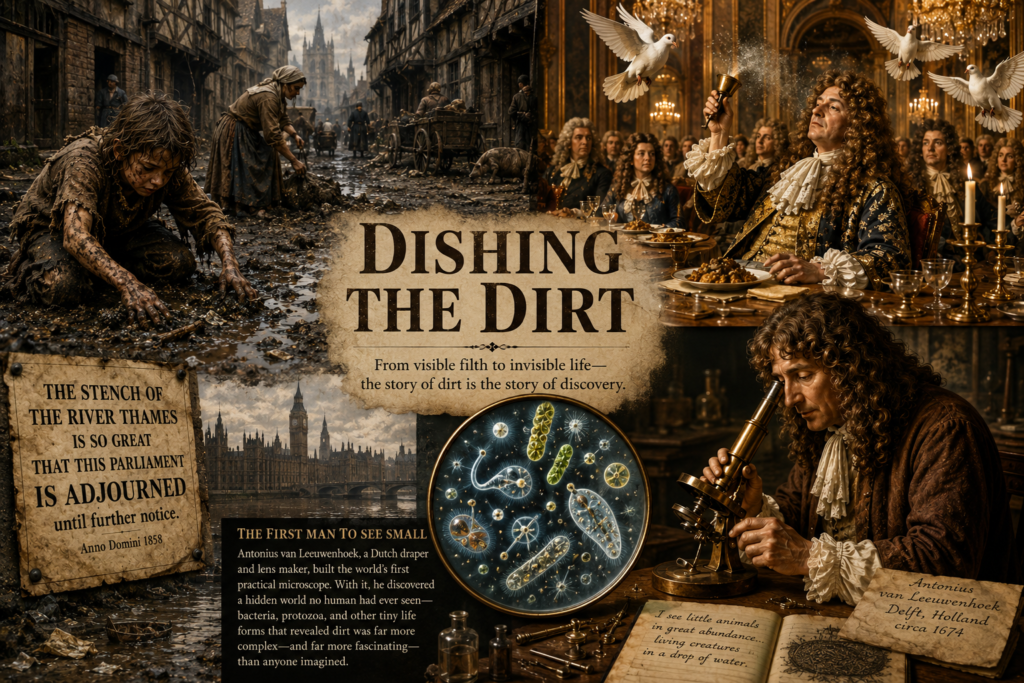
Tom Brokaw didn’t mention it. It wasn’t on Time magazine’s list of the most significant events of the twentieth century. But at least once every millennium, there ought to be a serious discussion about dirt. It has always been around, and as society has progressed, so has the nature of the dirt that surrounds us.
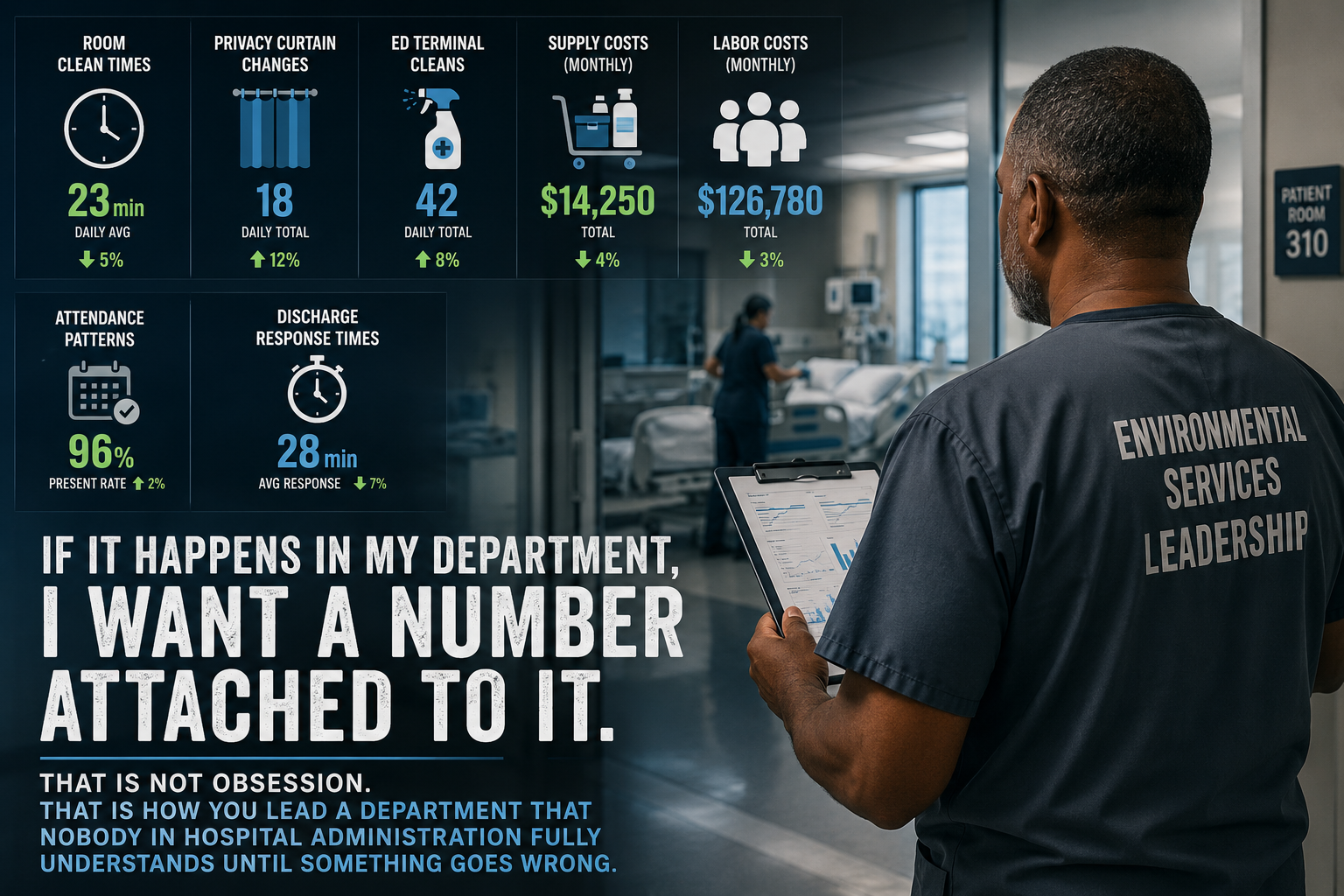
Room clean times. Privacy curtain changes. ED terminal cleans. Supply costs. Labor costs. Attendance patterns. Discharge response times. If it happens in my department, I want a number attached to it. That is not obsession. That is how you lead a department that nobody in hospital administration fully understands until something goes wrong.
In the first post in this series, I laid out four variables that drive smart disinfectant selection: microbial targets, contact time, chemistry, and EPA registration. Each one deserves a deeper look. This post focuses on the first and most foundational: knowing exactly which organisms you are targeting and why that determines which disinfectant belongs in your team’s hands.
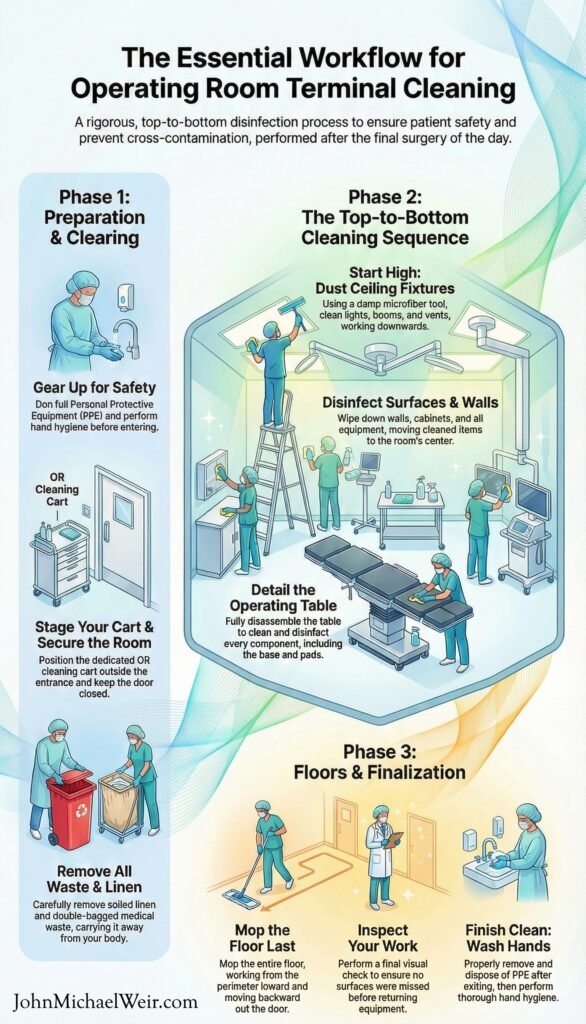
The Essential Workflow for Operating Room Terminal Cleaning