The Data Doesn’t Lie: How Validated Surface Cleaning Directly Drives Down HAIs
When hospital leaders see Hospital-Acquired Infections climb, the response is predictable. Leadership calls a meeting, clinical educators refresh hand hygiene…
When hospital leaders see Hospital-Acquired Infections climb, the response is predictable. Leadership calls a meeting, clinical educators refresh hand hygiene…
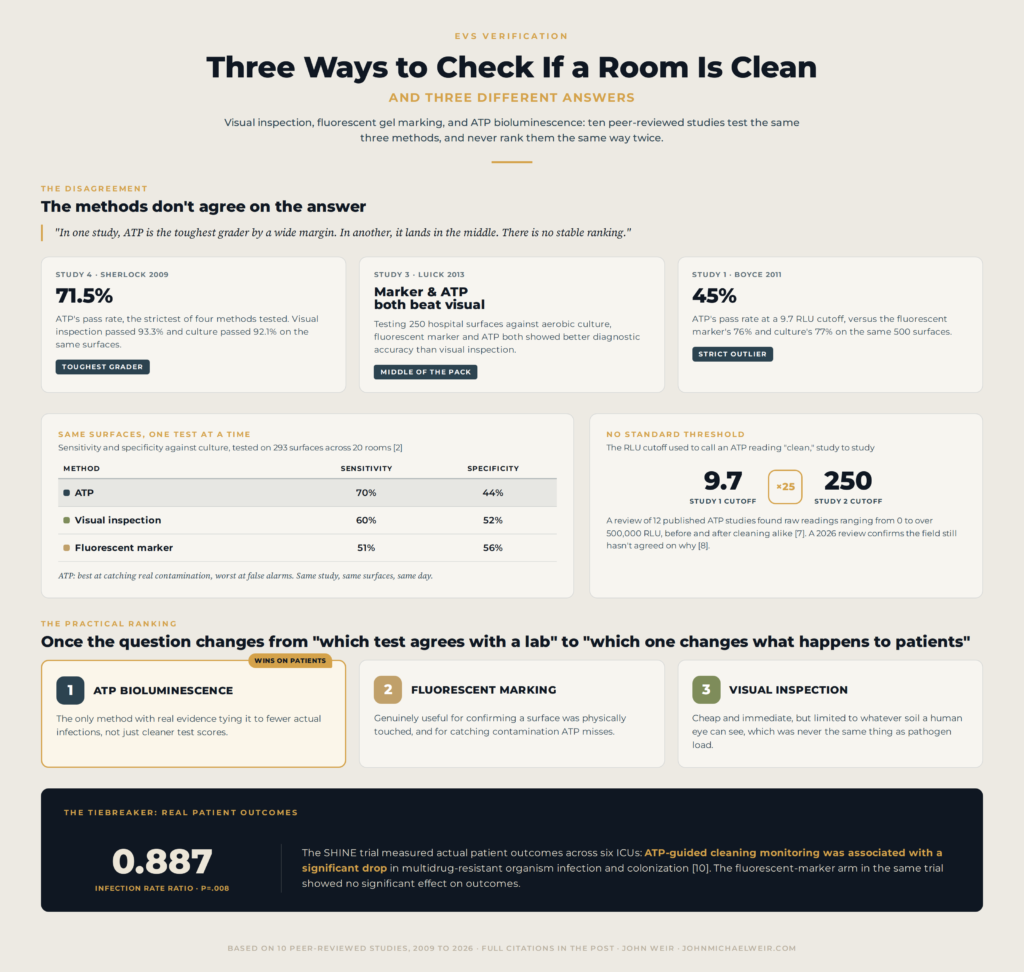
Ask an Environmental Services (EVS) program how it knows a room is clean, and you’ll get one of three answers: someone looked at it, someone marked it, or someone tested it. Only one of those three is actually capable of seeing what matters. The human eye can only ever catch visible soil. It has no way to see pathogen load, because pathogen load isn’t visible. Whatever a person can see with their own eyes was never going to be the whole picture, and the research bears that out again and again.
Stop Asking ATP What Clean Is Most Environmental Services (EVS) departments that adopt an ATP (adenosine triphosphate) luminometer program start…
Most of the data reviewed in healthcare operations meetings is historical. The reports look current because they were just printed, but the outcomes they describe were already determined days, weeks, or months before anyone sat down to discuss them. That is the nature of lagging data, and it is how most organizations are running.
I have sat in those meetings. Everyone is looking at the same numbers, agreeing on the same trends, and calling it management. What it actually is, most of the time, is documentation.
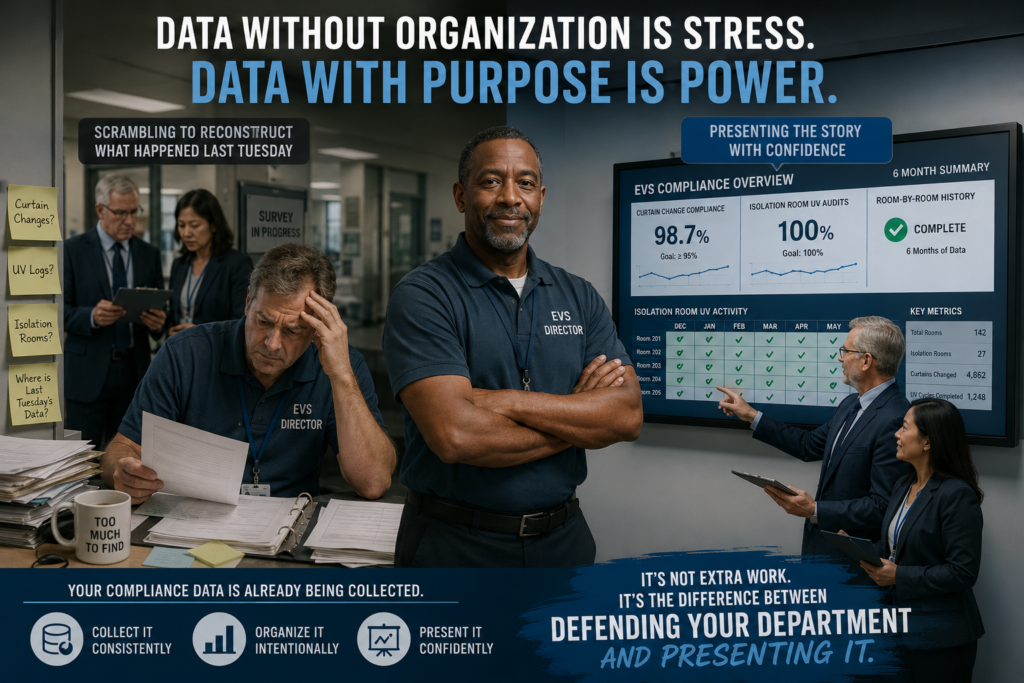
There are two reasons to invest in data, and most organizations have only committed to one of them. The first is protection: making sure the data is accurate, consistent, and trustworthy enough that compliance reports hold up under scrutiny, quality metrics reflect what is actually happening on the floor, and the right information reaches the right people when it matters. That is the defensive side of data, and it keeps you out of trouble.
The second reason is improvement. Once you have data you can trust, what you do with it matters just as much. Spotting trends before they become problems, allocating resources based on evidence rather than tradition, adjusting your approach when the numbers tell you something is not working: that is the offensive side, and it is where most departments fall short.
The financial pressure in healthcare right now is not a temporary condition. Margins are thinner than they have been in years, the scrutiny on every cost center is sharper, and the departments that cannot tell their story in the language of finance are finding themselves on the wrong side of the budget conversation.
The departments that hold their ground are not always the ones with the best outcomes. They are the ones with the best data, and there is a real difference between those two things.
When you track room clean times by employee over several months, patterns emerge. Some staff are significantly faster on discharge cleans. Others are more thorough on isolation terminal cleans. Some perform better on busy units. Others thrive in the quieter early morning hours.
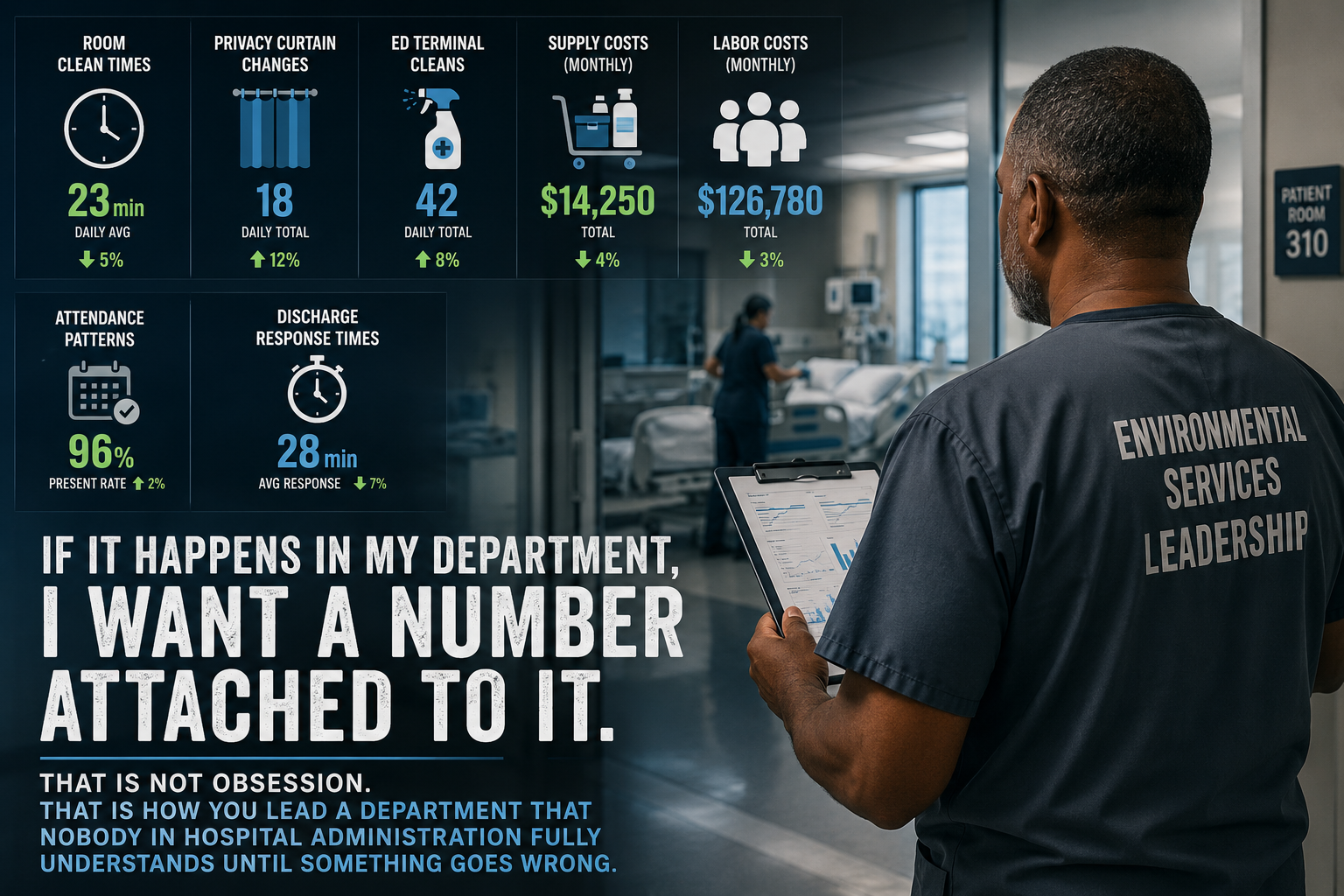
Room clean times. Privacy curtain changes. ED terminal cleans. Supply costs. Labor costs. Attendance patterns. Discharge response times. If it happens in my department, I want a number attached to it. That is not obsession. That is how you lead a department that nobody in hospital administration fully understands until something goes wrong.