Education – Training – Safety
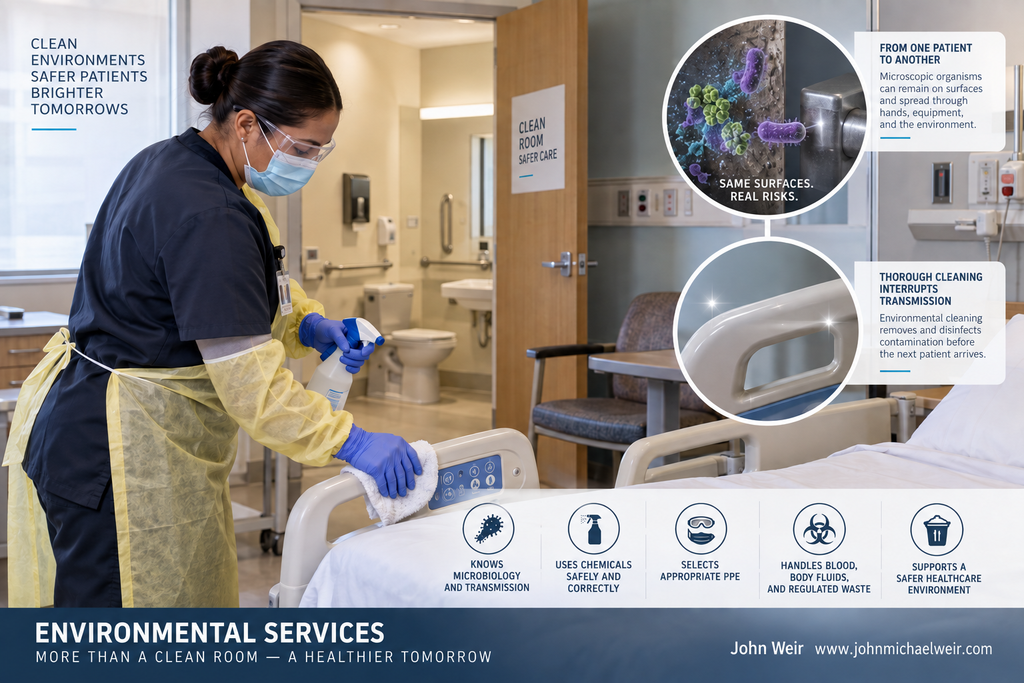
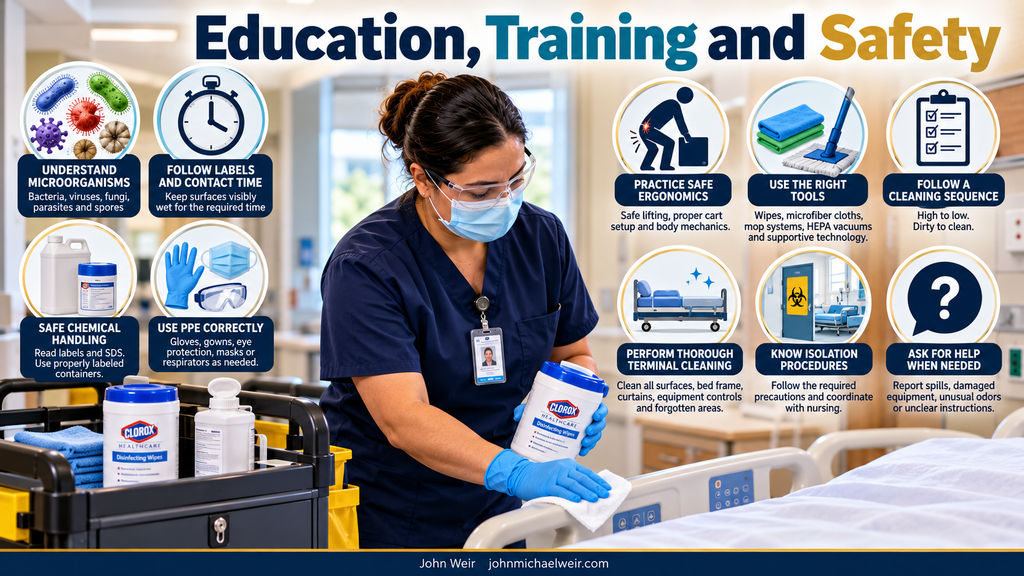
A strong EVS training program starts with the basics of microorganisms. Technicians learn that bacteria, viruses, fungi, and parasites behave…
A strong EVS training program starts with the basics of microorganisms. Technicians learn that bacteria, viruses, fungi, and parasites behave…
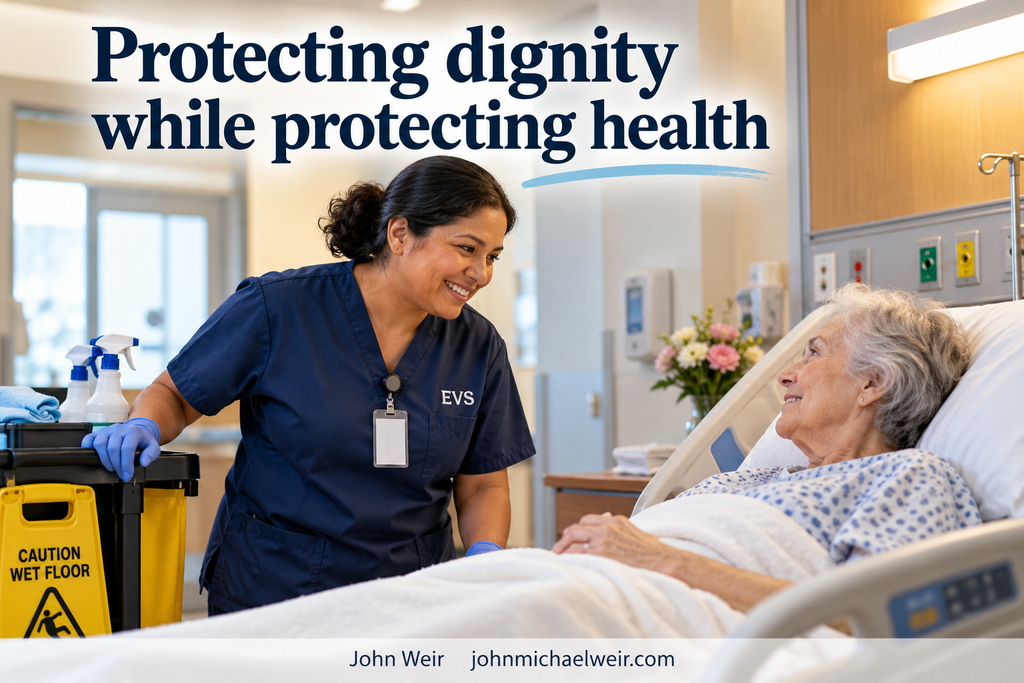
EVS workers often enter rooms when patients are tired, frightened, confused, or embarrassed. Their conduct influences how safe and respected…
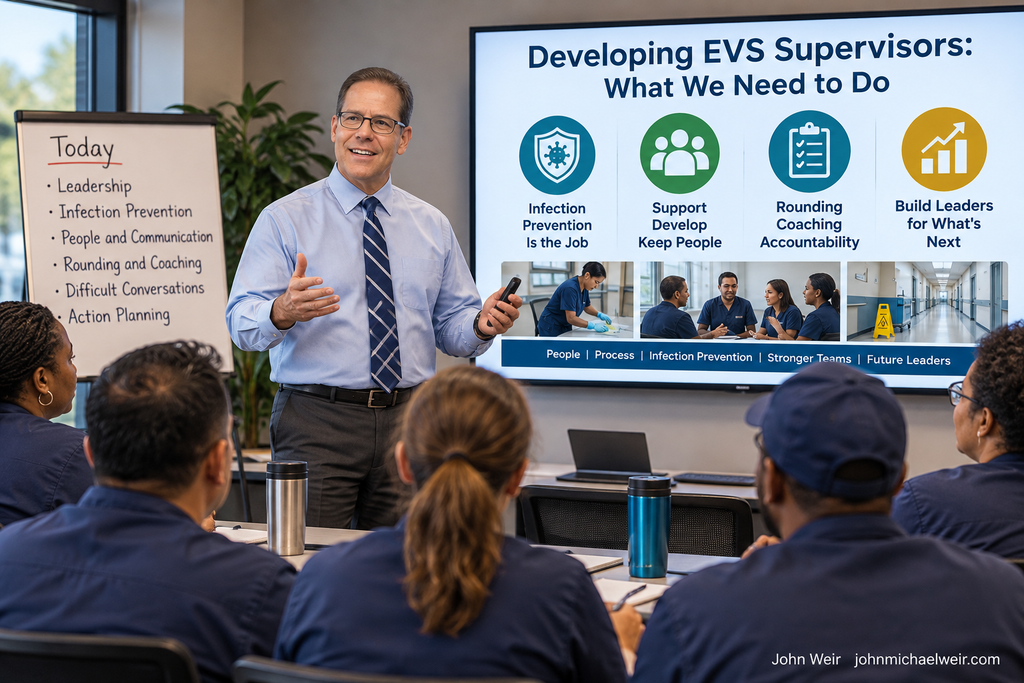
Our supervisors decide whether a room actually gets cleaned to standard, whether a short-staffed shift holds together, and whether a…
Cleaning in an adult behavioral health unit requires the same disciplined infection prevention practices used throughout the hospital, but it…
The phrase hospital-acquired infection, or HAI, describes an infection that develops during or soon after a person receives care. Some…
When you walk into a hospital, you see the doctors and nurses. You notice the monitors, the uniforms, the bright…
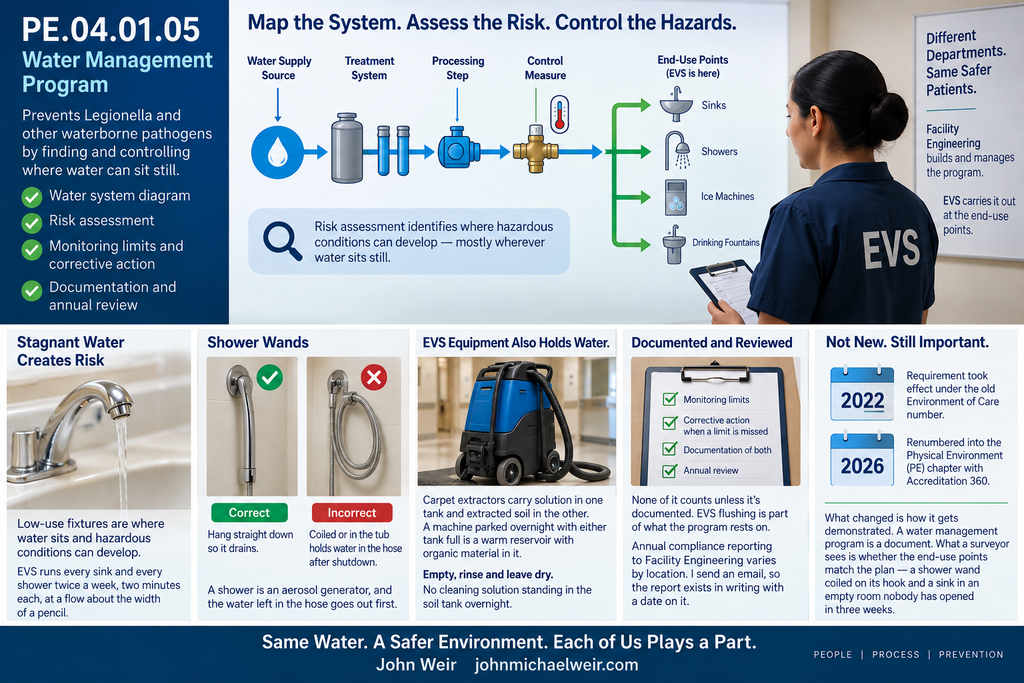
PE.04.01.05 requires organizations to have a water management program that addresses Legionella and other waterborne pathogens, and it carries four…
Safety Awareness in EVS, Part 4 of 4: The Systems Behind the Incident Report I went deep into safety research…
OSHA’s Safe & Sound Week ran August 10 to 16. It’s a voluntary campaign built on three things: management leadership, worker participation, and finding and fixing hazards before they find you. Participation is voluntary. The hazards it’s about are not.
Every EVS department has a version of the same list, and most of it has gone quiet. Overfilled trash and linen bags. Sharps disposed of improperly by clinical staff, not EVS. Cart wheels that have been bad for months. Chemical splash risk. Wet floors. Repetitive lifting. Workplace violence. None of these are secrets. They’re conditions a team sees so often that seeing them stops counting as noticing them.
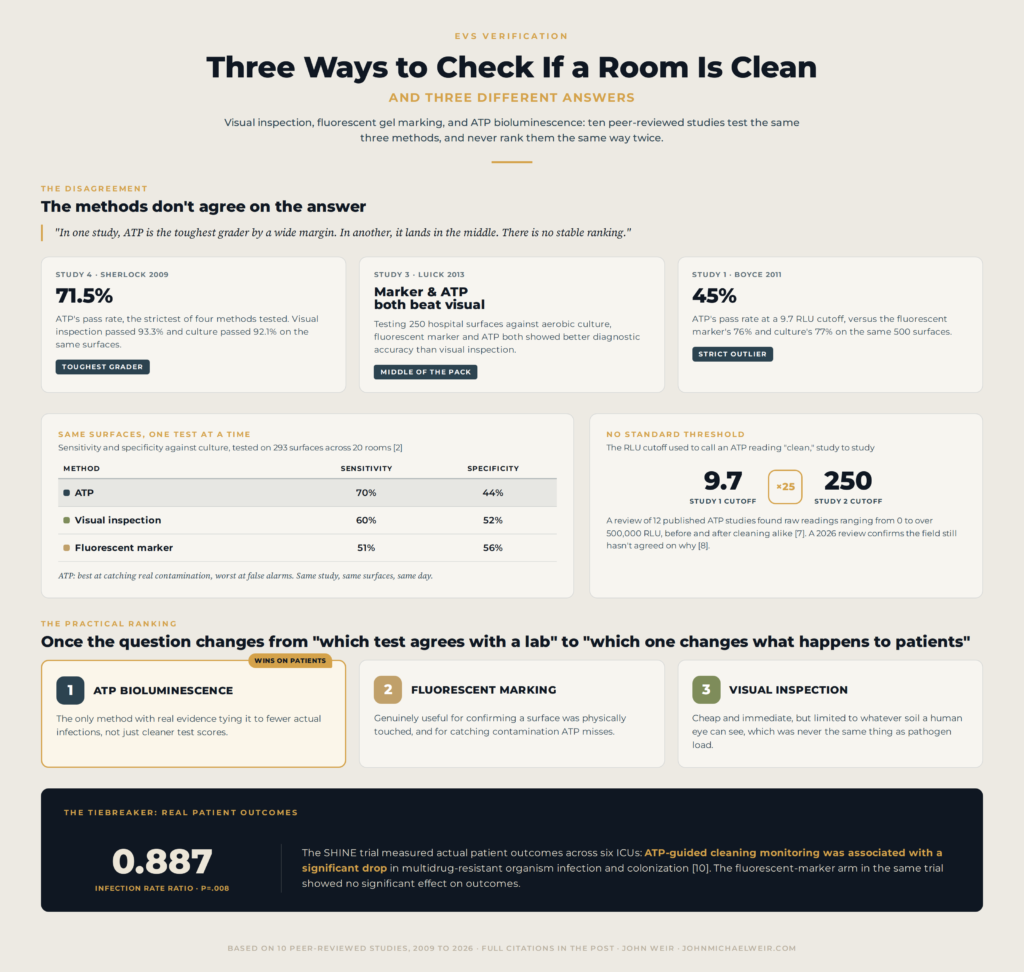
Two days ago I wrote about three ways to check if a room is clean: visual inspection, fluorescent marker, and ATP testing. All three exist because none of them fully agree with each other, and none of them is the one your patient is actually using.
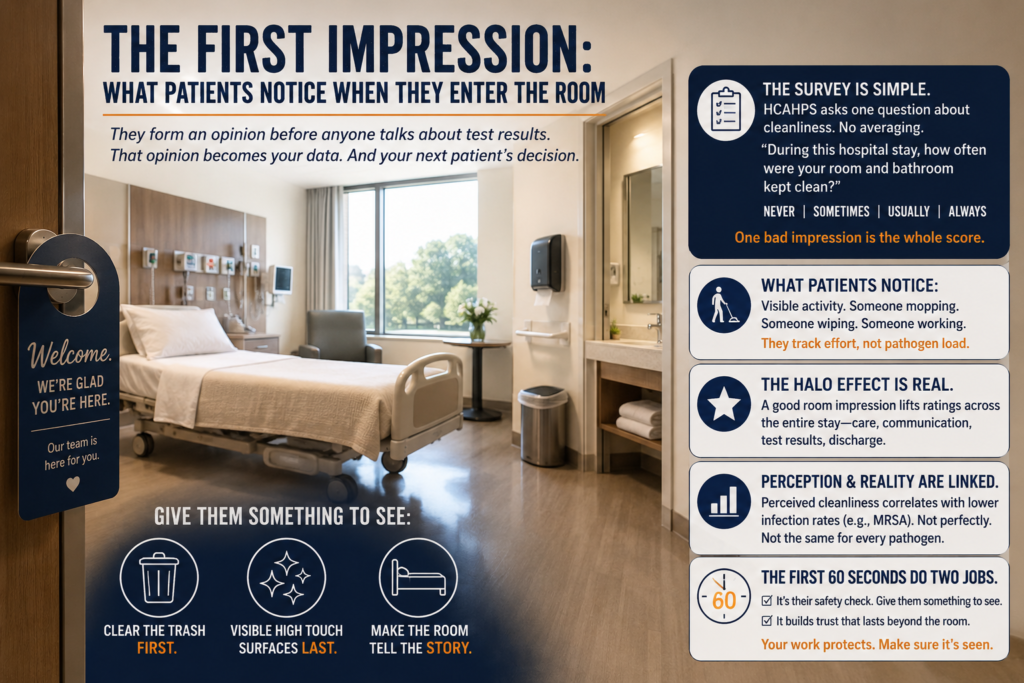
A patient forms an opinion about your hospital before anyone tells them the room passed any of those three tests. They form it by looking around: no dust on the windowsill, no wrapper in the trash, how the floor looks, a bed made square. That opinion becomes data. It shows up on a federal survey, and that is how the next patient hears about your hospital before they walk through the door.
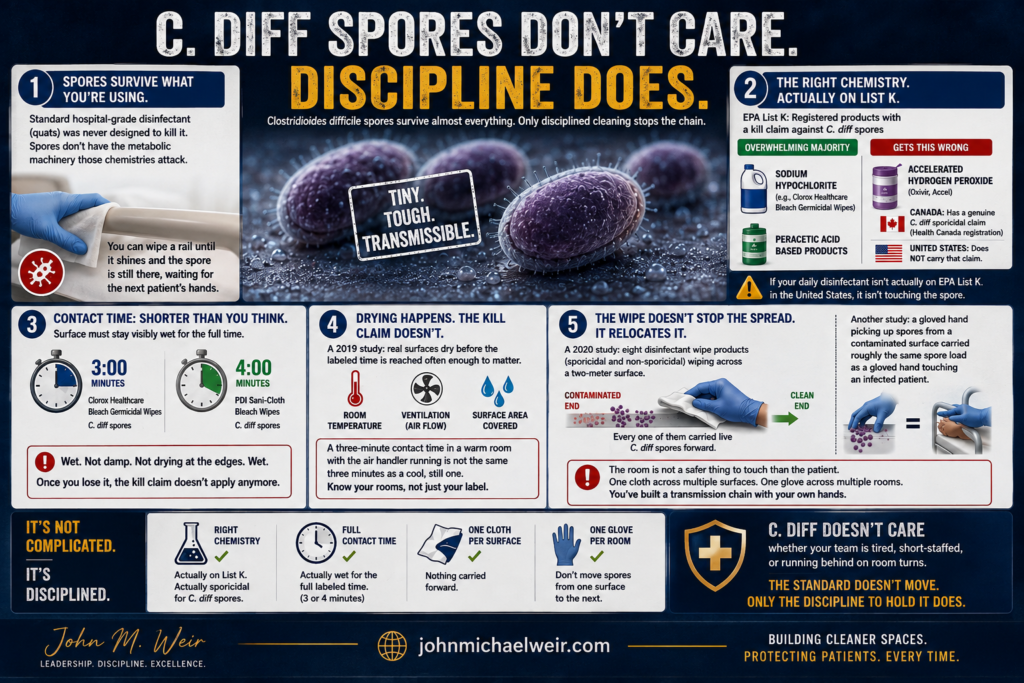
Clostridioides difficile forms a spore that survives almost everything you’re using to disinfect a room. Standard hospital-grade disinfectant, the quaternary ammonium product most departments use every day, was never designed to kill it. Spores don’t have the metabolic machinery those chemistries attack. You can wipe a rail until it shines and the spore is still there, waiting for the next patient’s hands.
Sodium hypochlorite (Clorox Healthcare Bleach Germicidal Wipes) and peracetic acid-based products make up the overwhelming majority of EPA List K, the actual registered list of products with a kill claim against C. diff spores. Here’s the detail some training materials get wrong: the accelerated hydrogen peroxide products a lot of departments already stock for daily disinfection, the Oxivir and Accel lines, do carry a genuine C. diff sporicidal claim in Canada under Health Canada registration. They do not carry that claim here. If your daily disinfectant isn’t actually on EPA List K in the United States, it isn’t touching the spore, no matter how hospital-grade the label says it is.
Ask an Environmental Services (EVS) program how it knows a room is clean, and you’ll get one of three answers: someone looked at it, someone marked it, or someone tested it. Only one of those three is actually capable of seeing what matters. The human eye can only ever catch visible soil. It has no way to see pathogen load, because pathogen load isn’t visible. Whatever a person can see with their own eyes was never going to be the whole picture, and the research bears that out again and again.