
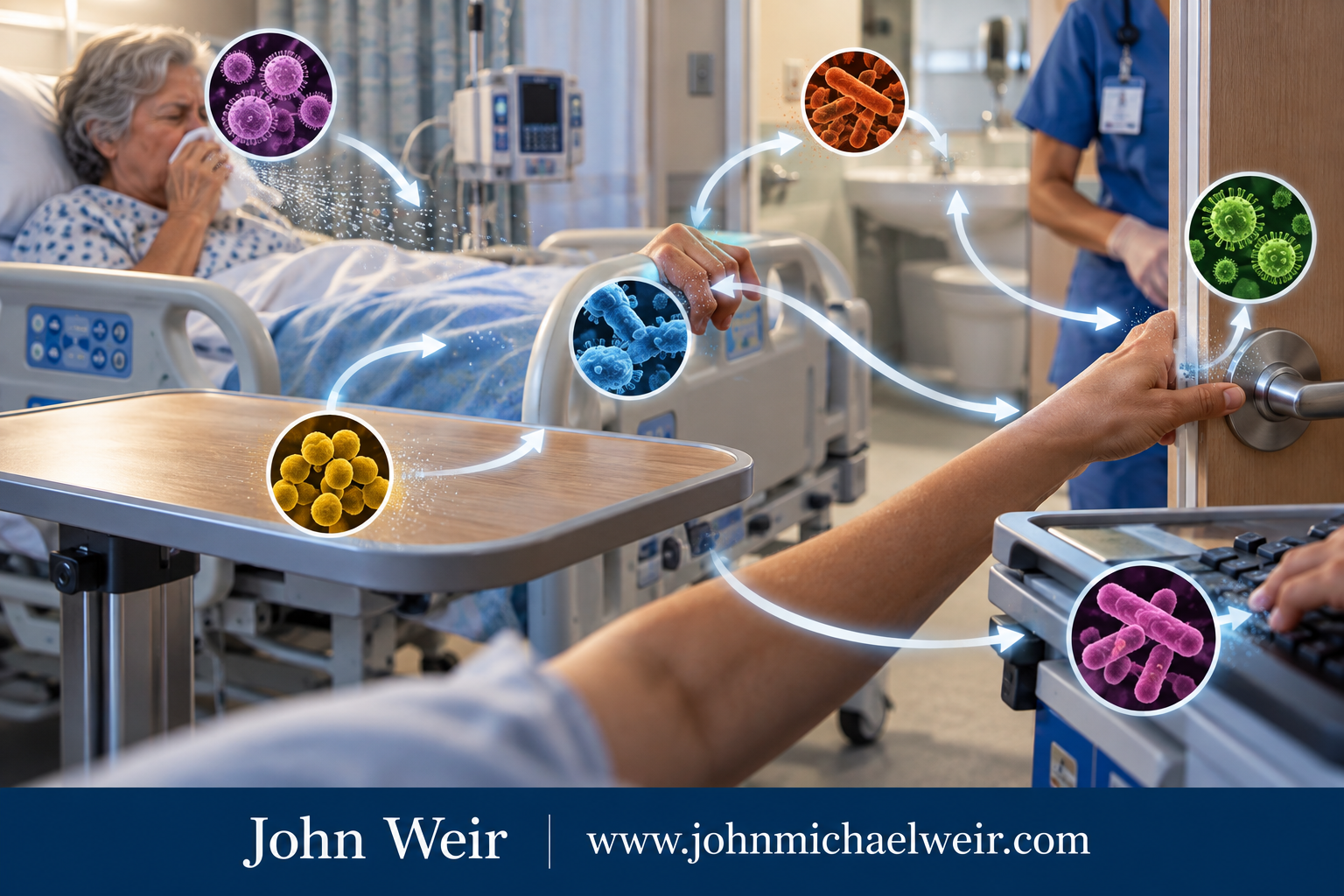
Infection control becomes easier to understand once you stop picturing germs as mysterious enemies and start tracking movement. Microorganisms travel through routes: from a person to a hand, from a hand to a bed rail, from a bed rail to equipment, and from equipment to another person. Some travel through droplets or airborne particles. Others move through contaminated food, water, medication, or medical devices. Environmental Services teams focus on one part of this network: the built environment and the objects in it.
A useful model is the chain of infection: an infectious agent, a reservoir where it lives, a way to leave that reservoir, a mode of transmission, a way to enter another person, and a susceptible host. Infection prevention works by breaking one or more of those links. Hand hygiene interrupts transmission. Vaccination reduces susceptibility. Proper treatment reduces the infectious agent. Cleaning and disinfection remove or destroy organisms in the environment. No single measure does everything, but each one weakens the chain.
In a hospital, reservoirs include people, water systems, food, medical equipment, linens, waste, and surfaces. A patient with a respiratory illness releases organisms by coughing, speaking, or breathing. A patient with a gastrointestinal infection can contaminate a bathroom or nearby objects. A wound can release blood or other body fluids. These materials reach surfaces even when no one sees it happen.
Microorganisms vary greatly. Some are fragile and die quickly outside the body. Others tolerate drying and stay viable on surfaces for extended periods. Certain organisms form spores or protective structures that make them harder to remove. Some viruses need only a small amount of exposure to cause illness; others need a larger dose or a specific route into the body. This is one reason hospitals use targeted procedures instead of treating every room the same way.
Surface contamination follows human behavior. People touch the objects closest to them, especially the ones that help them communicate, move, eat, or control their surroundings. Bed rails, tray tables, privacy curtains, phones, call buttons, door handles, bathroom fixtures, and mobility aids get repeated contact. Staff touch keyboards, carts, medication areas, monitors, and shared equipment just as often. The more frequently an object is touched, the more its cleaning schedule matters.
Not every contaminated surface causes an infection. For that to happen, several conditions have to line up: a viable organism present in enough quantity, a susceptible person, and a route in, through the mouth, nose, eyes, broken skin, a wound, or a medical device. The person also has to lack enough defenses to stop it. That complexity does not make cleaning unimportant. It explains why prevention relies on several overlapping protections instead of one.
EVS workers are trained to think about risk, not appearance. A shiny floor gets less attention than a dull-looking call button, if that call button is touched constantly. A bathroom needs special procedures after a patient with a contagious illness leaves. A room used for a routine visit does not require the same response as a procedure area where blood or body fluid was present. The cleaning plan follows the situation.
#EVS #HealthCare #InfectionControl #InfectionPrevention #PatientSafety #infectionprevention #cleaning #PatientCare #germseason
