
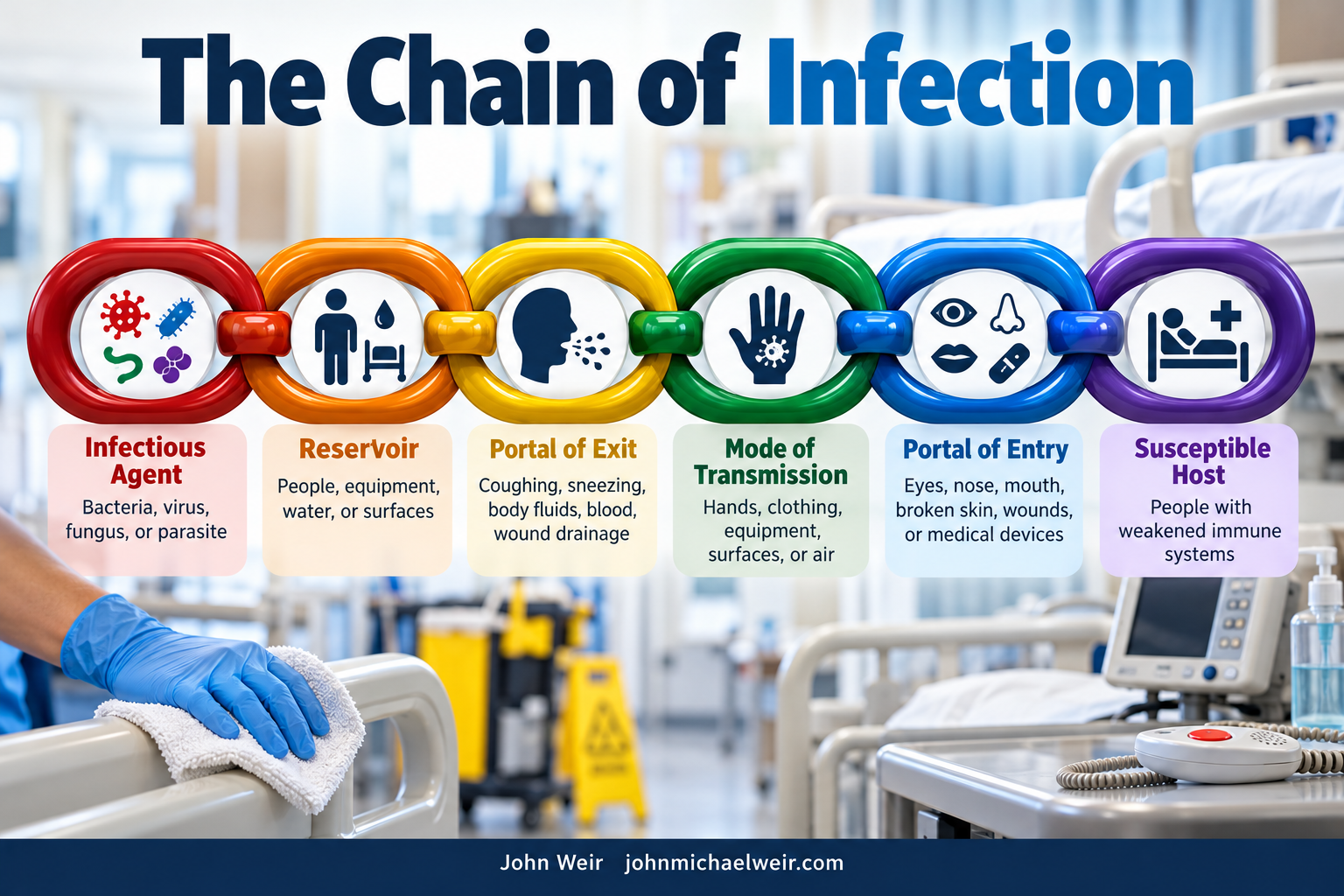
The Chain of Infection
Infections do not appear out of nowhere. They move through connected steps, and understanding these steps helps hospital teams stop them before they reach another patient.
Six links create a path for infection
The chain of infection includes six connected links: an infectious agent, a reservoir, a portal of exit, a mode of transmission, a portal of entry, and a susceptible host. An infectious agent is a bacterium, virus, fungus, or parasite. It can live in a person, on equipment, in water, or on a surface. The agent leaves through coughing, sneezing, wound drainage, blood, or other body fluids.
It may then travel on hands, clothing, medical equipment, or frequently touched surfaces. Infection begins when it enters another person through the eyes, nose, mouth, broken skin, a wound, or a medical device. This is why we teach our staff to never touch their eyes, nose our mouth. Patients with weakened immune systems are especially vulnerable. Understanding these links helps our teams recognize where contamination may occur and which cleaning actions interrupt its movement.
Every broken link reduces risk
No single safety measure can prevent every infection, because transmission can happen in several ways. Hand hygiene removes organisms before they can travel to another person or surface. Vaccination strengthens protection for susceptible individuals, while masks, isolation precautions, and ventilation can limit respiratory spread.
Environmental Services teams target another important link: contaminated surroundings. Careful cleaning removes soil, and an approved disinfectant destroys many remaining microorganisms when used correctly. EVS work does not replace clinical care or hand hygiene; it supports them. Each cleaned bed rail, bathroom fixture, call button, and shared device represents one fewer opportunity for harmful organisms to move through the hospital.
High-Risk Surfaces, Shared Equipment, and Teamwork
Hospitals are busy networks of people, surfaces, equipment, and air. The objects receiving the most contact often deserve the closest attention, even when they do not look dirty. Effective infection control depends on trained EVS workers, clinical staff, patients, and families understanding how their actions affect this network.
High-touch surfaces create repeated opportunities for spread
Bed rails, tray tables, call buttons, door handles, privacy curtains, phones, bathroom fixtures, keyboards, and mobility aids are touched dozens or hundreds of times each day. We call these high touch surfaces. Every contact creates an opportunity for microorganisms to move from hands to surfaces or from surfaces back to hands.
That is why a surface does not need to look dirty to deserve attention. A polished call button may be more important than a visibly dull floor if patients, visitors, and staff touch it constantly. Effective cleaning schedules consider contact frequency, patient vulnerability, room purpose, and the type of care being provided. EVS workers use this risk-based approach to prioritize surfaces that interrupt transmission and support safer patient recovery.
Body-fluid events require a careful response
Spills, leaks, vomit, blood, coughing events, and wound drainage create larger areas of contamination than routine touch alone. These events require more than a quick wipe. The technician must assess what happened, identify the possible hazard, select appropriate personal protective equipment, and use an approved product according to facility instructions.
Technique matters because rushing spreads contaminated material to nearby surfaces, equipment, or clothing. Workers should not be rushed and given time to properly clean, remove visible soil before disinfection, and dispose of waste correctly. Additional precautions may apply after a patient with a contagious gastrointestinal or respiratory illness leaves a room.
Shared equipment needs clear ownership
Wheelchairs, blood pressure cuffs, thermometers, ultrasound devices, patient-lift accessories, monitors, keyboards, and transport equipment often move between rooms. Each item becomes a vehicle for microorganisms if it is used with one patient and then transferred to another without proper cleaning.
EVS staff and clinical teams may share responsibility, but shared responsibility must never mean unclear responsibility. Strong programs identify who cleans each item, which product is approved, how long the surface must remain wet, how often cleaning occurs, and what to do when visible soil is present. Staff should also know when an item cannot be safely disinfected or needs specialized handling. Clear ownership closes gaps, reduces delays, and helps ensure that equipment is ready for the next patient.
Each of these areas are important for patient safety, staff safety and a properly cleaned and disinfected hospital or clinic. Breaking the chain of infection at the reservoir is our job and we take it seriously. Giving the EVS technician time to complete their work properly is everyone’s job.
#patientsafety #environmentalservices #evs #healthcare
