Education – Training – Safety
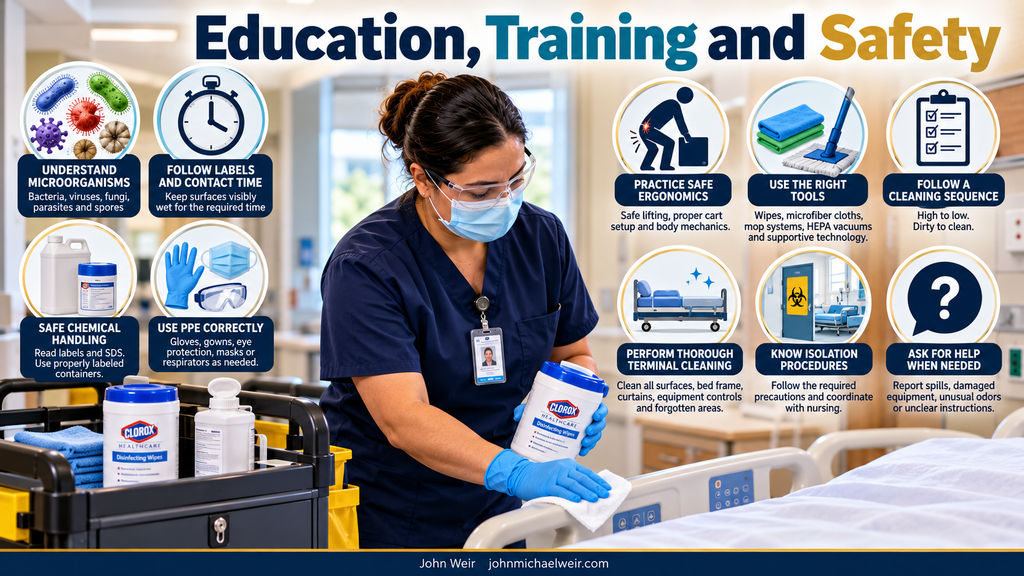
A strong EVS training program starts with the basics of microorganisms. Technicians learn that bacteria, viruses, fungi, and parasites behave…
A strong EVS training program starts with the basics of microorganisms. Technicians learn that bacteria, viruses, fungi, and parasites behave…
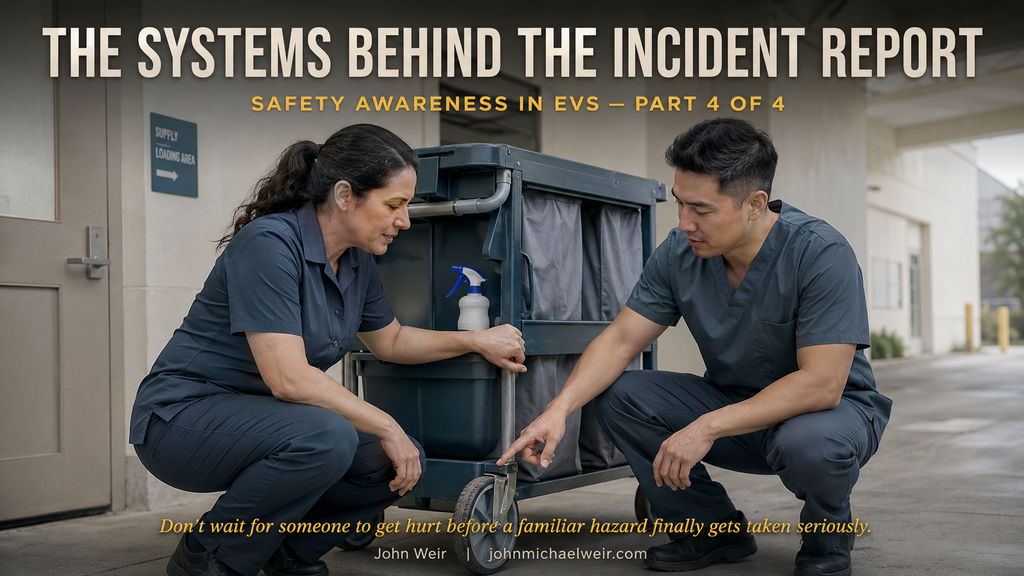
Safety Awareness in EVS, Part 4 of 4: The Systems Behind the Incident Report I went deep into safety research…
It’s not always a staffing shortage. We have a leadership development vacuum. If a paycheck is your only retention strategy, you are losing your best people to whoever offers a slightly bigger one.
I’ve hired people straight off the floor who had more leadership in them than some managers I’ve worked with. The instinct in a lot of departments is to look outside for that: post the supervisor job, bring in someone with a title already attached. Meanwhile the person who already knows the building, the staff, and the standard is standing right there, wiping down a room.
I wrote this book because I have spent nearly three decades leading teams in environmental services that do not allow for hesitation. The Stoics understood what hospital corridors and operating pressures teach you every day: character is not what you claim. It is what you do when things are hard.
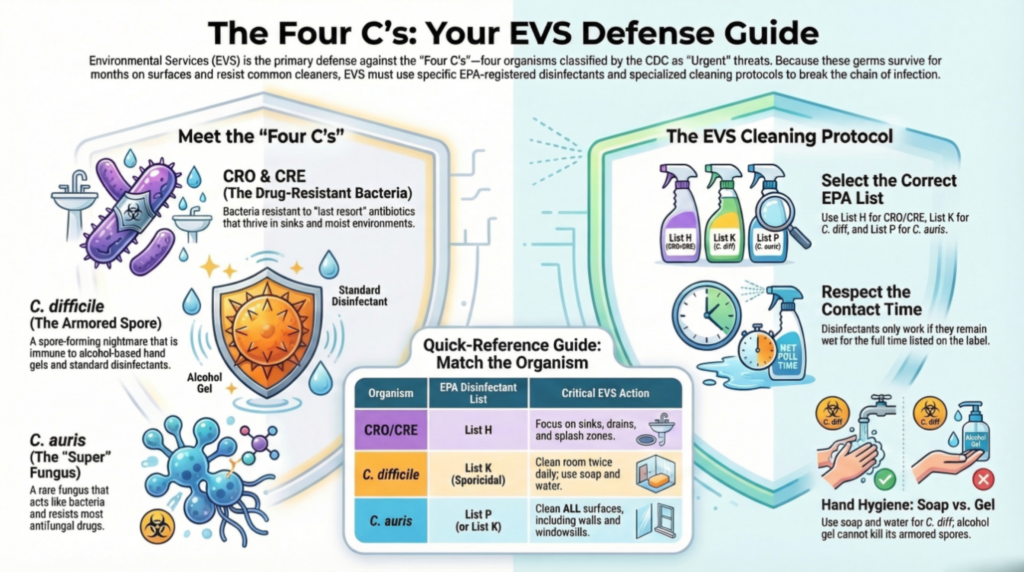
I have developed a full staff training on the Four C’s that we will be rolling out next week. These are four of the most dangerous drug-resistant organisms in healthcare settings, and I want to share some of the key points from that training here.
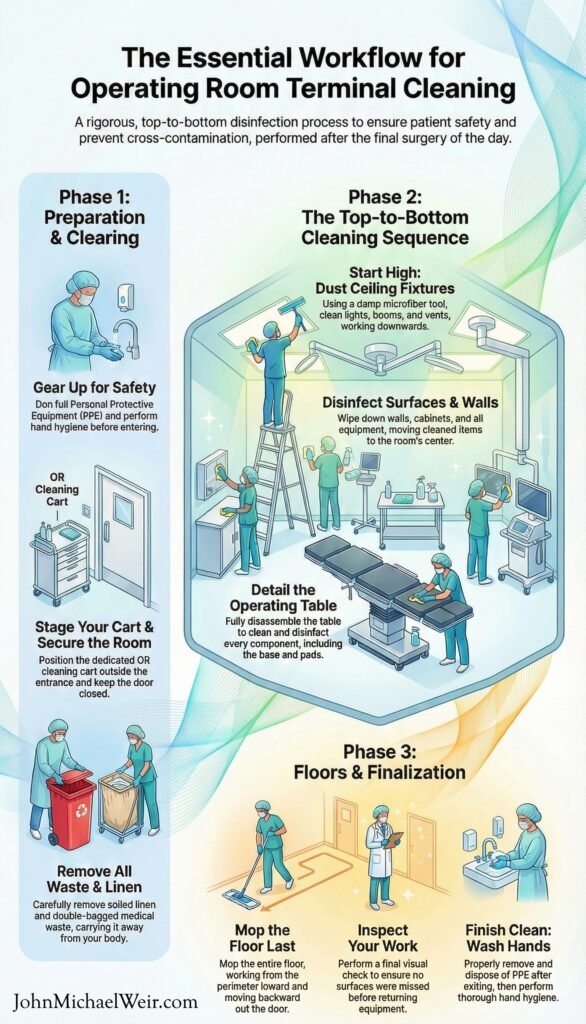
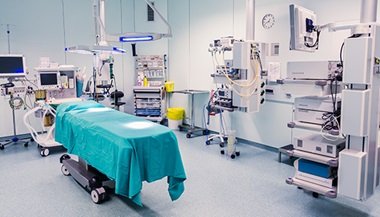
When you think of the word “clean,” you might picture a sparkling kitchen counter. But in a hospital operating room, “clean” is a term of microscopic precision, where the stakes are infinitely higher. For the highly trained Environmental Services (EVS) technicians responsible for this environment, cleaning is not about tidiness—it is a critical, non-negotiable component of patient safety.
The Essential Workflow for Operating Room Terminal Cleaning
Analogy for Understanding: Think of Candida auris like a “microscopic ghost.” Long after a patient has been discharged, the fungus remains haunting the surfaces of the room. Using standard cleaners is like dusting the furniture while the ghost remains; only periodic interventions like this will truly clear the space for the next patient.
Microbes are everywhere—on your skin, in the air you breathe, and in the food you eat. They form a vast, invisible universe that shapes our lives in profound ways. While we often think of “germs” as simple enemies to be defeated, their stories are far more complex, surprising, and fascinating than we can imagine. From their discovery and evolution to their impact on our health, the interplay between microbes and humanity is a journey through the quirks and mysteries of life at the microscopic level.
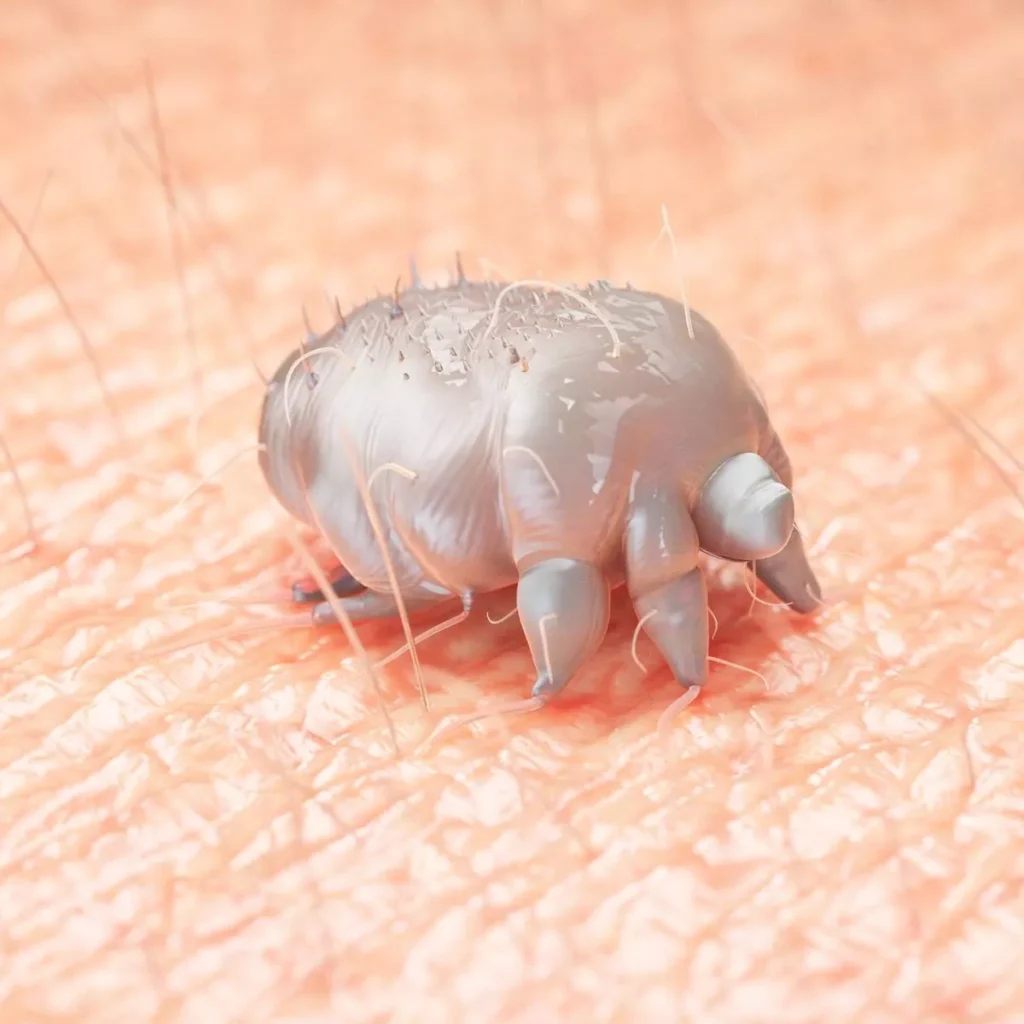
Scabies is a highly contagious skin condition caused by the human itch mite (Sarcoptes scabiei var. hominis). These microscopic mites burrow into the skin to live, lay eggs, and trigger an allergic reaction, leading to intense itching and a rash.
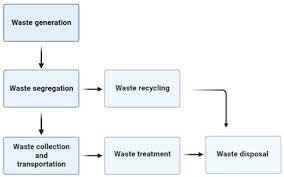
Hospitals generate a diverse range of waste types that require specific handling and disposal methods to ensure compliance with regulations, protect public health, and minimize environmental impact.
Here’s a comprehensive overview of the various waste types generated by healthcare facilities, including examples and handling practices:
Proper Cleaning of Hospital Operating Rooms: Adhering to AORN Standards and Joint Commission Requirements Hospital operating rooms (ORs) are critical…