Stoic Self Confidence Overview
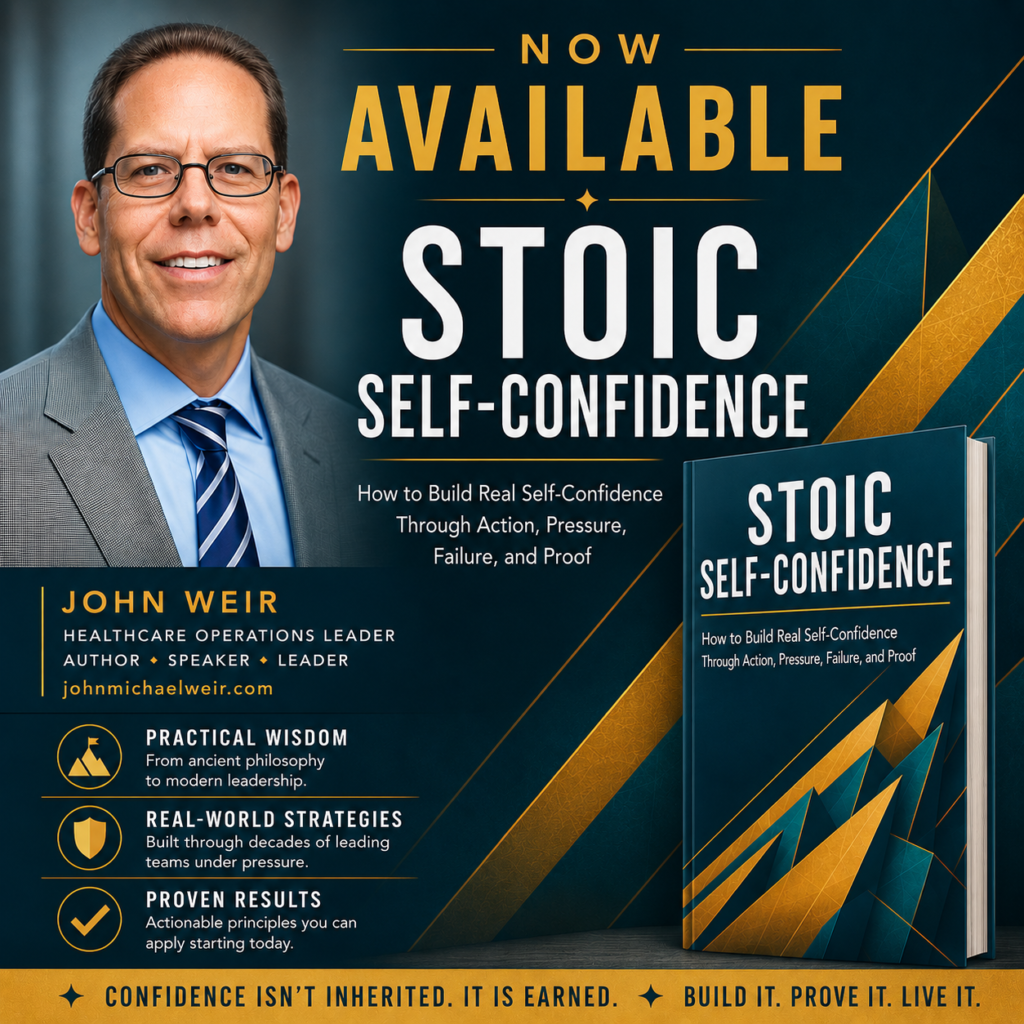
Learn more about my book: Stoic Self Confidence, on sale now.
Learn more about my book: Stoic Self Confidence, on sale now.
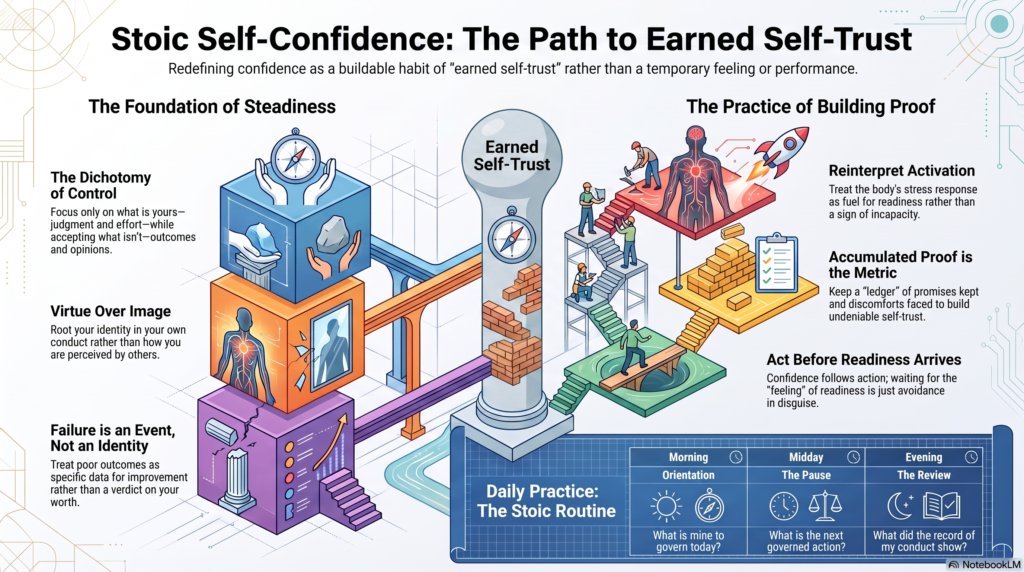
I wrote this book because I have spent nearly three decades leading teams in environmental services that do not allow for hesitation. The Stoics understood what hospital corridors and operating pressures teach you every day: character is not what you claim. It is what you do when things are hard.
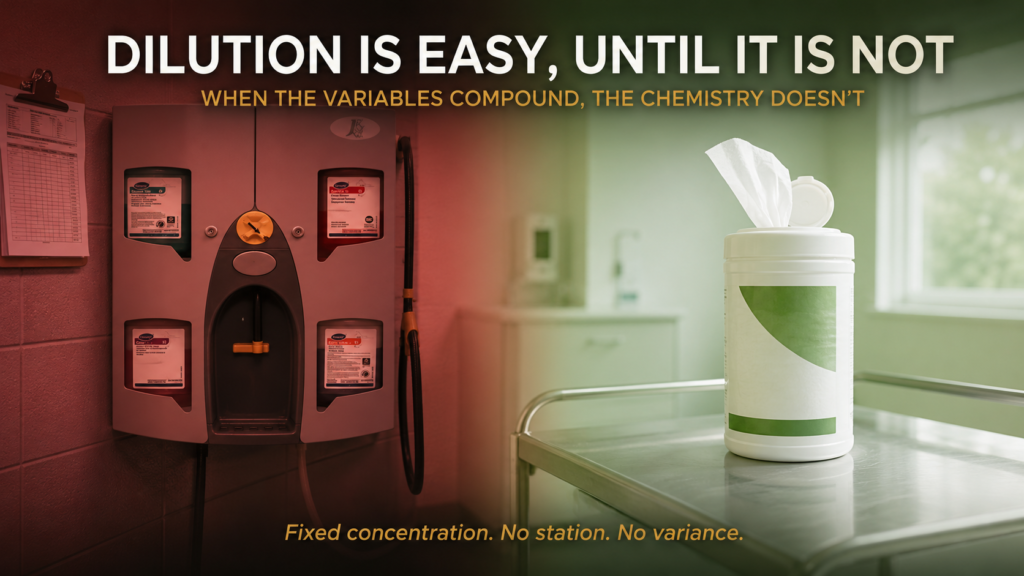
Mixing stations introduce variables that many cleaning programs don’t account for. Water pressure fluctuates throughout the day and across different locations in the building. Dispensers require regular maintenance to stay calibrated. Metering tips clog. One common dilution station manufacturer states water pressure minimum of 30lbs. That explained why I had a dispenser never meet standards of 800ppm, and after I had changed it out.
Most people think the hardship is the thing that happened to them. It is not. The hardship that does the most damage is the one that comes second. The first wave arrives uninvited. You do not choose it. It lands, and you absorb it. As brutal as it is, it has an end. Time helps, support helps, resilience helps, and you get through it. The second wave is different. It does not come from the outside. It comes from inside. It is the story you tell yourself about what happened and why.
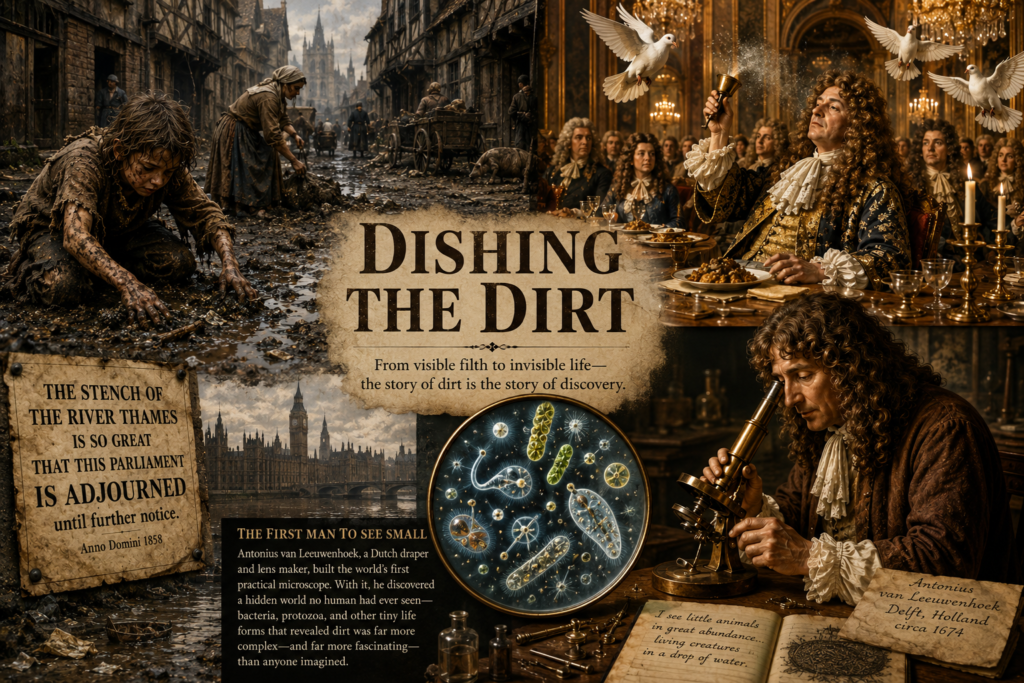
Tom Brokaw didn’t mention it. It wasn’t on Time magazine’s list of the most significant events of the twentieth century. But at least once every millennium, there ought to be a serious discussion about dirt. It has always been around, and as society has progressed, so has the nature of the dirt that surrounds us.
The leader who works the floor leads the floor. Physical presence is not a monitoring tactic; it is a profound investment in your team. When you are visible, performance naturally rises because people raise their standards when they know their leader is paying attention. Problems surface as “small issues” before they can mutate into patient complaints or safety incidents. Most importantly, presence communicates a level of support that a memo never could.
To bridge the gap between high-level strategy and frontline execution, leaders must master these five lessons from the floor.
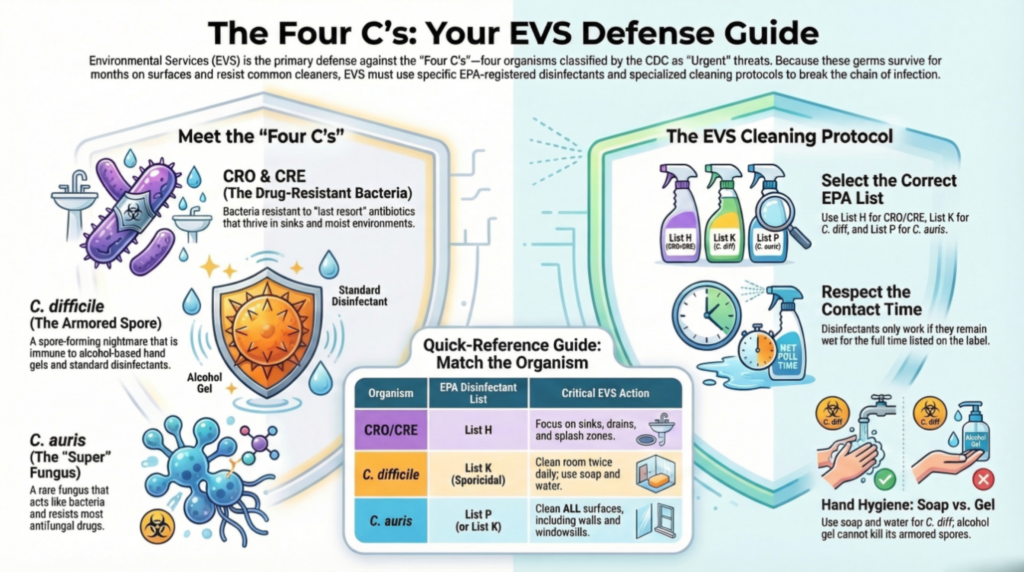
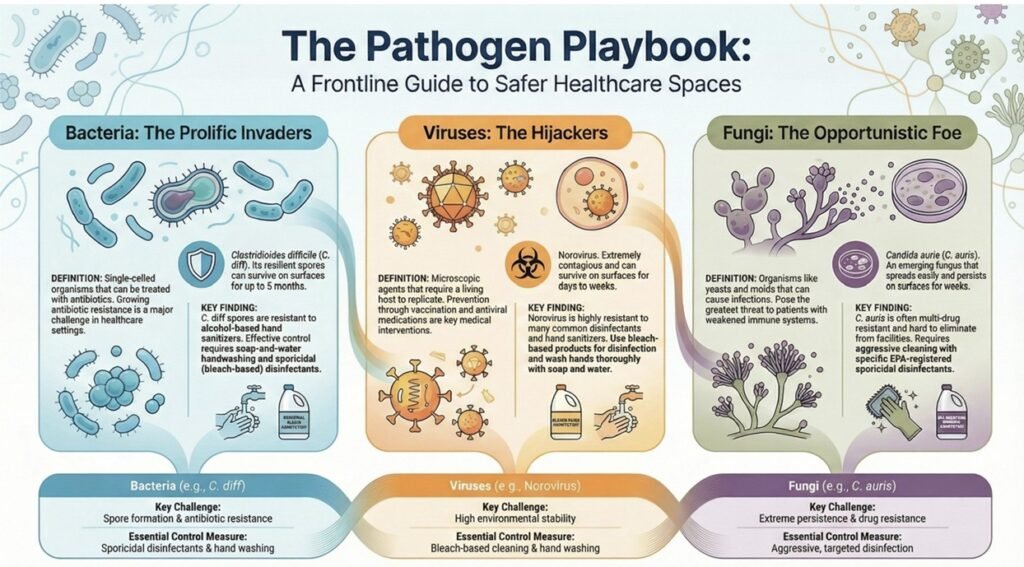
I have developed a full staff training on the Four C’s that we will be rolling out next week. These are four of the most dangerous drug-resistant organisms in healthcare settings, and I want to share some of the key points from that training here.
In the first post in this series, I laid out four variables that drive smart disinfectant selection: microbial targets, contact time, chemistry, and EPA registration. Each one deserves a deeper look. This post focuses on the first and most foundational: knowing exactly which organisms you are targeting and why that determines which disinfectant belongs in your team’s hands.
Choosing the right disinfectant is a critical decision for environmental services (EVS) professionals, impacting patient safety and infection control. Selection involves understanding microbial targets, proper application practices, chemical properties, and regulatory compliance.
Microbes are everywhere—on your skin, in the air you breathe, and in the food you eat. They form a vast, invisible universe that shapes our lives in profound ways. While we often think of “germs” as simple enemies to be defeated, their stories are far more complex, surprising, and fascinating than we can imagine. From their discovery and evolution to their impact on our health, the interplay between microbes and humanity is a journey through the quirks and mysteries of life at the microscopic level.
What is the first thing you notice when you enter a hotel or hospital room? I believe, most people register a simple impression: it is either clean and smells fresh, or it isn’t. This feeling of cleanliness gives us a sense of safety and comfort, a sign that professionals have worked tirelessly to prepare the space just for us. But what if that sterile scent masks an invisible world with a dramatic history of its own?
Why we don’t use phenolics around babies