
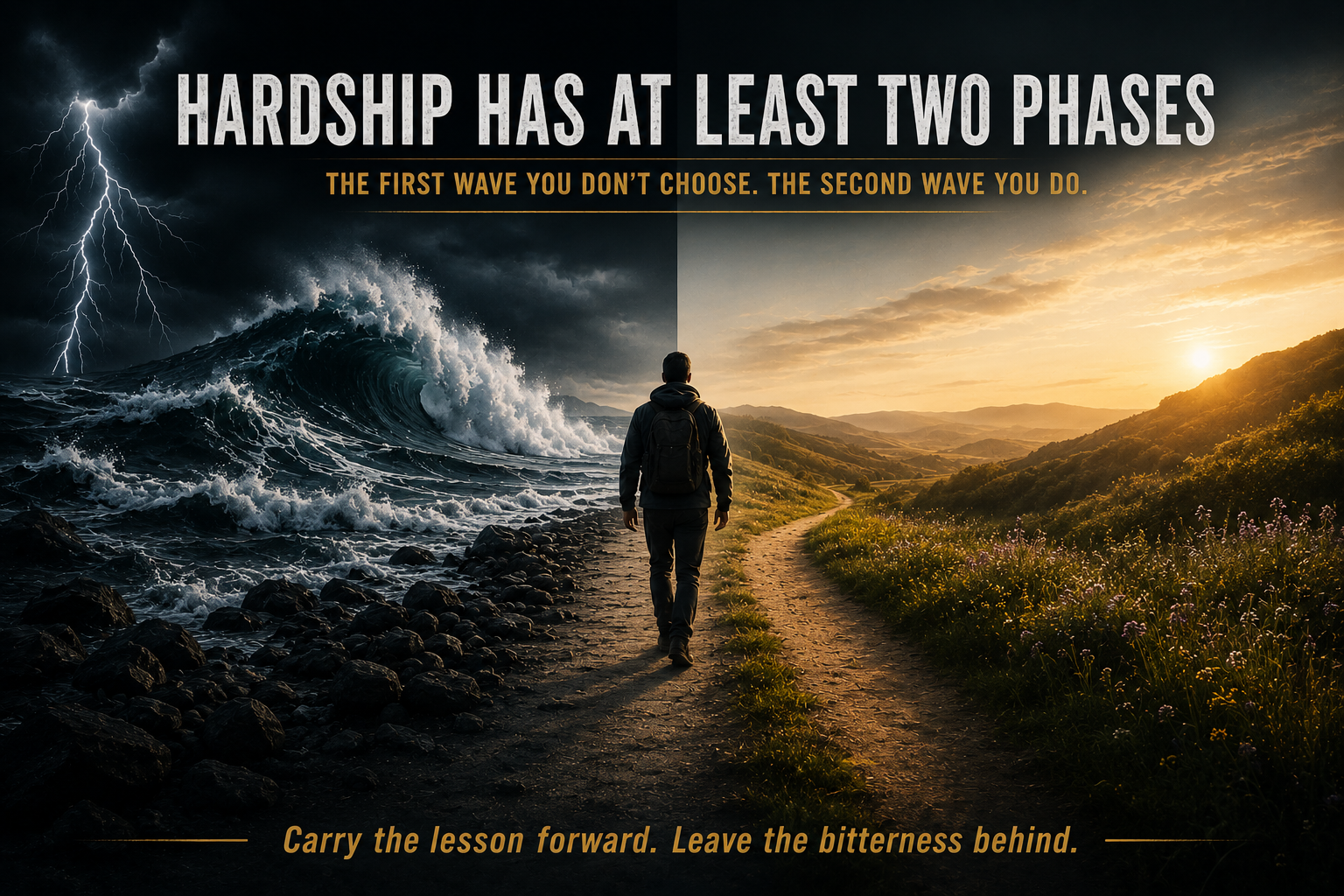
Misfortune hurts. That is not weakness, it is being human. The pain has to be endured before it can be overcome. There is no path around it, only through. But getting past the event is not the end of the story. It is where the real test begins.
Most people think the hardship is the thing that happened to them. It is not. The hardship that does the most damage is the one that comes second. The first wave arrives uninvited. You do not choose it. It lands, and you absorb it. As brutal as it is, it has an end. Time helps, support helps, resilience helps, and you get through it. The second wave is different. It does not come from the outside. It comes from inside. It is the story you tell yourself about what happened and why.
If you let resentment take hold, you rehearse the grievance and bitterness hardens. Unlike the first wave, the second has no expiration date. You decide how long it lasts. What makes it dangerous is that it does not feel like resentment. It feels like wisdom. Staying guarded feels like protecting yourself. Refusing to trust again feels smart. But it is not wisdom. It is the same grievance, calling itself caution.
I see this in my work. When I deal with a difficult employee, it is almost always someone who fell to the second wave. They have built a story, and the story is not what happened. It is full of self-defense, shaped to protect them from a harder truth. The hardest part is that the story is completely real to them. They believe it. So when I tell them it does not match the facts, it rarely lands. To them it is not a story. It is the truth. The employees who do not do this are a different group. They take the hard feedback, own their part, and move on. Those are my top ten percent. The difference is not talent. It is what they do with the second wave.
Epictetus taught that hardship is one of our most reliable teachers. Every misfortune is a chance to show character. For a leader, character shows before, during, and after the pressure. The question is not why did this happen to me. The question is what is my duty now. That one shift moves you from victim to agent. Leading with courage does not erase the first wave, but it stops the second wave cold. That does not happen by accident. It is a choice, and you make it on purpose.
The best leaders I have known are honest with themselves about where they are still rehearsing something that is already over. They do not always forgive and they do not always forget. They do something harder. They keep the lesson and drop the grievance. When you have come through a hard season, there is only one response worth giving. Carry the lesson forward, and leave the bitterness behind. That is not surrender. That is the victory.
#Leadership #Hardship #TopTenPercent #Winning
