Infection Prevention and EVS
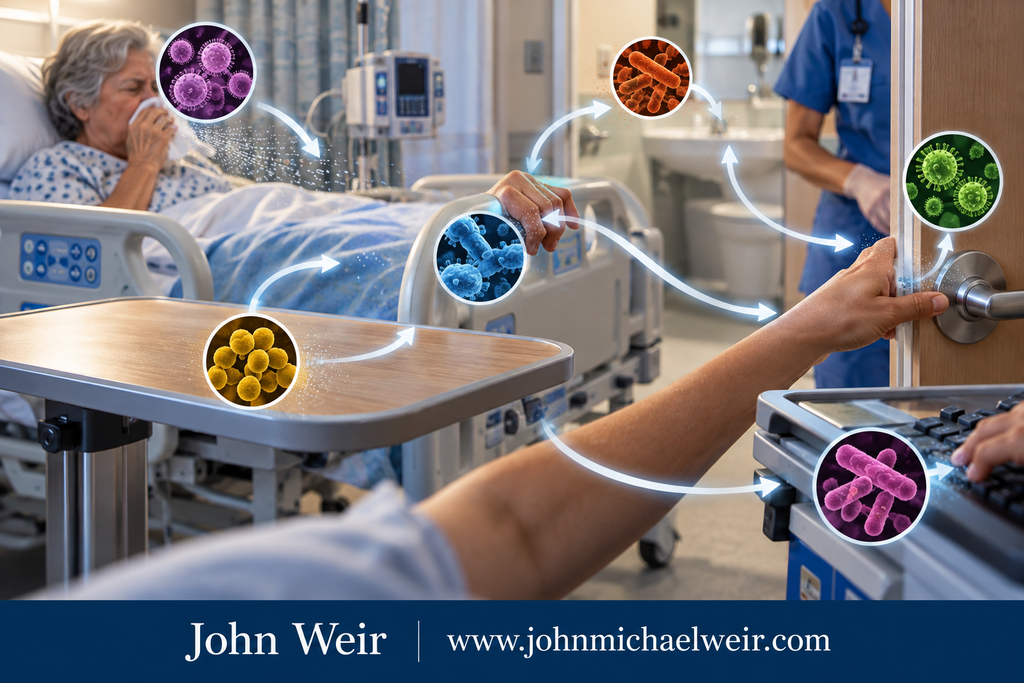
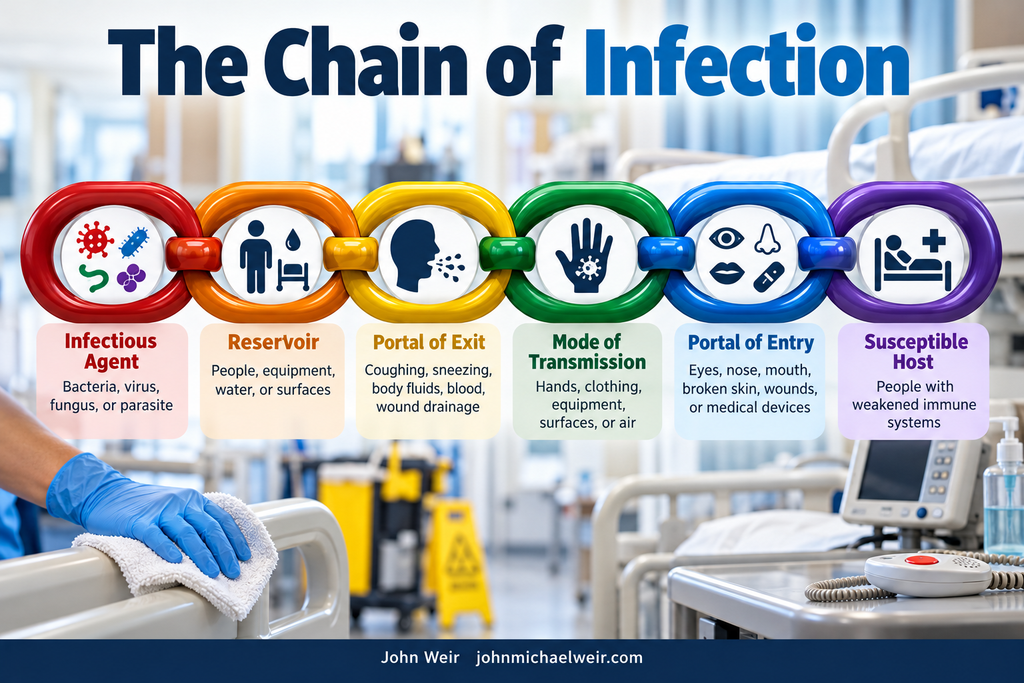
The Chain of Infection Infections do not appear out of nowhere. They move through connected steps, and understanding these steps…
The Chain of Infection Infections do not appear out of nowhere. They move through connected steps, and understanding these steps…
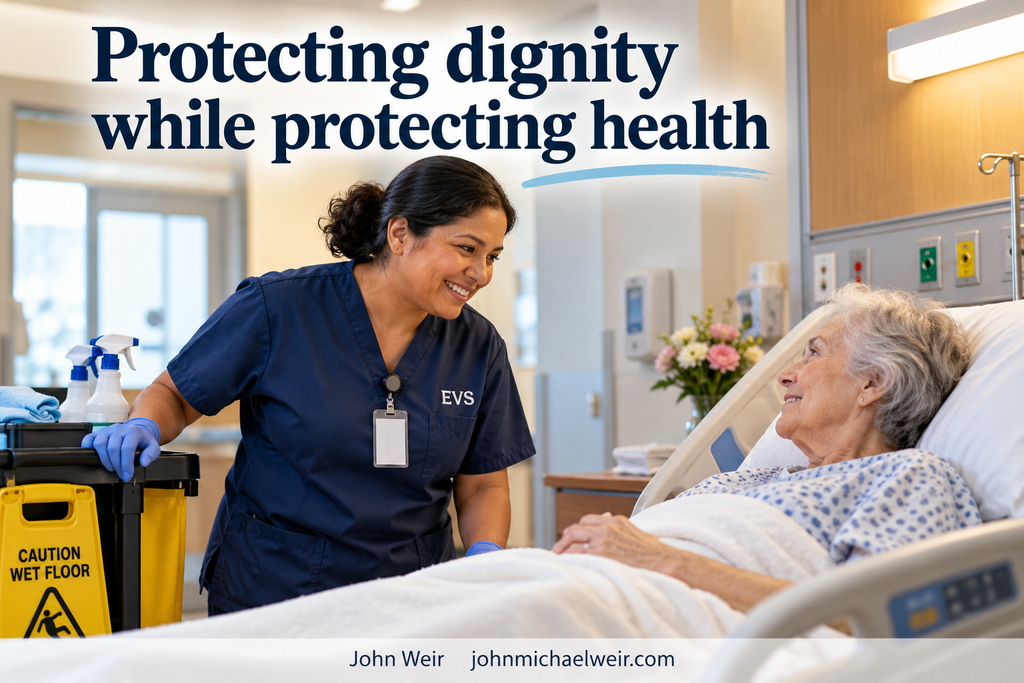
EVS workers often enter rooms when patients are tired, frightened, confused, or embarrassed. Their conduct influences how safe and respected…
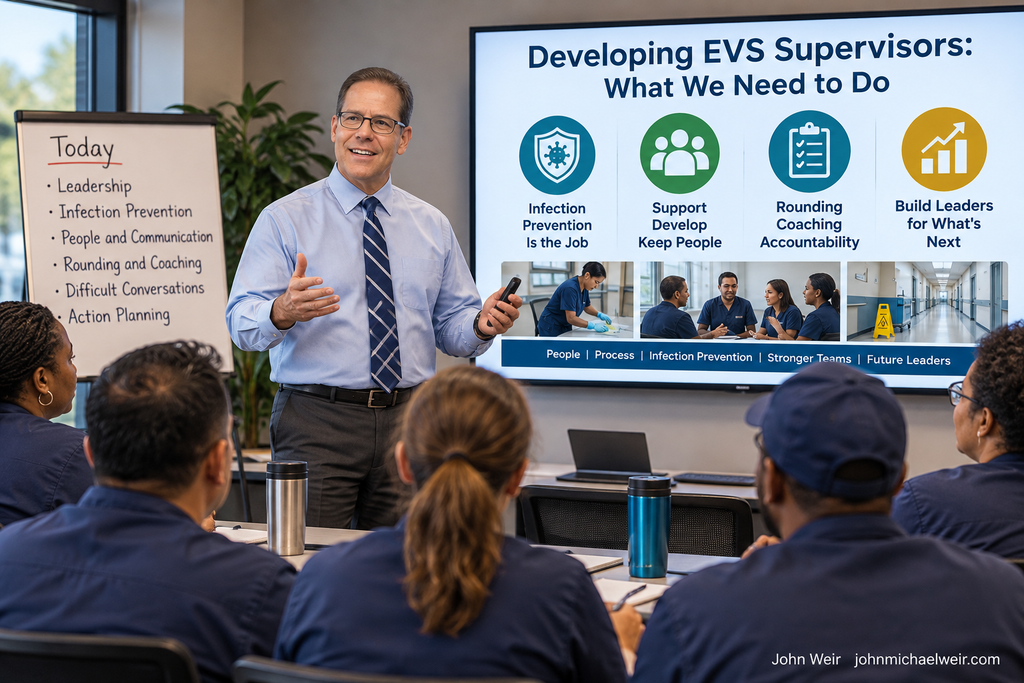
Our supervisors decide whether a room actually gets cleaned to standard, whether a short-staffed shift holds together, and whether a…
In Environmental Services, we understand that the first impression of our hospital sets the tone for every patient, visitor, and…
When you have seen the version of yourself you could become, the comfortable version of your life stops feeling comfortable.…
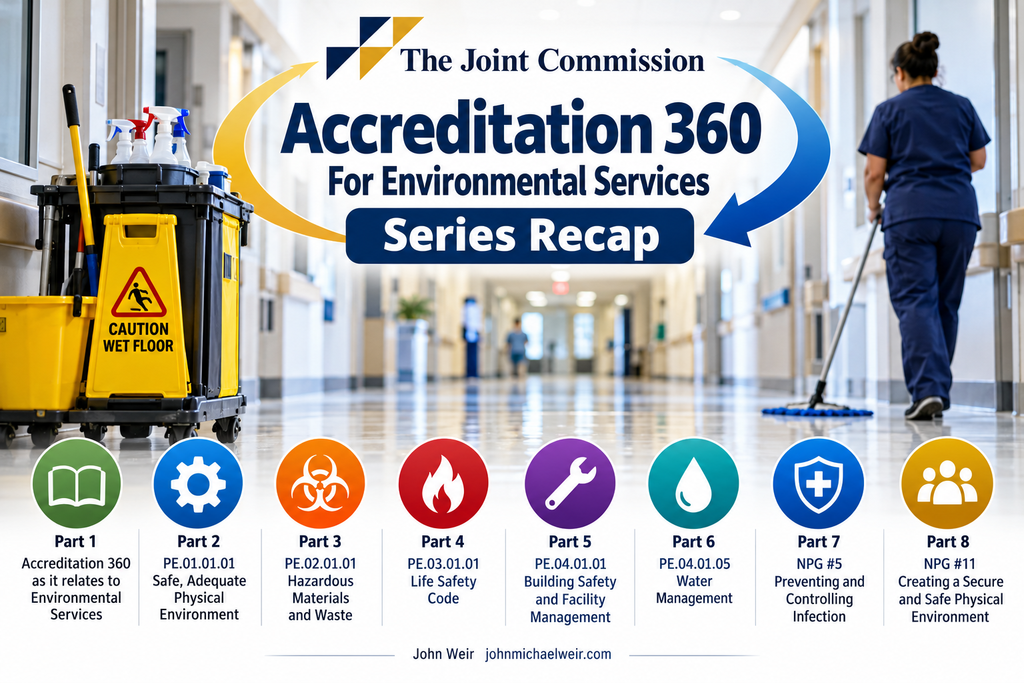
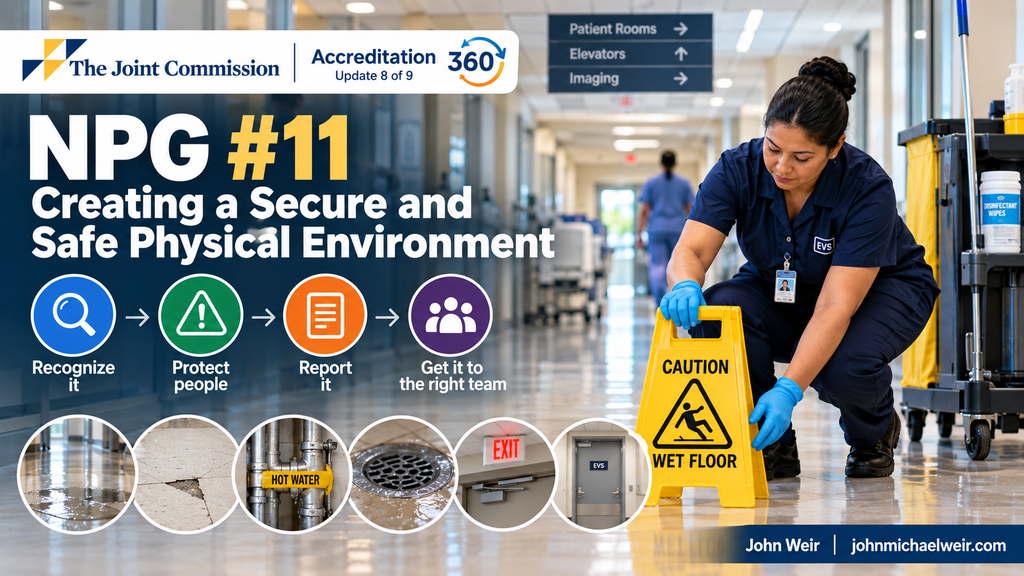
On January 1, 2026, Joint Commission’s Accreditation 360 replaced the Environment of Care (EC) and Life Safety (LS) chapters with…
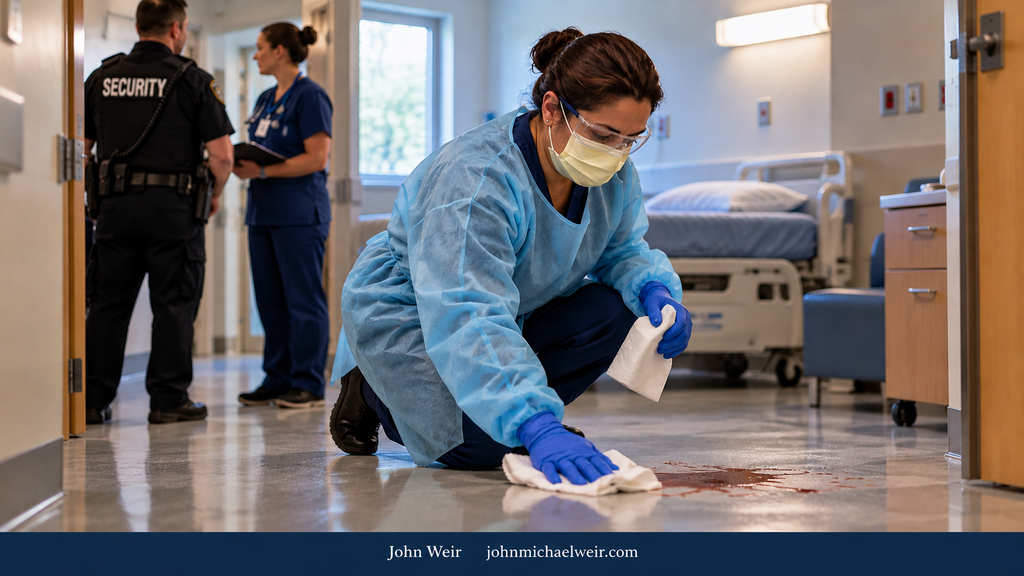
Cleaning After an Incident on a Behavioral Health Unit Routine cleaning on a behavioral health unit is usually that, routine.…
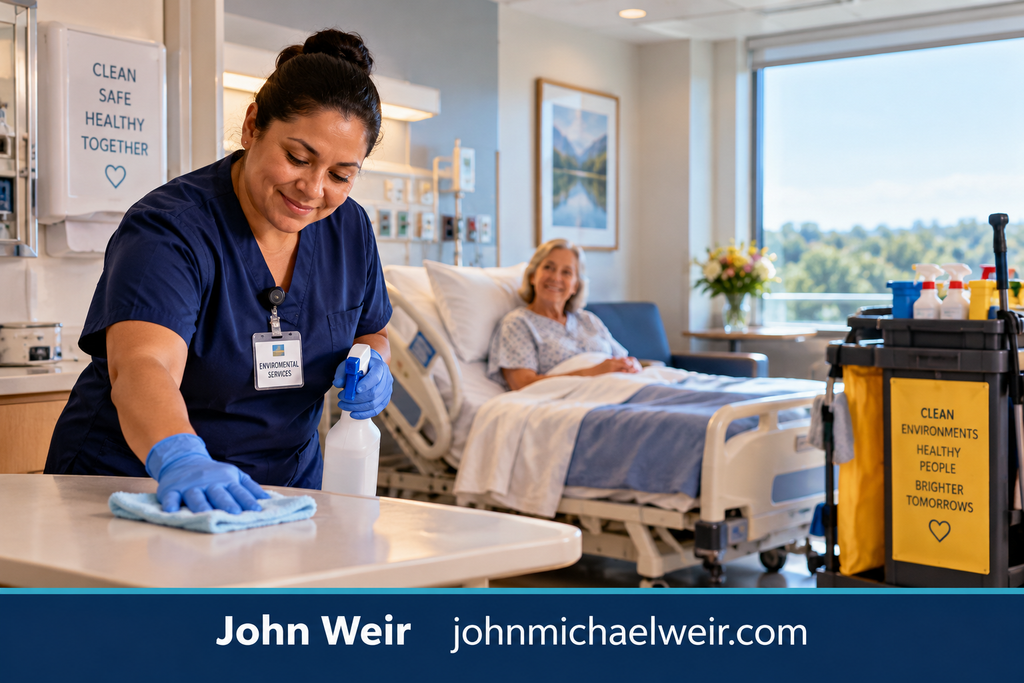
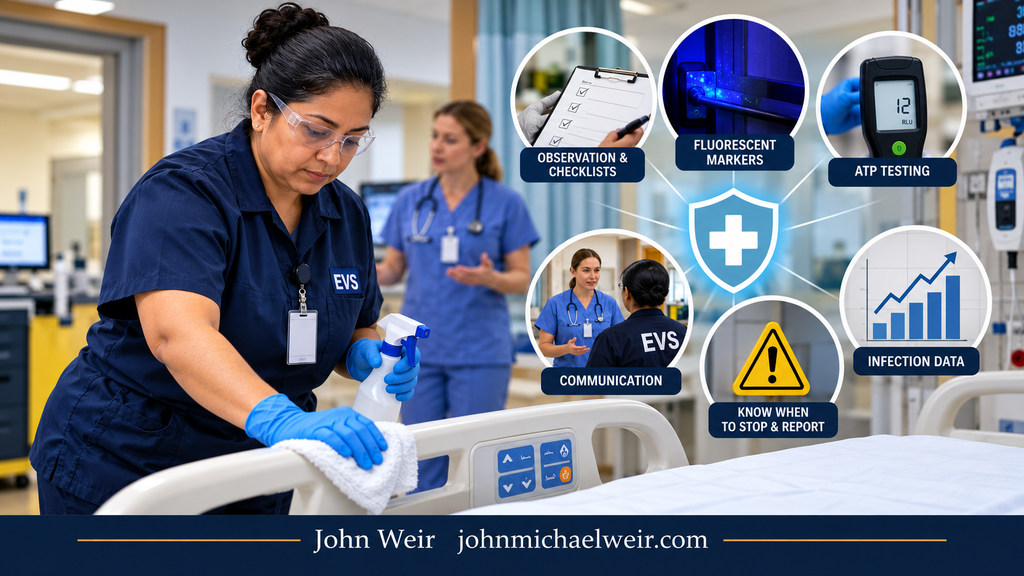
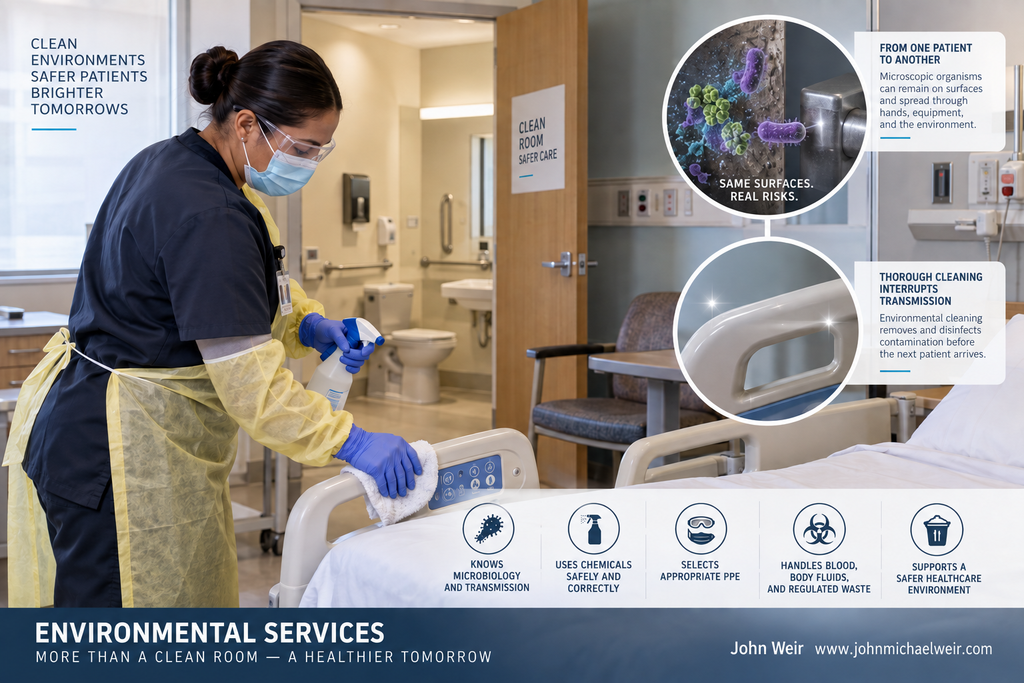
Environmental Services (EVS) work ties directly to patient safety and to the way patients experience the hospital. Careful cleaning reduces…
NPG #11: Creating a Secure and Safe Physical Environment A safe hospital is built out of small actions. A spill…
Infection control becomes easier to understand once you stop picturing germs as mysterious enemies and start tracking movement. Microorganisms travel…
Cleaning in an adult behavioral health unit requires the same disciplined infection prevention practices used throughout the hospital, but it…
The phrase hospital-acquired infection, or HAI, describes an infection that develops during or soon after a person receives care. Some…