
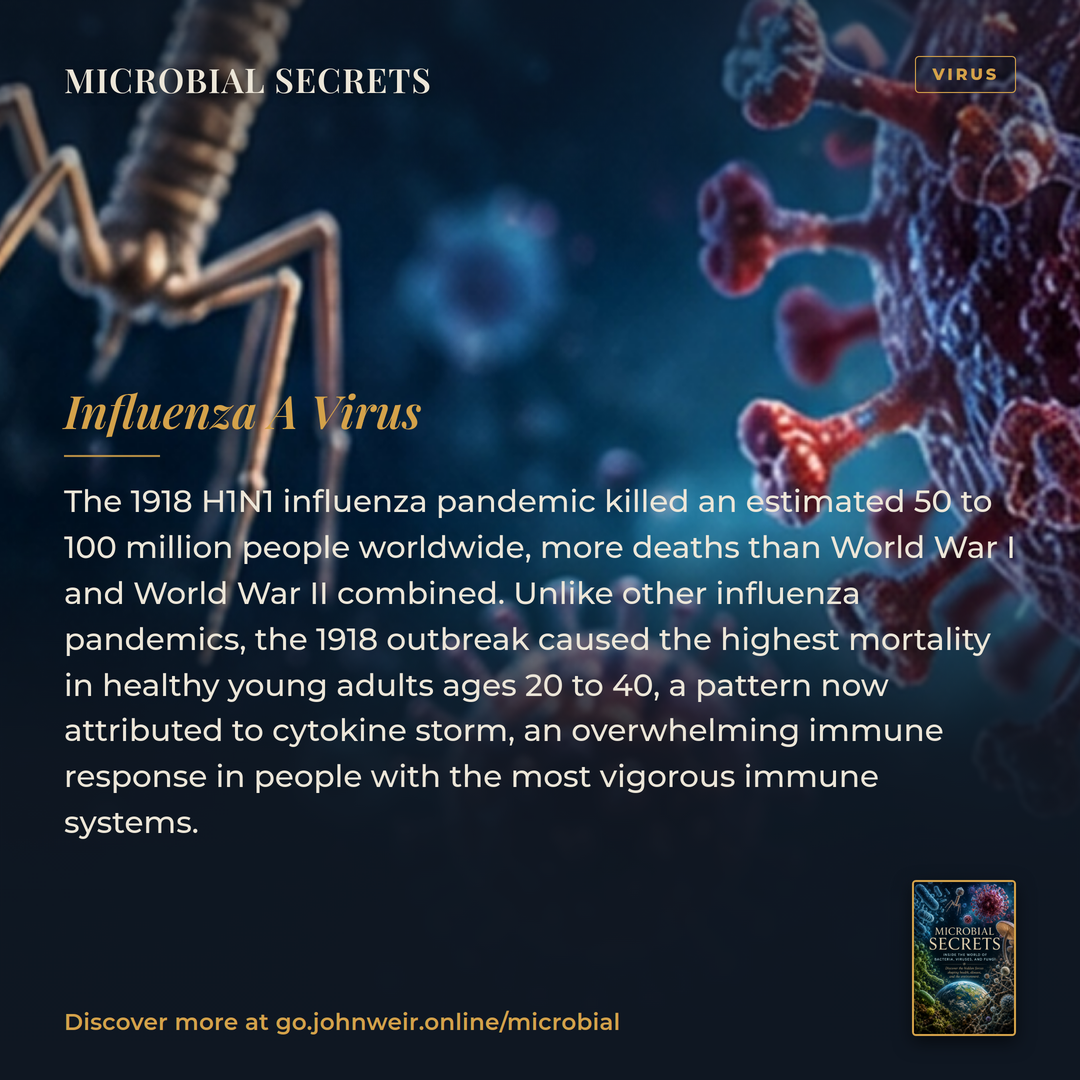
Influenza A Virus
Discovery and History
Influenza A virus was first isolated in 1933 by a British team led by Wilson Smith, Christopher Andrewes, and Patrick Laidlaw. They successfully isolated the virus from infected ferrets and demonstrated its role in causing human influenza. The 1918 Spanish influenza pandemic, caused by an H1N1 strain, was one of the deadliest pandemics in human history, killing an estimated 50-100 million people worldwide.
Effects on Humans
Influenza A causes seasonal flu epidemics and occasional pandemics. Symptoms include sudden onset of fever, cough, body aches, fatigue, headache, and sometimes vomiting and diarrhea. Most people recover within one to two weeks, but influenza can cause severe complications including pneumonia, especially in elderly individuals, young children, pregnant women, and people with chronic health conditions.
Treatment
Antiviral medications including oseltamivir (Tamiflu), zanamivir (Relenza), and baloxavir (Xofluza) can reduce the severity and duration of illness if started within 48 hours of symptom onset. Treatment is primarily supportive, including rest, fluids, and medications for symptom relief. Annual vaccination is the most effective prevention method.
Environmental Control
Influenza A spreads through respiratory droplets and contact with contaminated surfaces. The virus can survive on hard surfaces for 24-48 hours. Prevention includes annual vaccination, frequent hand washing, avoiding close contact with sick individuals, covering coughs and sneezes, and staying home when ill. The virus is susceptible to common disinfectants and hand sanitizers.
Fun Facts
Influenza A undergoes two types of genetic change with very different consequences. Antigenic drift involves gradual, continuous accumulation of mutations in surface proteins that require annual vaccine reformulation. Antigenic shift involves sudden, dramatic reassortment of entire gene segments between different influenza A strains, which can produce entirely new subtypes against which no human population has immunity, creating pandemic potential.
The 1918 H1N1 influenza pandemic killed an estimated 50 to 100 million people worldwide, more deaths than World War I. Unlike all other influenza pandemics, the 1918 outbreak caused the highest mortality in healthy young adults ages 20 to 40, a pattern now attributed to cytokine storm (an overwhelming immune response) in people with the most vigorous immune systems rather than failure of immunity in the vulnerable.
Ferrets are uniquely susceptible to human influenza A viruses and display clinical illness resembling human flu, including fever, nasal discharge, sneezing, and reduced activity. This made them the first and still the gold-standard animal model when influenza virus was first isolated in 1933. Ferrets remain the primary preclinical model for testing new influenza vaccines and antivirals before human trials.
#MicrobialSecrets #InfluenzaAVirus #Viruses #H1N1 #vaccination #Ferrets #epidemics #Tamiflu #influenza
