
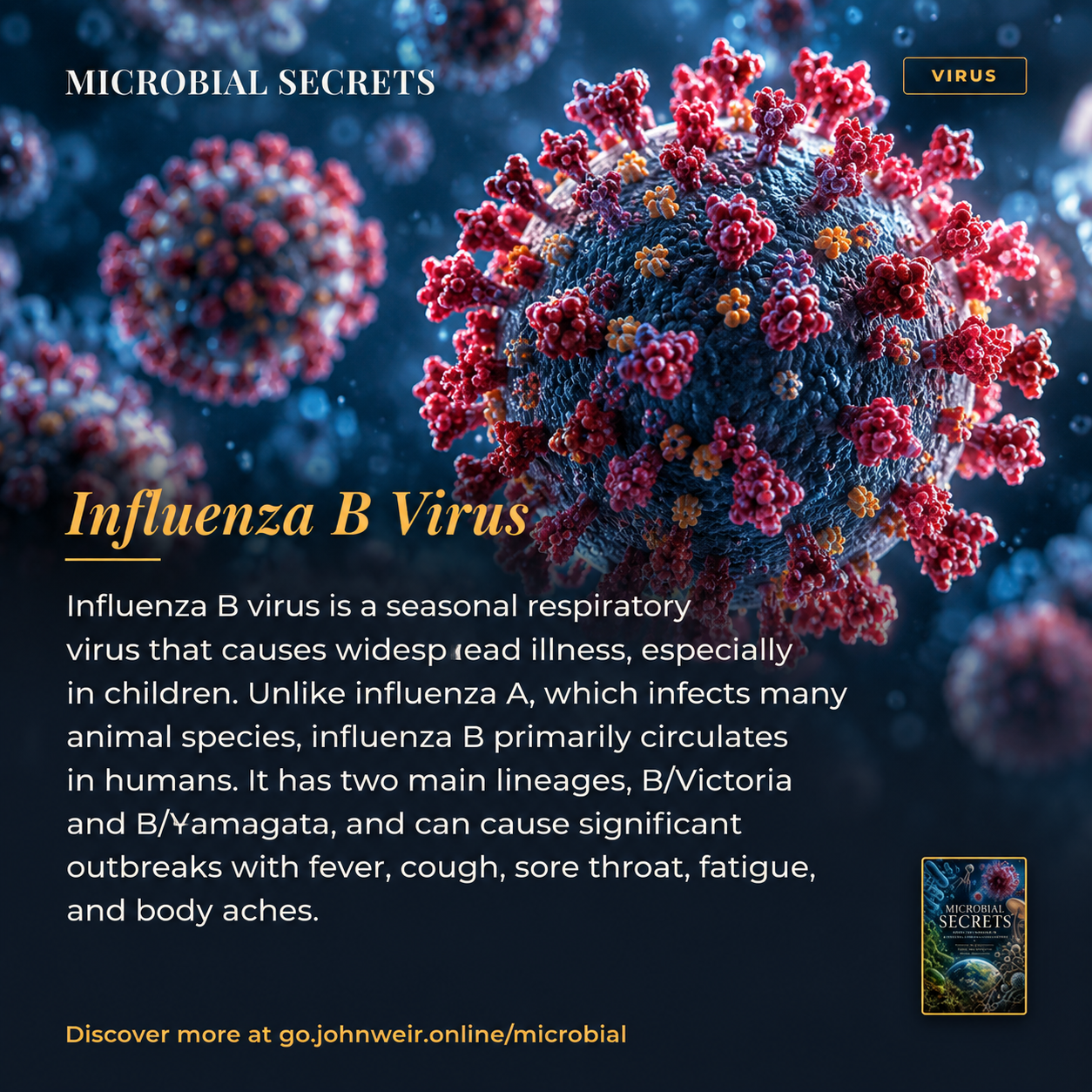
Influenza B Virus
Discovery and History
Influenza B virus was discovered in 1940, seven years after influenza A virus. Unlike influenza A, which has many subtypes and can infect various animal species, influenza B has only two main lineages (Victoria and Yamagata) and primarily infects humans and seals. Influenza B viruses mutate more slowly than influenza A viruses and don’t cause pandemics.
Effects on Humans
Influenza B causes seasonal flu symptoms similar to influenza A, including fever, cough, body aches, and fatigue. The illness is generally similar in severity to influenza A, though it may be slightly milder. Like influenza A, it can cause complications including pneumonia in high-risk groups. Influenza B typically causes epidemics later in the flu season.
Treatment
Treatment is the same as for influenza A, including antiviral medications like oseltamivir and supportive care. The neuraminidase inhibitors used for influenza A are also effective against influenza B. Annual vaccination that includes both influenza A and B strains is recommended.
Environmental Control
Prevention and control measures are the same as for influenza A, including vaccination, hand hygiene, respiratory etiquette, and environmental disinfection. The virus has similar survival characteristics outside the host and responds to the same disinfection methods.
Fun Facts
Influenza B viruses have only two lineages, Victoria and Yamagata, which diverged from each other around 1983. Both lineages have co-circulated in human populations ever since, which is why quadrivalent influenza vaccines include one representative strain from each B lineage alongside two influenza A strains, covering four strains in a single shot.
Unlike influenza A, which infects a wide range of animal species and can generate pandemic strains through genetic reassortment with animal viruses, influenza B primarily infects only humans and seals. This restricted host range means influenza B cannot generate the kind of pandemic-producing genetic shifts that influenza A can, and influenza B has never caused a recorded influenza pandemic.
Thomas Francis Jr., who discovered influenza B in 1940, also oversaw the massive 1954 field trial of the Salk polio vaccine, the largest peacetime clinical trial in U.S. history at the time, involving 1.8 million children. His career spanned two of the most consequential vaccine programs of the 20th century, and the scientific rigor of the polio trial design he championed set the standard for clinical vaccine evaluation.
#InfluenzaB #flu #vaccines #microbialsecrets #pathogens #handhygiene
