Leadership

Page 2

Hardship has at least two phases

Most people think the hardship is the thing that happened to them. It is not. The hardship that does the most damage is the one that comes second. The first wave arrives uninvited. You do not choose it. It lands, and you absorb it. As brutal as it is, it has an end. Time helps, support helps, resilience helps, and you get through it. The second wave is different. It does not come from the outside. It comes from inside. It is the story you tell yourself about what happened and why.

Investing in Your Team

A certified supervisor does not just know more. She sees differently. She asks better questions. She holds a higher standard because she understands why the standard exists. She becomes someone her staff trusts not just because she is their supervisor, but because she has earned it.

Seven Things You Can Do With EVS Data That Nobody Is Doing

When you track room clean times by employee over several months, patterns emerge. Some staff are significantly faster on discharge cleans. Others are more thorough on isolation terminal cleans. Some perform better on busy units. Others thrive in the quieter early morning hours.

Most EVS Leaders Are Flying Blind. Here Is What Changes When You Stop.

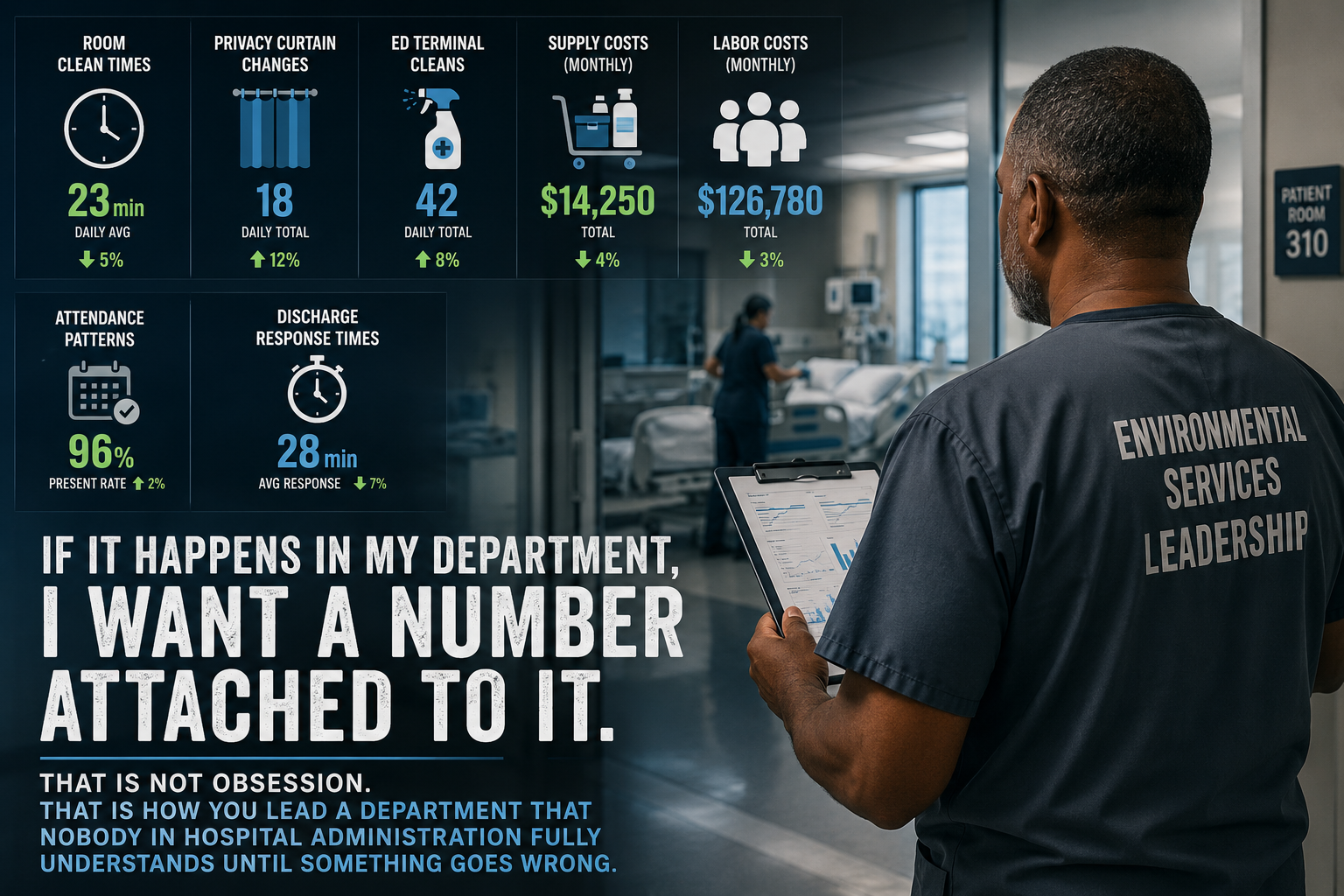
Room clean times. Privacy curtain changes. ED terminal cleans. Supply costs. Labor costs. Attendance patterns. Discharge response times. If it happens in my department, I want a number attached to it. That is not obsession. That is how you lead a department that nobody in hospital administration fully understands until something goes wrong.

The Buttermilk Problem in Leadership

The buttermilk problem in EVS leadership looks like this: a supervisor spends the same amount of time and attention on the employee who does the minimum as on the one who quietly exceeds expectations every single day. The one who asks the right questions. Who comes in early when the floor is short. Who takes feedback on Tuesday and comes back Thursday doing it better. Who watches how things work and wonders how to make them work better.

The Office is a Trap: 5 Leadership Lessons

The leader who works the floor leads the floor. Physical presence is not a monitoring tactic; it is a profound investment in your team. When you are visible, performance naturally rises because people raise their standards when they know their leader is paying attention. Problems surface as “small issues” before they can mutate into patient complaints or safety incidents. Most importantly, presence communicates a level of support that a memo never could.

To bridge the gap between high-level strategy and frontline execution, leaders must master these five lessons from the floor.

Know Your Microbial Targets: Choosing the Right Disinfectant for the Pathogen

In the first post in this series, I laid out four variables that drive smart disinfectant selection: microbial targets, contact time, chemistry, and EPA registration. Each one deserves a deeper look. This post focuses on the first and most foundational: knowing exactly which organisms you are targeting and why that determines which disinfectant belongs in your team’s hands.

Team Leadership Reflections part 2

As a leader, your communication sets the tone for interaction among your people. This simple yet profound truth underscores the importance of clear, consistent, and intentional communication in shaping the culture and success of any team. Leadership is not merely about issuing directives or setting goals; it’s about fostering connections and empowering others to contribute their strengths to a shared vision.

Development as a Choice

Development matters. It matters to you, personally, your team, your leader, and our organization overall. If you are growing in…

Team Leadership Reflections Part 1

“As the leader, your communication sets the tone for interaction among your people” “Two are better than one… and a…