John Weir

Page 6
With over 27 years in Healthcare Environmental Services (ES), I lead with a belief that attitude drives outcomes. As a Regional Director at MultiCare Health System, I oversee multi-site ES operations with a focus on people-first leadership, infection control, and operational excellence. I champion a Positive Mental Attitude (PMA) not as a slogan, but as a leadership principle. I believe positivity is contagious, and as a leader, I set the tone. Through consistent, uplifting communication, I create environments where ES teams feel empowered to be helpful, proactive, and proud of their impact. For me, development is a choice, and I invest in training, huddles, and coaching that energize teams, helping them thrive in their current roles and grow toward what’s next. My approach to high standards isn't theoretical, it's practical. Just like we notice when a hotel room is clean and fresh, patients and families immediately sense a space that’s been cared for. Through standardized protocols, team accountability, and a shared mission, I help create clean, safe, and healing environments that directly enhance patient experience and staff well-being. It's a privilege to lead teams that play such a vital role in the patient journey, and to help elevate the perception and performance of ES professionals across our system.

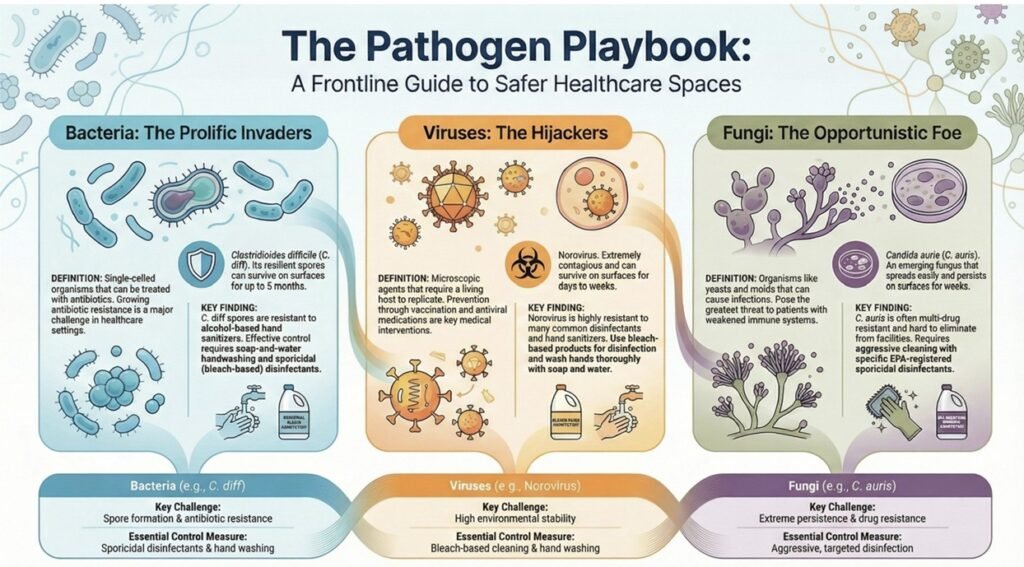
6 Microbial Secrets That Will Change How You See the World

Microbes are everywhere—on your skin, in the air you breathe, and in the food you eat. They form a vast, invisible universe that shapes our lives in profound ways. While we often think of “germs” as simple enemies to be defeated, their stories are far more complex, surprising, and fascinating than we can imagine. From their discovery and evolution to their impact on our health, the interplay between microbes and humanity is a journey through the quirks and mysteries of life at the microscopic level.

More Than a Menace: The Secret Histories of the World’s Toughest Germs

What is the first thing you notice when you enter a hotel or hospital room? I believe, most people register a simple impression: it is either clean and smells fresh, or it isn’t. This feeling of cleanliness gives us a sense of safety and comfort, a sign that professionals have worked tirelessly to prepare the space just for us. But what if that sterile scent masks an invisible world with a dramatic history of its own?

The Hidden Benefits of Choosing Local Distributors for Cleaning Supplies

In a world increasingly dominated by online shopping, the convenience of ordering cleaning supplies from a big online distributor can be tempting for both businesses and individual consumers.

The History of Phenolics In Healthcare Disinfection

Phenolic compounds have played a defining role in the history of medical disinfection, shaping modern practices in infection control and hospital hygiene. Their story is one of discovery, innovation, and ongoing evolution as scientists and healthcare professionals sought better ways to prevent the spread of disease.

Housekeeping in Washington State Behavioral Health Facilities: A Historical and Safety-Oriented Perspective

Washington’s state hospitals grew rapidly between the 1920s and 1940s. By 1930, Western and Eastern State Hospitals housed thousands of patients, many of whom lived in appalling conditions. Despite the increased scale, there was no corresponding improvement in cleaning practices or worker protections. Institutional housekeeping remained a custodial function assigned to patients or underpaid staff without training.

Cleaning methods focused on visible tidiness rather than microbial safety. Chemical use was unregulated, and tools were rudimentary. Staff and patients were exposed to pathogens, toxic substances, and unsafe physical environments. There were no systems for reporting workplace injuries or exposures. Institutional goals prioritized containment over care, and the human dignity of workers and residents was largely ignored.

The Power of Courtesy: How Environmental Services Technicians Can Show Respect to Patients

As Environmental Services (EVS) professionals, we play a crucial role in healthcare beyond just cleaning rooms and disinfecting surfaces. We are often the first and last hospital staff members a patient sees each day, and the way we carry ourselves can significantly impact their experience. A clean room provides comfort, but a kind interaction can bring true peace of mind.

Maintaining the Hospital Physical Environment

The physical environment of a hospital plays an important role in patient safety. It’s not just about keeping things tidy—it’s about maintaining an environment that ensures patient safety, supports efficient operations, and complies with strict regulatory standards.

Scabies: Everything you are itching to know

Scabies is a highly contagious skin condition caused by the human itch mite (Sarcoptes scabiei var. hominis). These microscopic mites burrow into the skin to live, lay eggs, and trigger an allergic reaction, leading to intense itching and a rash.

Common Types of Healthcare Waste

Hospitals generate a diverse range of waste types that require specific handling and disposal methods to ensure compliance with regulations, protect public health, and minimize environmental impact.

Here’s a comprehensive overview of the various waste types generated by healthcare facilities, including examples and handling practices:

Wide Area Vacuums -vs- 36″ Dust Mops

Research to look at the efficiencies of using the traditional 36″ dust mops versus battery powered wide area vacuums for cleaning our hospital hallways.

Team Leadership Reflections part 2

As a leader, your communication sets the tone for interaction among your people. This simple yet profound truth underscores the importance of clear, consistent, and intentional communication in shaping the culture and success of any team. Leadership is not merely about issuing directives or setting goals; it’s about fostering connections and empowering others to contribute their strengths to a shared vision.