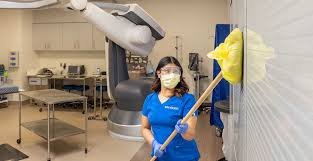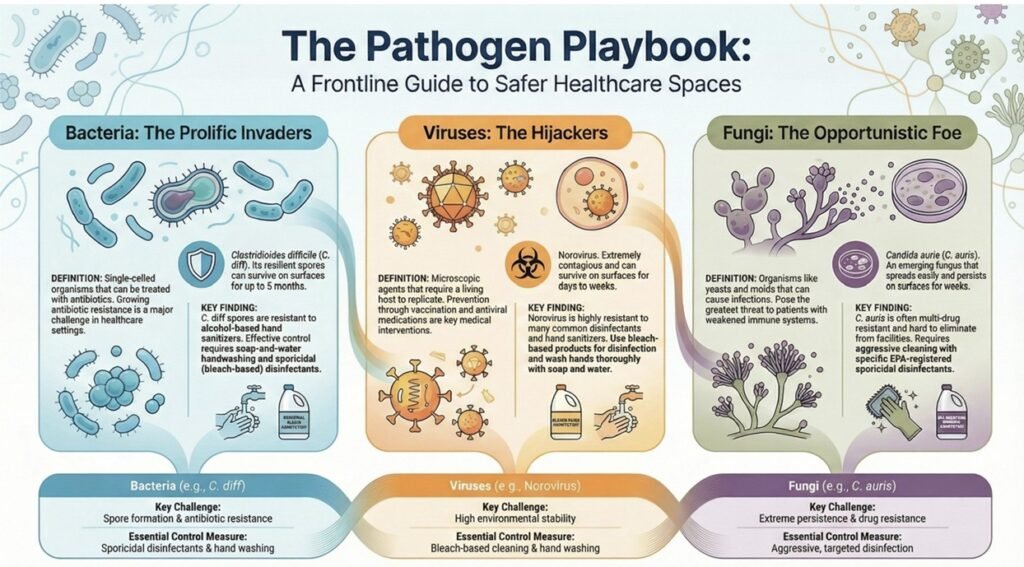
In the first post in this series, I laid out four variables that drive smart disinfectant selection: microbial targets, contact time, chemistry, and EPA registration. Each one deserves a deeper look. This post focuses on the first and most foundational: knowing exactly which organisms you are targeting and why that determines which disinfectant belongs in your team’s hands.
Category: Ideas
Choosing the right disinfectant is a critical decision for environmental services (EVS) professionals, impacting patient safety and infection control. Selection involves understanding microbial targets, proper application practices, chemical properties, and regulatory compliance.
What is the first thing you notice when you enter a hotel or hospital room? I believe, most people register a simple impression: it is either clean and smells fresh, or it isn’t. This feeling of cleanliness gives us a sense of safety and comfort, a sign that professionals have worked tirelessly to prepare the space just for us. But what if that sterile scent masks an invisible world with a dramatic history of its own?
In a world increasingly dominated by online shopping, the convenience of ordering cleaning supplies from a big online distributor can be tempting for both businesses and individual consumers.
As Environmental Services (EVS) professionals, we play a crucial role in healthcare beyond just cleaning rooms and disinfecting surfaces. We are often the first and last hospital staff members a patient sees each day, and the way we carry ourselves can significantly impact their experience. A clean room provides comfort, but a kind interaction can bring true peace of mind.
Research to look at the efficiencies of using the traditional 36″ dust mops versus battery powered wide area vacuums for cleaning our hospital hallways.
As a leader, your communication sets the tone for interaction among your people. This simple yet profound truth underscores the importance of clear, consistent, and intentional communication in shaping the culture and success of any team. Leadership is not merely about issuing directives or setting goals; it’s about fostering connections and empowering others to contribute their strengths to a shared vision.
Improving inpatient satisfaction with housekeeping services is essential for creating a positive and comfortable healthcare environment. Patients who feel well-cared
Development matters. It matters to you, personally, your team, your leader, and our organization overall. If you are growing in
“I am certainly not one of those who need to be prodded. In fact, If anything, I am the prod”
Posted on the go with iPad mini & Blogsy