Similar Posts
Celebrate
Each year we celebrate environmental services week. How about we celebrate everyday for the next year. Our hardworking staff mean so much to staff, visitors and patients.
Cleaning Operating Rooms
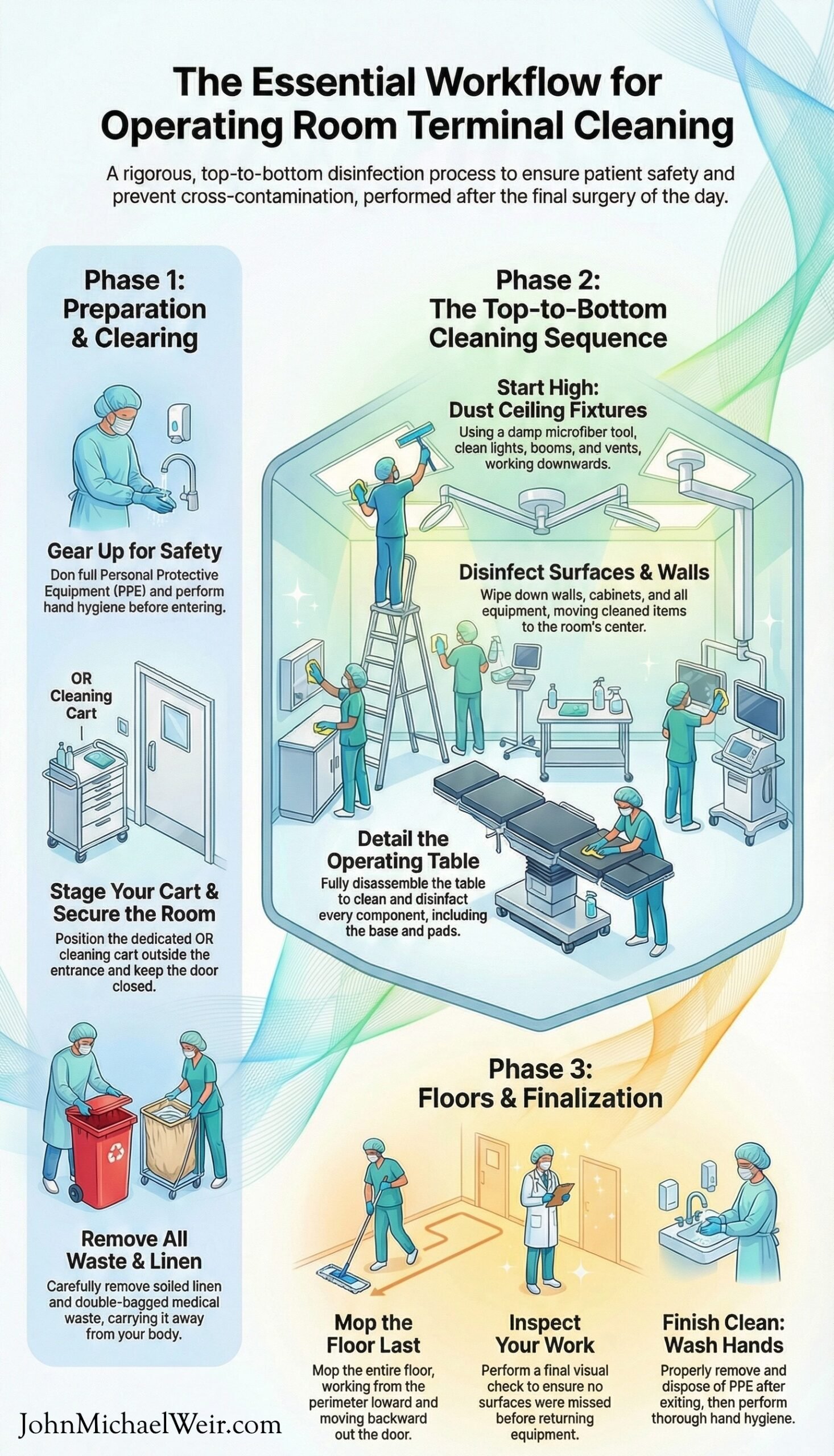
Proper Cleaning of Hospital Operating Rooms: Adhering to AORN Standards and Joint Commission Requirements Hospital operating rooms (ORs) are critical environments where cleanliness and sterility are paramount to patient safety. The meticulous cleaning and disinfection of ORs play a crucial role in preventing healthcare-associated infections (HAIs), ensuring compliance with regulatory standards, and maintaining the trust…
6 Microbial Secrets That Will Change How You See the World
Microbes are everywhere—on your skin, in the air you breathe, and in the food you eat. They form a vast, invisible universe that shapes our lives in profound ways. While we often think of “germs” as simple enemies to be defeated, their stories are far more complex, surprising, and fascinating than we can imagine. From their discovery and evolution to their impact on our health, the interplay between microbes and humanity is a journey through the quirks and mysteries of life at the microscopic level.
- Education | Pest Control | Scabies | Training
Scabies: Everything you are itching to know
Scabies is a highly contagious skin condition caused by the human itch mite (Sarcoptes scabiei var. hominis). These microscopic mites burrow into the skin to live, lay eggs, and trigger an allergic reaction, leading to intense itching and a rash.
Healthcare Cleaning Success
When was the last time you were at your doctors office, or (and I hope not) at a hospital, and it was not as clean as you would expect? Unfortunately with the cleaning being demanding physical labor, it takes a good management team to bring out the best in cleaning results. As one who…
Housekeeping in Washington State Behavioral Health Facilities: A Historical and Safety-Oriented Perspective
Washington’s state hospitals grew rapidly between the 1920s and 1940s. By 1930, Western and Eastern State Hospitals housed thousands of patients, many of whom lived in appalling conditions. Despite the increased scale, there was no corresponding improvement in cleaning practices or worker protections. Institutional housekeeping remained a custodial function assigned to patients or underpaid staff without training.
Cleaning methods focused on visible tidiness rather than microbial safety. Chemical use was unregulated, and tools were rudimentary. Staff and patients were exposed to pathogens, toxic substances, and unsafe physical environments. There were no systems for reporting workplace injuries or exposures. Institutional goals prioritized containment over care, and the human dignity of workers and residents was largely ignored.