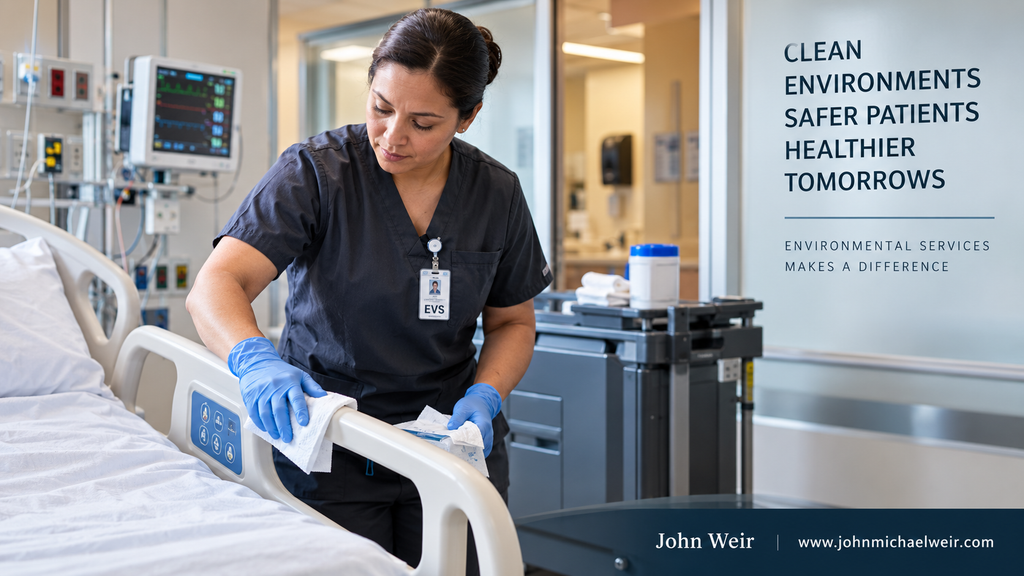
When you think of the word “clean,” you might picture a sparkling kitchen counter. But in a hospital operating room, “clean” is a term of microscopic precision, where the stakes are infinitely higher. For the highly trained Environmental Services (EVS) technicians responsible for this environment, cleaning is not about tidiness, it is a critical, non-negotiable component of patient safety.

This process is not a chore but a set of rigorously validated protocols, a choreographed system where every variable is controlled to mitigate the risk of infection. It is a profound contribution to healing and patient care.

We say hello to human kindness by providing a clean safe environment as we help save lives. It is our contribution to The Healing Ministry.

What follows are five secrets from this unseen ballet, revealing the meticulous contamination control protocols that ensure a truly sterile environment for every patient.

1. Cleaning Follows a Strict Choreography

Environmental Services Technicians don’t simply start wiping surfaces at random. Every movement in the operating room follows a predetermined path, such as moving clockwise or counterclockwise. This systematic approach is a core principle of quality control, designed to eliminate variables and ensure complete, verifiable coverage so that no surface is ever missed.

The choreography is governed by two rigid principles of contamination control:

• Top-to-Bottom: The performance always begins with the highest surfaces, like ceiling-mounted lights, and works down to the floor. This logic prevents microbes from high surfaces from re-contaminating an already-sterilized lower area.

• Cleanest-to-Dirtiest: The choreography dictates a path from the cleanest zones to the dirtiest, strategically corralling and removing contaminants rather than simply displacing them.

These “unidirectional” movements are intentional. In a striking example of foresight, technicians place fresh, disinfectant-charged microfiber cloths at the start of each wall before beginning their path. This planning “ensures that you have a wipe that is fresh and clean at each place where you transition areas within the room,” guaranteeing process integrity and minimizing cross-contamination.

2. Friction Is Part of the Formula

Spraying a surface with disinfectant is only half the battle. As process experts know, “physical mechanical action and scrubbing is a part of the disinfecting process.” This is because microbes often shield themselves within a protective matrix called a biofilm, which can render chemical disinfectants ineffective.

To break their grip, technicians engage in a direct assault on these microbial defenses. They apply “flat Palm pressure” and use methodical “s-stroke” motions when wiping. This isn’t just cleaning; it’s creating the necessary friction to trap, capture, and physically remove the bio-burden that could otherwise lead to a life-threatening infection. It is a process executed with focused intent and efficacy.

…always clean it like you mean it.

3. Every Bag of Trash Could Hide a Danger

In the high-stakes environment of an operating room, every item is treated as a potential vector for harm. EVS technicians are trained with a mindset of absolute threat assessment. They are taught to “treat all linen as though it could contain sharps” and to “always treat every bag of waste as if it could have a sharp object in it.”

This translates into a visceral choreography of safety:

• Before removing soiled linen, technicians carefully “fold the linen corners into the middle of the table forming a small bundle,” containing any potential hazards within.

• They never compress waste into a container with their hands, as a hidden sharp could cause serious injury.

• Waste bags are secured with a “gooseneck knot,” and all waste is carried away from the body to prevent accidental puncture.

Furthermore, a strict separation protocol is followed. General waste in clear bags is kept apart from red-bagged medical waste, as they are handled and disposed of via entirely different protocols at significantly different costs.

4. The Color of Your Cleaning Cloth Matters—A Lot

To make process errors nearly impossible, technicians can employ a robust visual control system known as color-coding. This suggested approach uses different colored microfiber cloths for specific zones, preventing the microscopic transfer of pathogens from one area to another. A typical system includes:

• Red cloths: Reserved exclusively for the operating table, the most critical surface.

• Green cloths: Used for high-touch general surfaces like worktables, overhead lights, and door handles.

• Light blue cloths: Designated for glass and reflective surfaces for a streak-free clean.

To maximize the efficacy of each cloth, technicians use an “eight-sided fold method.” By folding a cloth in half, and then in half again, they create eight distinct wiping surfaces. After cleaning a small area, the technician refolds the cloth to expose a fresh, uncontaminated face, effectively turning to a new “page” for the next surface. Crucially, a used cloth is never placed back into a pail of clean solution, an act that would instantly compromise the entire bucket.

5. Take it apart to clean properly

Cleaning the operating table is the final act in this meticulous performance, a complete deconstruction and reconstruction. The table isn’t simply wiped down; technicians methodically take it apart, removing table pads and all other components to expose every hidden surface.

The process is exhaustive. Each removable component is cleaned on all sides—top, bottom, and edges. Then, the area of the bed underneath where that component sat is thoroughly disinfected before the clean part is reinstalled. The bed itself is raised to expose “additional components and areas that may get missed,” and every surface down to the “legs and casters” is scrubbed. This painstaking disassembly ensures that the hidden nooks and crannies where pathogens “hang out” are systematically eliminated.

Conclusion: A New Respect for an Invisible Art

Cleaning an operating room is far more than a janitorial task. It is a science-based, high-stakes discipline performed by dedicated professionals. These five principles—systematic paths, physical force, threat assessment, zone separation, and complete disassembly—are not merely cleaning tips. They form an integrated system of risk mitigation where every action is designed to break a potential chain of infection. This invisible process, full of precise rules and methodical actions, is a fundamental pillar of patient safety in modern medicine.

It makes you wonder: what other lifesaving, invisible actions are being performed around us every single day?

Pursuing a Career in Healthcare Environmental Services: A Critical and Rewarding Path

The healthcare industry is a dynamic, ever-growing field offering numerous career opportunities that contribute significantly to public health and safety. Among these, Healthcare Environmental Services (EVS) stands out as a critical and impactful career path that ensures safe, clean, and healthy environments for patients, staff, and visitors. This recommendation explores the compelling reasons to pursue a career in Healthcare Environmental Services, highlighting its importance, opportunities for growth, and intrinsic rewards.

The Vital Role of Healthcare Environmental Services

Healthcare Environmental Services professionals are unsung heroes in the healthcare system. They are responsible for maintaining the cleanliness, safety, and functionality of healthcare facilities, which directly affects patient outcomes and operational efficiency. Key aspects of their role include:

1. Infection Prevention and Control

• EVS teams are at the forefront of infection prevention. They implement rigorous cleaning protocols to reduce healthcare-associated infections (HAIs), safeguarding patient and staff health.

• Their work ensures compliance with standards set by organizations such as the Centers for Disease Control and Prevention (CDC), the Joint Commission, and the Association for the HealthCare Environment (AHE).

2. Patient and Staff Safety

• A clean and sanitized environment minimizes risks of slips, trips, and falls while ensuring proper waste management.

• EVS professionals contribute to emergency preparedness by managing hazards and maintaining readiness for crises, such as pandemics or natural disasters.

3. Enhancing Patient Experience

• Clean and welcoming facilities are essential for patient satisfaction. EVS teams play a crucial role in shaping perceptions of care quality through their meticulous attention to detail.

Compelling Reasons to Choose a Career in EVS

1. Making a Meaningful Impact

Working in EVS allows individuals to directly contribute to the health and safety of others. Every cleaned surface, sanitized room, and properly disposed waste item plays a role in saving lives and improving care outcomes. This is a career where your efforts are visible, essential, and deeply appreciated.

2. Career Stability and Demand

• Healthcare is one of the fastest-growing industries, and the demand for skilled EVS professionals is increasing. With a heightened focus on infection prevention due to global health crises like COVID-19, the role of EVS is more critical than ever.

• According to the U.S. Bureau of Labor Statistics, the healthcare and social assistance sector is projected to add more jobs than any other industry over the next decade.

3. Diverse Career Opportunities

EVS professionals can work in a variety of settings, including:

Hospitals and Clinics: Maintaining cleanliness in high-risk environments.

Long-Term Care Facilities: Supporting vulnerable populations.

Ambulatory Surgery Centers: Ensuring sterile conditions for outpatient procedures.

Specialized Healthcare Settings: Such as laboratories or mental health facilities.

There are also opportunities for advancement into leadership roles, such as EVS Manager, Director of Environmental Services, or Infection Control Specialist.

4. Professional Development and Certification

The field of EVS offers numerous professional development opportunities:

• The Association for the HealthCare Environment (AHE) provides certifications like the Certified Healthcare Environmental Services Professional (CHESP), which enhance skills, credibility, and career prospects.

• Continuous education and training keep EVS professionals updated on the latest techniques and regulatory requirements.

5. Flexibility and Variety

EVS careers offer flexibility in work hours and environments. Professionals often appreciate the variety in daily tasks, from handling advanced cleaning equipment to collaborating with clinical teams.

6. Inclusive Career Path

This field is welcoming to individuals from diverse backgrounds. Whether you’re starting your career or seeking a meaningful career change, EVS provides an entry point into the healthcare industry with opportunities for growth and advancement.

Core Competencies and Skills Gained in EVS

A career in Healthcare Environmental Services helps individuals develop valuable skills, including:

Leadership and Teamwork: Working in multidisciplinary teams and leading cleaning crews.

Attention to Detail: Ensuring compliance with stringent cleaning protocols.

Technical Proficiency: Operating advanced cleaning technologies, such as UV disinfection robots and electrostatic sprayers.

Problem-Solving: Addressing unique cleaning challenges in complex healthcare environments.

Regulatory Knowledge: Understanding healthcare compliance standards from OSHA, EPA, and CDC.

Intrinsic Rewards of an EVS Career

Pride in Work: Knowing that your efforts contribute to healing and recovery for patients.

Appreciation from Stakeholders: EVS professionals are recognized and valued by healthcare teams for their essential contributions.

Personal Fulfillment: This is a career where you can make a difference every single day, knowing your work supports life-saving healthcare.

Testimonials from Healthcare Environmental Services Professionals

Maria S., CHESP: “In my 15 years in EVS, I’ve learned that every job we do is important. The patients and staff depend on us, and that gives me a sense of purpose every day.”

James T., EVS Manager: “I started as a floor technician and worked my way up to management. The opportunities in EVS are limitless if you’re willing to learn and grow.”

Karen L., Infection Prevention Specialist: “The knowledge I gained in EVS laid the foundation for my career in infection control. It’s a rewarding path with real impact.”

Conclusion

A career in Healthcare Environmental Services is more than a job—it is a calling to make a meaningful impact on patient care, safety, and the overall healthcare system. With strong demand, opportunities for growth, and the chance to work in a role that directly supports life-saving efforts, EVS offers a compelling career path for individuals who value service, diligence, and making a difference.

By choosing a career in EVS, you are stepping into a role where your contributions are essential, appreciated, and impactful. Whether you aspire to advance within the field, gain a foothold in healthcare, or simply seek a career with purpose, Healthcare Environmental Services is a fulfilling and promising choice.

patient-room

For any healthcare administrator to discount quality results – with documented evidence – and revert to justification based on square footage borders on the unconscionable and very possibly unethical.  To ignore your results and measures and revert to staffing levels and budget levels based only on square feet of floor surface will certainly have a detrimental effect on overall patient health, outcomes, and survival.  Just as proper staffing and proper processes in place by nursing saves lives, proper staffing and proper processes used by Environmental Services saves lives.  Environmental Services should be viewed by everyone in healthcare as an investment in patients and quality outcomes, not an expense to the bottom line.

Our profession is so immensely diverse because of the level of talent and professionalism our members bring to the table. Many years ago, various housekeeping departments were just that–housekeeping–but due to the evolution of health care environmental services managers, we have become multifaceted department managers with responsibilities encompassing a wider array of functions.

With the increased complexity of the job, such as emerging pathogens and potential worldwide outbreaks like avian bird flu, there is demand for professionals who are both experienced and have Certified Healthcare Environmental Services Professional (CHESP) certifications in health care systems throughout the world. We all need to be ready to step up and take the extra challenge on, view it as an opportunity and allow it to shape us as professionals.

Another impacting grand approach is to ensure you have an active succession-planning program in place for your future environmental champions. This profession has provided a lifelong career to many individuals and provides a clean, safe, healthy and healing environment to the patients we serve every day.

Health Care Reform

As part of the proposed changes to healthcare, reimbursement for hospital care and post-acute care will be bundled; patient readmission’s will be at a lower rate in some cases; hospital reimbursement and performance will be directly linked; and physician self-referral will be more closely regulated. Out of those four important items, environmental services has a direct impact on two—readmission rates and performance-based reimbursements. A sufficiently staffed environmental services department plays a major role in minimizing patient readmission’s. The proliferation of microorganisms affecting our communities and the patient population demands a properly cleaned and disinfected care environment. It is my belief that investing in the environmental services department and assuring proper funding, staffing, training, and consistent cleaning procedures and protocols will have a positive impact on lowering the infection rates, lowering the rate of “never” events like patient falls and improving patient satisfaction rates. Each of these examples provides a direct link between our departments and performance-based reimbursements.

So what does this all mean to the environmental services department? This is an opportunity to position the department as the front-line quality assurance and infection control team able to facilitate cost containment for the health care facility and ensure a proper setting for care delivery throughout the continuum of care. Speak up and make sure your senior leaders know the value you and the departmental staff bring to the health care facility. Make the business case for what you do and the big-picture impact on finances, patient readmission and performance-based reimbursement.

There are thousands of health care facilities in the United States. I imagine there are mock surveys and actual surveys everyday somewhere. And during each one, many regulations and requirements are checked for compliance. An increasing focus is being paid to regulated medical waste or RMW.

Most health care facility professionals understand the need to be familiar with the regulatory complexities of managing waste. In Environmental Services we deal with a lot of waste, including RMW.

There are many regulations and standards, including the Joint Commission’s Leadership (LD), Environment of Care (EC) and Emergency Management (EM) standards, as well as the federal Department of Transportation, Environmental Protection Agency and many state and local rules and regulations.

Quite a few of the standards related to regulated medical waste can be found in these standards:

  • LD.04.01.01
  • EC.01.01.01 (EP 5)
  • EC.02.02.01 (EP 11, 12)
  • EC.04.01.01 (EP.01, 8, 15)
  • EM.02.02.05 (EP 4)

An organization can be fined thousands of dollars per day per violation by local, state and federal authorities if it is found noncompliant with waste regulations. Many of these fines vary by state. It is very important to be familiar and understand your own state’s current and emerging regulations to avoid these costly fines and remain a compliant leader within the health care industry and their community

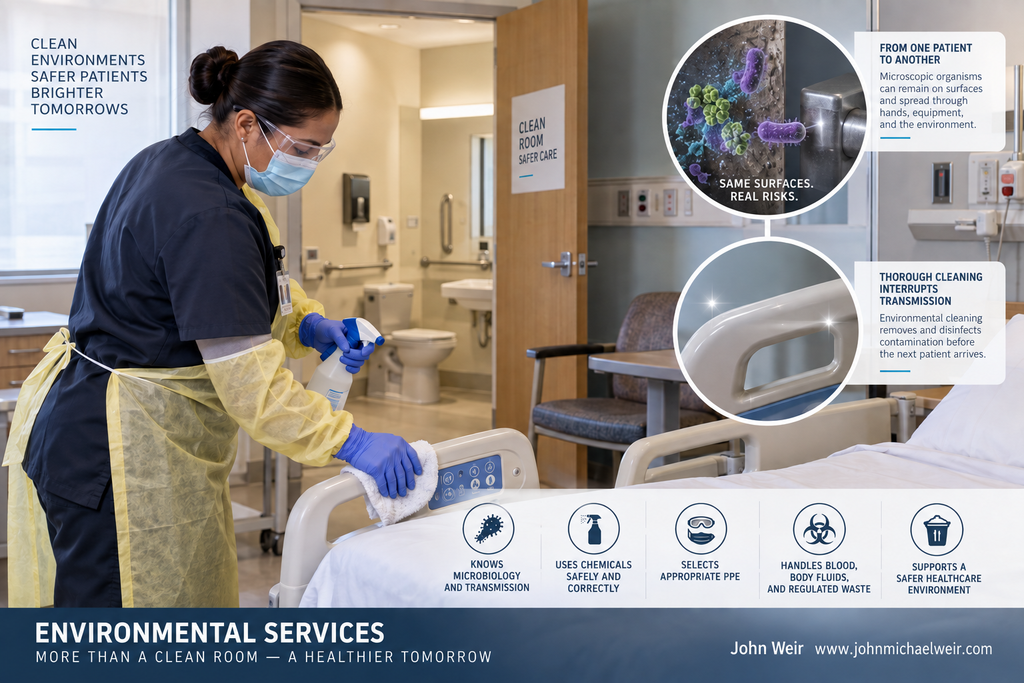
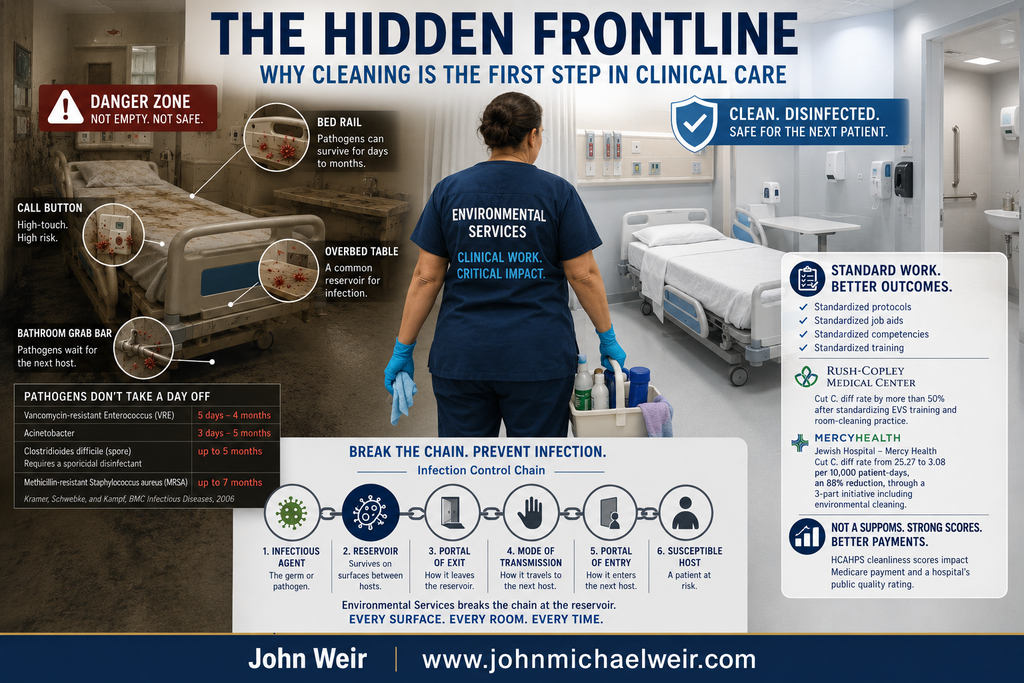
The major difference between cleaning a medical facility and any other building is the focus on the un-seen enemy, bacteria. Environmental Service’s job is to not only provide good visible results, but to reduce the number of surface bacteria to a safe level in order to control cross infection. This is an extremely important responsibility because it keeps harmful bacteria from infecting the person next door or across the hall. Persons whose bodies are recuperating from surgery, injury or a primary infection are in a weakened condition and therefore, cannot put p their normal fight against harmful bacteria. A secondary infection in these cases can cause very serious illness.

(more…)