
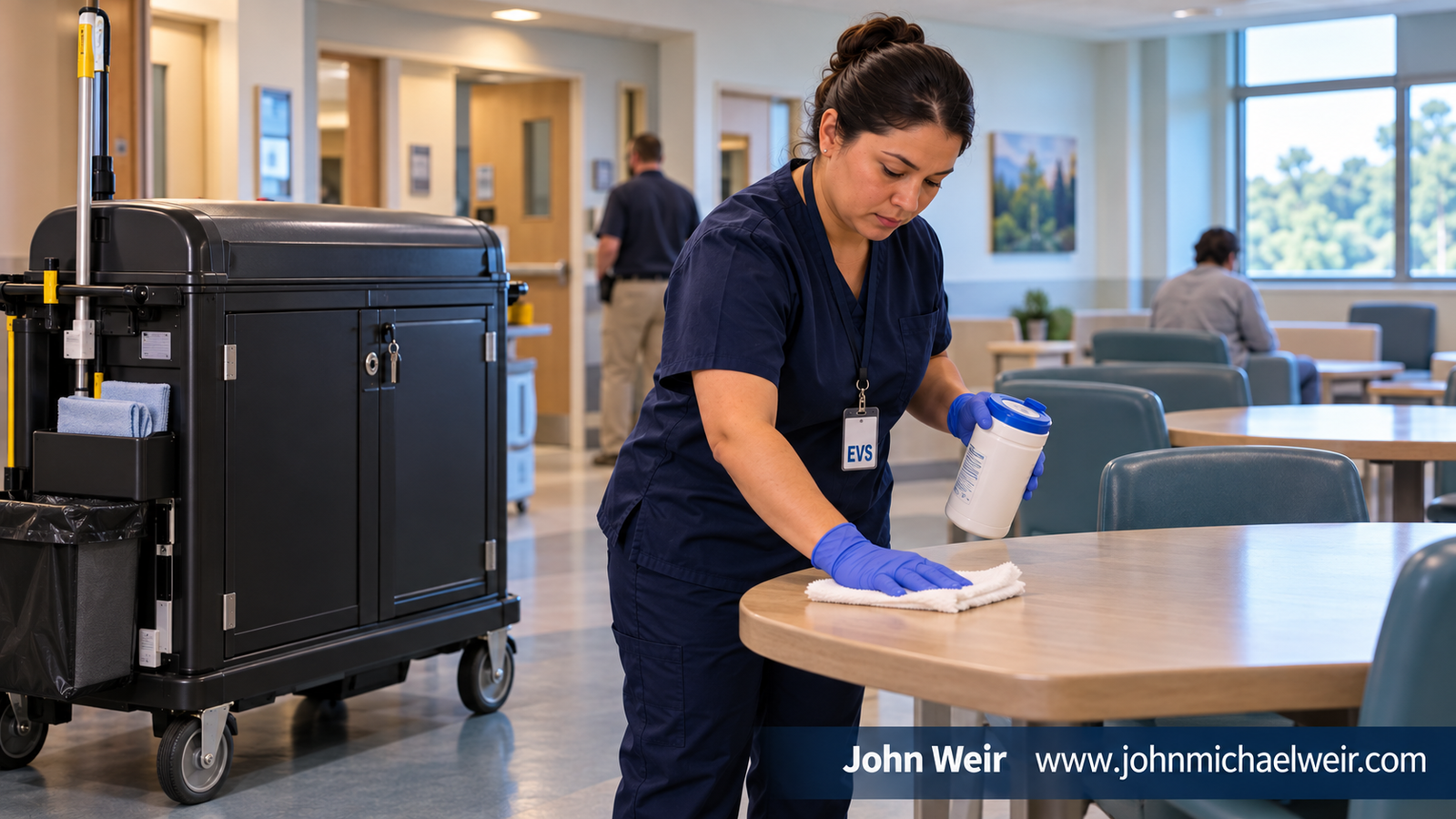
Cleaning in an adult behavioral health unit requires the same disciplined infection prevention practices used throughout the hospital, but it also demands a higher level of environmental awareness. EVS professionals must clean and disinfect patient rooms, bathrooms, day rooms, and common areas while recognizing that everyday supplies, equipment, and room conditions can create safety risks if they are accessible or left unattended. The goal is simple but essential: maintain a clean, disinfected environment while preventing access to anything that could contribute to self-harm, harm to others, contraband concealment, elopement, or another unsafe event.
The most important rule for EVS is cart control. A housekeeping cart must remain locked, attended, and within the employee’s direct control at all times. A locked cart is not an unattended cart. If the EVS technician must leave the immediate area, the cart, chemicals, tools, bags, wipes, mops, vacuum, floor machine, and all other equipment must be removed to an approved secure location. Staff should bring only the supplies needed for the immediate task and keep backup products, bulk stock, sharp or pointed items, and nonessential equipment in a locked storage area. This protects patients while also helping the EVS employee work in a more organized, deliberate way.
Situational awareness is equally important. EVS staff should clean with their eyes up, using peripheral vision and regularly scanning the room and surrounding unit activity. That means staying aware of patient location and behavior, noticing if someone is becoming too close to the cart, reaching toward supplies, trying to grab a badge or key, blocking an exit, or positioning themselves between the employee and a safe route out. EVS technicians should never attempt to physically manage a patient or retrieve an item from a patient. When an interaction feels unsafe, the right response is to stop work, maintain distance, keep a clear exit route, and notify behavioral health staff immediately.
A strong behavioral health cleaning practice also includes a constant environmental safety scan: look up, look down, look around, and look again before leaving. Staff should watch for damaged fixtures, loose hardware, broken furniture, exposed components, sharps, cords, bags, dropped supplies, altered room conditions, and anything that appears unsafe or out of place. Before leaving, EVS must conduct a final sweep to ensure that no chemicals, cloths, bags, tools, mop heads, equipment components, badges, keys, or personal items remain accessible. In behavioral health, excellent cleaning is not only about visibly clean surfaces. It is about creating a clean, controlled, safe environment where every EVS team member helps protect patients, coworkers, and visitors.
#BehavioralHealth #EVS #Safety #Quality #PatientSafety
