Statistically successful objectives are precursers to, or actual goals, that have a better than average probability to help your personal or professional outcomes. Or simply stated; things you should do to be better off.

An objective is defined excellently by dictionary.com as ’something worked toward or striven for’. When we combine this definition with the acronym SMART (and variations thereof), which is often discussed in the same ‘breath’ as business objectives, we are able to set objectives for any level of an organization which compliment the strategy of the organization (and hence the vision and mission). As a quick reminder here is what SMART means:
•    Specific: The objective must not be too broad and must be defined.
•    Measurable: Self explanatory – you must be able to measure success against the objective.
•    Achievable: It must be possible to achieve the objective.
•    Relevant: The objective must compliment higher objectives and strategy and be relevant to the person/department for whom the objective is being set.
•    Time-based: Don’t leave objectives open-ended. Have a specific date as to then the objective must be met.

I am going to focus on four daily / weekly objectives that my friends over at JimRohn.com recently shared with me. I agree with these four because they are simply enough to accomplish, focused enough to produce results, and meet the definition of “SMART”.

  1. Take care of the daily to-do’s.
  2. Invest some time (on average 5-10%) on a regular basis toward future planning and projects.
  3. Invest some time (2-5%) cleaning up old projects or messes.
  4. Finish strong and don’t create new messes that will need to be cleaned up in the future.

If you don’t get frustrated in the short term, over a given period of time you will start to see amazing progress on many levels. Daily consistancy will improve, deadlines will be easier to meet, and future planning will bring amazing results. Of course the usual and customary improvements will follow, such as no weeds in your flowerbeds, your dog won’t bite, flowers will bloom, birds won’t mess on your car… you know what I’m talking about.

Following the ‘Six Aims’
By Tina L. Cermignano, CHESP

There has been a lot of media attention about the Institute of Medicine’s (IOM) report “To Err is Human,” especially over outbreaks of community-based Methicillin-resistant Staphylococcus aureus (MRSA). However, we should concentrate on the second report from the IOM, “Crossing the Quality Chasm,” which provides a road map for quality.

In this report, the IOM describes “Six Aims” to ensure health care quality. The Six Aims are identified as: safe, timely, effective, efficient, equitable and patient-centered health care. So what does this mean for ASHES members?

There is no other service in the health care environment that more intimately and consistently touches patients than environmental services. The patient comes in constant contact with our products, from the textiles that they wear and sleep on to the furniture, fixtures and various pieces of equipment they touch on a daily basis.

Taking this into consideration, our base of operations must be in complete balance with the Six Aims. A health care institution may employ the best in clinical care and purchase the finest technology available, yet little of it will matter if the institution is not properly cleaned and disinfected where appropriate. At its very core, environmental services’ reason for being is patient-centered. If we do not perform our roles in a safe, effective, efficient, equitable and timely manner we compromise the quality and health of our patients.

Environmental services staff and the roles they play are often the forgotten heroes in the quest for quality. As the rest of the institution works to achieve and improve upon the Six Aims, our services are often viewed as a way to improve timeliness and the core purpose is defeated. It is our job and obligation to make sure that everyone in the institution and within the industry is aware of how vital our services are to the safety and the healing environment of the patient.

There is no substitute for a clean environment that is free from potentially harmful organisms. The quality initiatives of environmental, waste, linen and transport services cannot be minimized or overlooked as insignificant in the quest for quality improvement.

What can you do? Get involved! In the IOM report, quality is defined as, “The degree to which health services for individuals and populations increase the likelihood of desired health outcomes and are consistent with current professional knowledge.” Professional knowledge is not limited to our profession. Be knowledgeable about other professions and their roles in quality as well. Be knowledgeable about what is going on in your institution. Make sure when the rest of your institution is working on the Six Aims, that you and your staff are involved and that you have allies in the infection control, safety and quality departments so you are included in the discussions and decisions when initiatives are being developed.

It is common for improvement initiatives that seem simple in the planning phase to turn into a problem for another department further down the continuum of care. This is not done intentionally; it usually occurs from lack of awareness about the rest of the cycle. Do not let this happen to you. Keep your eyes and ears open to what improvements are being discussed in your institution and play an active role.

Quality should be a topic when you meet with your boss, your peers across the institution and your staff. They tend to know more than we do at times, because they are on the units every day.

What steps have you taken in order to be consistent with professional knowledge? Let’s talk about it.

On the road to excellence!

Tina L. Cermignano, CHESP
Operations Manager
Children’s Hospital of Philadelphia
Philadelphia

Suggestions for Infection control procedures for free-standing imaging centers and hospital radiology departments

The cleanliness of free-standing imaging centers and hospital radiology departments is crucial for reducing the spread of MRSA and other acquired infections. The following are 11 simple procedures to implement that can prevent the spread of these infections.

1. Have a written infectious control policy to include MRI cleaning procedures as well as the cleaning schedule and have it posted throughout the center.

2. Implement a mandatory hand washing / hand sanitizing procedure between patient exams for technologists and any others who come into contact with patients.

3. Clean the MRI tables, inside the bore of the magnet and any other items that come into contact with a patient. Infection control experts recommend this be done between each patient.

4. Clean all pads and positioners with an approved disinfectant. Infection control experts recommend cleaning after each patient.

5. Periodically inspect the pads with a magnifying glass, particularly at the seams, to identify fraying or tearing. If present, the pads should be replaced.

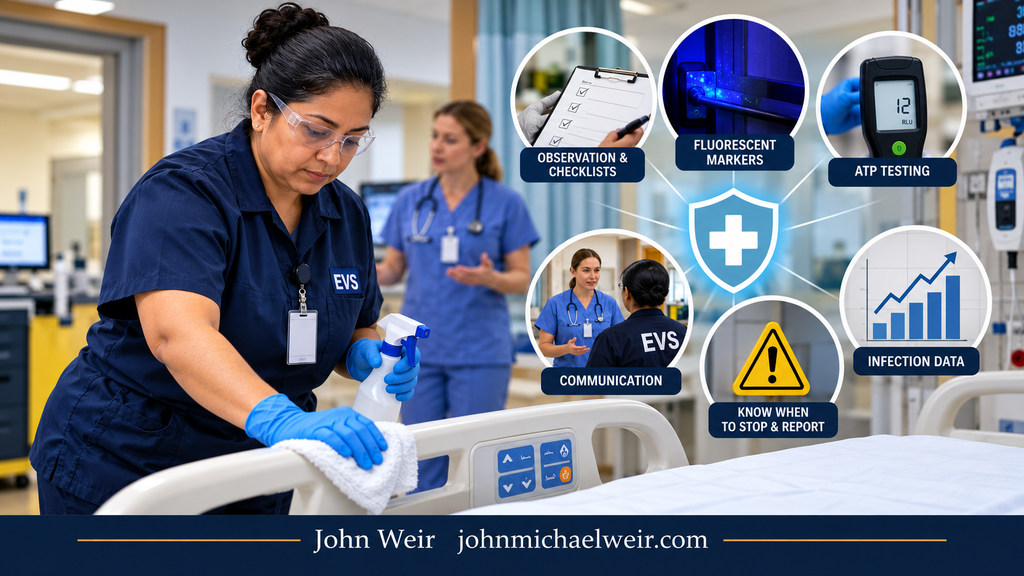
6. Regularly check all padding material with an ultraviolet (black) light and make sure that any biological material detected on the pads can be removed.

7. Replace damaged or contaminated pads with new pads incorporating permanent antimicrobial agents.

8. Use pillows with a waterproof covering that is designed to be surface wiped. Replace pillows when their barrier is compromised.

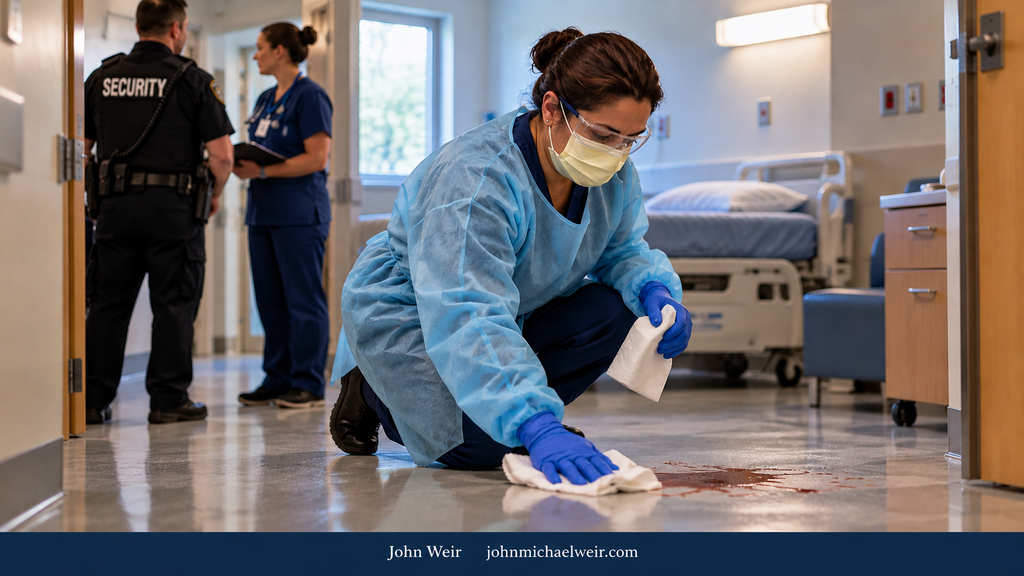
9. Promptly remove body fluids, and then surface disinfect all contaminated areas.

10. If a patient has an open wound or any history of MRSA/other infection:

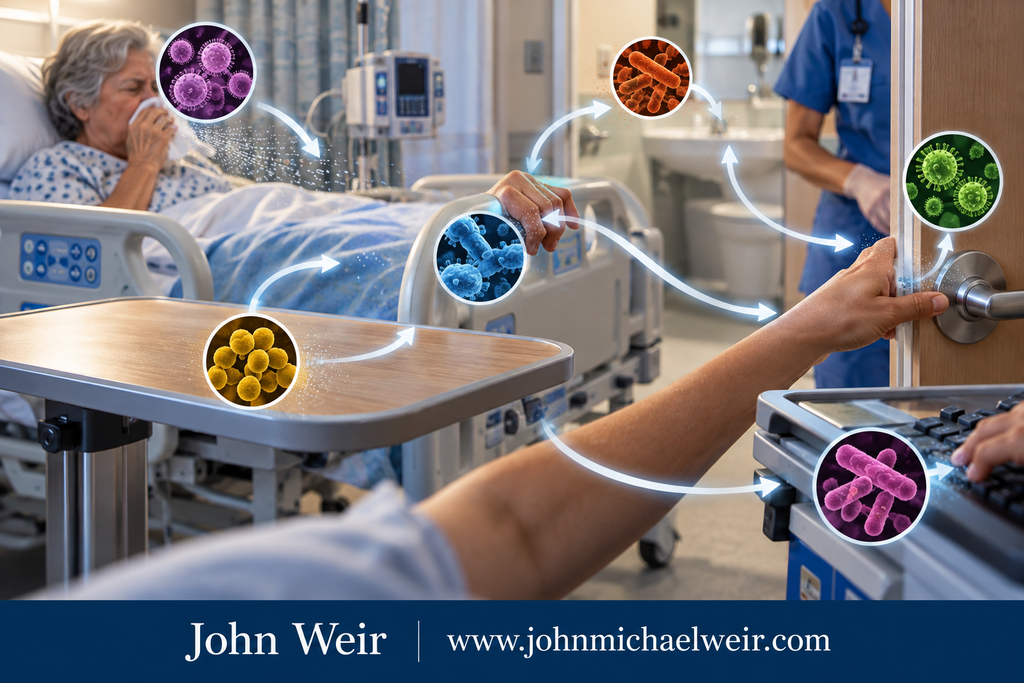
a. Gloves and gowns should be worn by all staff coming in contact with the patient. These barriers must be removed before touching other areas not coming in contact with the patient, i.e. door knobs, scanner console, computer terminals, etc.

b. The table and all the pads should be completely cleaned with disinfectant before the next patient is scanned, if it is not already being performed between every patient. For patients with any known infectious process add 10-15 minutes onto the scheduled scan time to assure there is enough time to thoroughly clean the room and all the pads.

11. All furniture should be periodically cleaned. Ideal surfaces are those that are waterproof and wipeable. Infection control experts recommend this be done between each patient.

Cleaning is Fundamental

We know that our primary purpose is cleaning. We train our staff to recognize dirt and soil in so many forms and to remove it. We educate, coach and celebrate our successes. We also know that good strategies for combating infection and cross contamination include things such as hand washing and personal protective equipment. In fact recent studies point more often to poor hand washing practices then the environment as the primary cause of hospital acquired infections.

We in Environmental Services understand the importance of hand washing as well as the importance of a clean environment. No matter how well hospital employees adhere to hand washing policies we simply cannot keep pathogens out. Without a top quality training program focused on cleaning and disinfecting the environment, infections will continue to be a problem; germs must be killed wherever they exist within the hospital environment.

I teach my staff to focus on cleaning. Our primary purpose is cleaning, and we never stop and say good enough. We clean and disinfect so that our surfaces not only look clean, they are free of contamination also. I work closely with our infection control department to track results and the partnership has helped to develop best practices that have proven very successful.

When you think about your role in healthcare, remember that without a healthy environment, patients will get sicker, and ultimately, go somewhere else for their healthcare. Support you facility with excellent cleaning, a team relationship with your infection control department as well as your staff. And don’t ever lose focus on cleaning for success.